Anyone researching body contouring eventually runs into the same question. Should you go with a newer radiofrequency technology or stick with the procedure that has been around for decades? Traditional liposuction has a long track record, but newer methods like BodyTite Radiofrequency Assisted Liposuction have changed what patients can realistically expect from a single procedure.
This guide compares both approaches side by side so you can understand what actually separates them, beyond marketing language.
What Traditional Liposuction Actually Does
Traditional liposuction has one job. It removes unwanted fat from targeted areas of the body using a cannula, a thin tube connected to a suction device. The surgeon moves the cannula beneath the skin to break up fat cells, which are then suctioned out of the body. It is a well established procedure with predictable, reliable fat reduction results.
The limitation is simple. Traditional liposuction does not do anything for the skin sitting above the fat layer. It relies entirely on the skin’s own natural elasticity to retract and settle smoothly after the fat is removed. For younger patients with good skin quality, this often works fine. For patients with looser skin, whether from aging, weight loss, or pregnancy, the results can look uneven, or the skin may sag rather than tighten.
What BodyTite Adds to the Equation
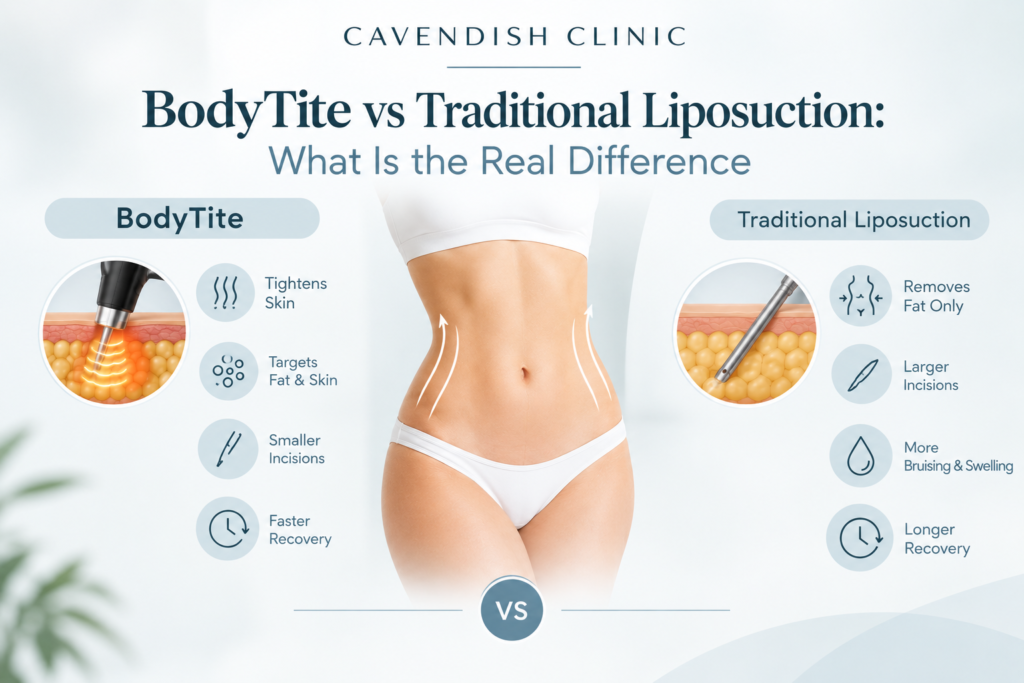
BodyTite works from the same basic principle as liposuction, removing unwanted fat through a small incision. The difference is what happens before that fat is removed. BodyTite uses radiofrequency energy delivered through a device with two electrodes, one under the skin and one on the surface. As energy passes between them, it heats the tissue in a controlled and monitored way.
This heat does two things at once. It liquefies fat, making it easier to remove with less physical trauma to surrounding tissue, and it stimulates the deeper layers of skin to contract and rebuild collagen. In other words, BodyTite tackles both the fat and the skin quality issue in a single session, something traditional liposuction was never designed to do.
Comparing the Two Procedures
Skin Tightening
This is the most significant difference between the two treatments. Traditional liposuction offers no active skin tightening mechanism. Any improvement in skin appearance comes purely from the body’s own healing response. BodyTite directly heats the dermis to trigger collagen contraction and remodeling, giving patients a noticeably firmer result, particularly in areas prone to looseness like the abdomen, upper arms, and inner thighs.
Precision and Control
Traditional liposuction depends heavily on the surgeon’s manual technique and experience to achieve even results. BodyTite includes real time temperature monitoring built into the device, which helps maintain consistent heating across the treatment area and reduces the risk of uneven contouring or burns.
Incision Size and Scarring
Both procedures use small incisions, but BodyTite typically requires even smaller entry points because the technology reduces the physical force needed to break up fat. This often means less visible scarring once the area has healed.
Recovery Time
Traditional liposuction recovery can vary widely depending on the treatment area and volume of fat removed, often requiring one to two weeks before returning to normal activity, with full results settling over several months. BodyTite recovery tends to follow a similar timeline for the first week or two, but many patients report less bruising thanks to the more controlled tissue disruption.
Cost Considerations
Traditional liposuction is generally the more affordable option upfront, since it is a simpler procedure without additional technology. BodyTite typically costs more due to the equipment and added skin tightening benefit, but many patients see it as an investment that replaces the need for a separate skin tightening procedure later.
Where Nonsurgical Options Fit In
Not every patient wants or needs a surgical procedure. For smaller areas of stubborn fat with minimal skin concerns, nonsurgical treatments like CoolSculpting Elite offer a needle free alternative that uses controlled cooling to gradually reduce fat cells over several weeks. It will not tighten skin the way BodyTite does, and results are generally more subtle, but it appeals to patients who want zero downtime and are comfortable with a slower, more gradual outcome.
Comparing all three options really comes down to what you are trying to solve. If skin laxity is not a concern and you want a simple, affordable fat reduction option, traditional liposuction remains a solid choice. If you are dealing with both fat and loose skin, BodyTite generally delivers a more complete result. If you prefer no incisions at all and are targeting smaller areas, CoolSculpting Elite may be the better starting point.
Who Benefits Most From Each Option
Traditional liposuction tends to suit younger patients with naturally elastic skin who mainly want fat removed from one or two areas. It also remains a strong choice for larger volume fat removal where skin tightening is not the primary concern.
BodyTite tends to suit patients who have experienced some skin laxity from weight fluctuations, pregnancy, or age, and who want a single procedure that addresses both fat and skin quality without the longer recovery of a surgical lift.
A proper consultation is the only way to determine which approach fits your body and your goals. Skin quality, fat distribution, weight stability, and personal preferences around downtime all factor into the recommendation.
Choosing the Right Clinic
Because BodyTite depends on careful temperature control and surgical skill, the provider matters just as much as the technology. Working with an experienced, well reviewed Aesthetic Clinic London gives you access to both traditional and radiofrequency assisted options, so your treatment plan is based on your actual anatomy rather than whichever single technique a clinic happens to specialize in. Cavendish Clinic offers both approaches, along with nonsurgical alternatives, allowing patients to choose the method that genuinely fits their goals rather than settling for a one size fits all recommendation.
Frequently Asked Questions
Is BodyTite better than traditional liposuction? Neither option is universally better. BodyTite offers added skin tightening that traditional liposuction cannot provide, but traditional liposuction remains a reliable and more affordable choice for patients with good skin elasticity who only need fat removed.
Does traditional liposuction tighten skin at all? Traditional liposuction relies entirely on the skin’s natural elasticity to retract after fat removal. It has no active tightening mechanism, which is why results vary more depending on age and skin quality.
Is BodyTite more painful than traditional liposuction? Both procedures are generally performed under local anesthesia or light sedation, and patients typically report similar levels of mild discomfort during recovery rather than significant pain.
How much more does BodyTite cost compared to traditional liposuction? BodyTite usually costs more due to the additional radiofrequency technology involved, though the exact difference depends on the treatment area and the number of areas treated.
Can I combine BodyTite with nonsurgical treatments? Yes. Many patients pair BodyTite with treatments like CoolSculpting Elite to address different areas of the body without committing to a fully surgical approach everywhere.
Which option has a shorter recovery time? Recovery timelines are broadly similar for both procedures, though many BodyTite patients report less bruising and swelling due to the more controlled way fat is broken down before removal.
If you are still weighing your options, a consultation with an experienced provider is the most reliable way to find out which procedure matches your skin, your fat distribution, and the results you are actually hoping to achieve.
