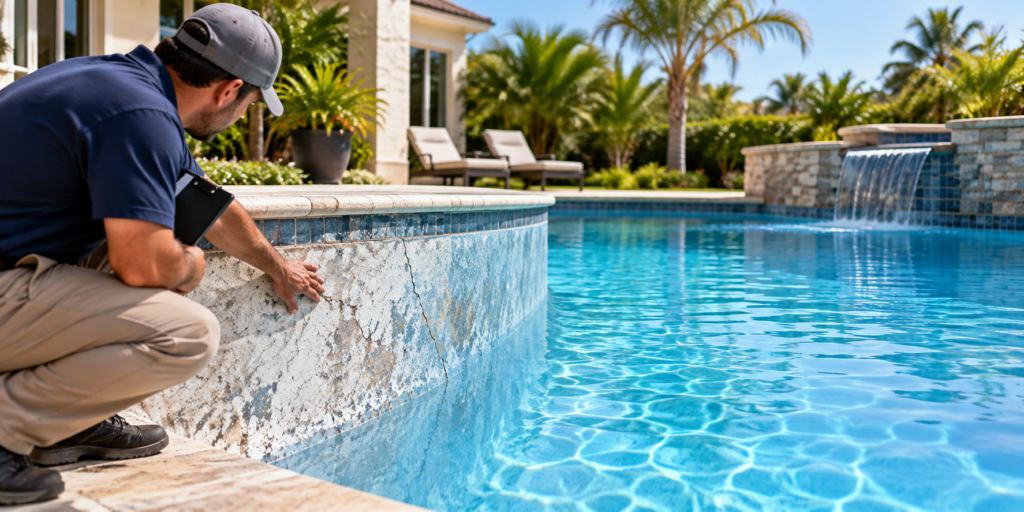
An inground swimming pool should have a smooth and strong finish that can handle regular use and constant contact with water. Pool plaster is an important part of that finish. It covers the inside of the pool and gives it a clean, finished look.
Over time, you may notice small lines or cracks in the plaster. Some cracks are minor and may only affect the look of the pool. Others can be a sign of a bigger problem with the pool surface or structure.
So, what causes cracks in inground pool plaster? There are several possible reasons, including age, pool movement, poor installation, water chemistry, temperature changes, and soil movement. Knowing the common causes can help you understand when a crack needs attention.
What Is Inground Pool Plaster?
Inground pool plaster is the smooth surface placed over the concrete or gunite shell of a swimming pool. Traditional pool plaster is made from cement and fine materials. Other pool finishes may contain quartz, pebble, or similar materials.
The plaster creates the surface that you see when you look inside the pool. It also helps protect the pool shell from constant contact with water.
Even though inground pool plaster is made to last for years, it can still develop cracks. Daily use, chemicals, sunlight, weather, and normal aging can all affect the surface.
Common Causes of Cracks in Inground Pool Plaster
There is not always one single reason for a pool plaster crack. Different conditions can cause or contribute to cracking.
1. Movement in the Pool Structure
Movement in the pool shell is one possible cause of cracks. An inground pool is surrounded by soil, and the soil around it can move or settle over time.
When the pool structure moves, the plaster can also be placed under stress. Since plaster is not meant to handle a lot of movement, cracks can form.
Small changes may create thin cracks that are hard to notice. More serious movement can lead to larger or deeper cracks.
If you notice that a crack is getting bigger or that new cracks keep appearing, it is worth having the pool checked to find the cause.
2. Poor Plaster Installation
The quality of the installation can affect how well pool plaster performs over time.
If the pool surface is not prepared correctly, the plaster mixture is not made properly, or the plaster is not applied and finished correctly, problems can develop later.
Using too much water in the plaster mixture, applying the wrong thickness, or not following the right curing steps can make the finish weaker.
Good installation practices are important when applying inground pool plaster. Proper preparation and curing can help reduce the chance of cracks and other surface problems.
3. Shrinkage While the Plaster Dries
Cement-based materials naturally shrink a little as they dry and cure. This is normal, but too much shrinkage can lead to small cracks.
These cracks are often very thin and may look like a group of small lines across the pool surface. They are sometimes called hairline or surface cracks.
In many cases, these small cracks are mainly a visual issue. Still, they should be watched over time to make sure they do not become larger.
Proper mixing, application, and curing can help reduce problems caused by shrinkage.
4. Unbalanced Pool Water
Pool water chemistry has a direct effect on the condition of the plaster. Water that is not properly balanced can slowly damage the surface.
For example, water with low pH or low calcium hardness can be harsh on plaster. Over time, this can make the surface weaker or rougher.
High calcium levels can also cause problems such as scaling.
Regularly testing the pool water and keeping the pH, alkalinity, calcium hardness, and sanitizer levels within the recommended range can help protect inground pool plaster.
5. Changes in Temperature
Swimming pools are exposed to hot and cold temperatures throughout the year. These temperature changes can cause building materials to expand and contract.
When this happens again and again, stress can be placed on the pool plaster.
Temperature changes may not cause serious cracks in a healthy pool finish by themselves. However, they can make existing weak areas worse, especially when the plaster is old or already damaged.
6. Draining the Pool
Draining an inground pool can change the pressure around the pool shell. The water inside the pool normally creates pressure against the walls and floor.
When the pool is empty, that pressure is removed. At the same time, groundwater outside the pool can place pressure on the shell.
Because of this, draining a pool should not be taken lightly. Removing the water without checking the conditions around the pool can sometimes lead to movement or other damage.
If the pool needs to be drained for repairs or resurfacing, it is safer to have the work planned and handled properly.
7. Old Pool Plaster
Pool plaster has a limited lifespan. Even a well-installed finish will eventually show signs of wear.
As inground pool plaster gets older, you may notice cracks, stains, rough areas, or changes in color. Years of contact with water, pool chemicals, sunlight, and regular cleaning can slowly wear down the surface.
Older plaster may also become more likely to crack because the finish has already experienced years of use.
If the plaster has widespread damage, fixing one or two cracks may not be enough. In some cases, a full resurfacing may make more sense.
8. Soil Movement Around the Pool
The soil around an inground pool can also play a role in cracking.
Some types of soil expand when they become wet and shrink when they dry. This repeated movement can put pressure on the pool shell.
Poor drainage can make the situation worse by allowing too much water to collect around the pool.
If cracks keep coming back after repairs, it may be useful to look at the conditions around the pool instead of focusing only on the plaster.
9. Problems With the Pool Shell
Sometimes a crack in the plaster is related to a problem underneath the finish.
The plaster sits over the pool shell, so movement or cracking in the concrete or gunite can eventually show through the plaster.
This is why it is important to look at the size, location, and pattern of a crack. A small surface line may not be serious, while a wider crack that keeps growing may need more attention.
A professional inspection can help determine whether the problem is limited to the plaster or involves the pool structure.
Surface Cracks vs. Structural Cracks
Not every pool crack should be treated the same way.
Surface cracks are often very thin and may stay limited to the plaster layer. They can happen because of normal curing, aging, or small amounts of movement.
Structural cracks can be wider or deeper and may be connected to movement in the pool shell.
A crack that continues to grow, appears in several areas, or is connected with water loss should be checked.
Knowing the difference can help you avoid spending money on a simple plaster repair when the real problem is underneath the surface.
Can Cracked Inground Pool Plaster Be Repaired?
In some cases, yes. The right repair depends on the type and size of the crack and what caused it.
Small surface cracks may be repaired without replacing the entire finish. However, simply filling a crack may not fix the problem if the pool is still moving.
For example, if soil movement or structural movement caused the crack, the same problem may cause the crack to return.
If the plaster is old and has many cracks, stains, rough areas, or other damage, resurfacing may be a better choice than making several small repairs.
How Can You Help Prevent Pool Plaster Cracks?
While some cracks cannot be avoided, regular care can help reduce the chance of plaster damage.
Here are some simple steps that can help:
- Test your pool water regularly.
- Keep pH and alkalinity at the proper levels.
- Maintain the recommended calcium hardness.
- Avoid draining the pool unless it is necessary.
- Check the area around the pool for drainage problems.
- Watch for changes in the soil around the pool.
- Take new or growing cracks seriously.
- Keep the pool properly maintained.
- Have older plaster checked when it starts showing several signs of wear.
- Use proper care methods for your specific pool finish.
Good pool maintenance can help your inground pool plaster stay in better condition for a longer period.
When Should You Have a Pool Crack Checked?
A small hairline crack does not always mean there is a major problem. However, some cracks should not be ignored.
Consider having the pool inspected if:
- The crack is getting wider.
- The crack continues to get longer.
- New cracks are appearing.
- You notice unusual water loss.
- Several cracks are found in different areas.
- The plaster is breaking away from the surface.
- The pool shell appears to be moving.
- A crack is deep or appears to extend beyond the plaster.
- New cracks appear after the pool has been drained.
Finding the cause early can make it easier to choose the right repair.
Final Thoughts
Cracks in inground pool plaster can develop for different reasons, from normal aging and water chemistry issues to pool movement, soil changes, and problems with the pool surface. Small cracks may not always be serious, but cracks that grow, spread, or appear with other pool problems should be checked.
If your pool needs repairs, resurfacing, or other improvements, choosing the right pool service can make a big difference. For homeowners planning a new pool or looking for help with pool projects in the area, Pool builders Palm Beach Gardens can provide information about pool design and construction options. Taking care of problems early and keeping the pool properly maintained can help protect the surface and keep your pool looking and working well for years.
