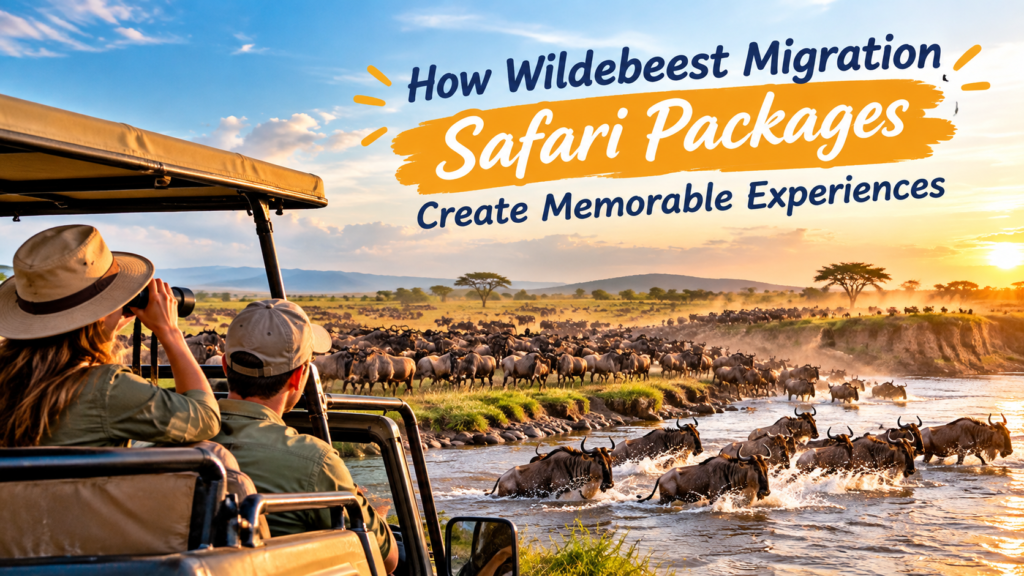
Few wildlife experiences can compare with watching thousands of wildebeest move across the African plains in search of fresh grazing and water. The Great Wildebeest Migration is a remarkable natural event that brings together vast herds, predators, changing landscapes, and dramatic seasonal movements. For travelers interested in experiencing this spectacle, carefully planned safari packages can make the journey more organized and meaningful.
Wildebeest migration safari packages can combine wildlife viewing, transportation, accommodation, local guidance, and carefully selected safari locations. More importantly, they give travelers an opportunity to experience the migration while learning about the animals, ecosystems, and communities that make these destinations unique.
Understanding the Great Wildebeest Migration
The Great Wildebeest Migration is a continuous movement of wildebeest across the ecosystems of Tanzania and Kenya. The animals travel in response to seasonal rainfall, availability of fresh grass, and access to water.
A Journey Driven by Nature
The migration does not follow a simple timetable that remains exactly the same every year. Weather conditions and rainfall can influence where herds gather and when they move. This natural uncertainty is part of what makes the experience so fascinating.
Travelers may encounter large herds grazing across open grasslands, crossing rivers, or moving through different habitats. Each safari can therefore provide a different perspective on the migration.
More Than Just Wildebeest
Although wildebeest are at the center of the migration, they are not the only animals involved in the ecosystem. Zebras and other herbivores often move through the same landscapes, while lions, cheetahs, leopards, hyenas, and crocodiles depend on the abundance of prey.
This interaction creates opportunities to observe predator-prey relationships and the wider balance of the African ecosystem.
How Safari Packages Simplify the Experience
Planning an African wildlife trip independently can involve many details, including transportation, accommodation, park access, safari schedules, and route planning. A well-organized package can bring many of these elements together.
Coordinated Travel Arrangements
Safari packages may include transportation between airports, lodges, camps, and wildlife areas. Having these arrangements planned in advance can reduce logistical challenges and allow travelers to focus more on the experience.
For international visitors, this can be particularly useful because traveling through unfamiliar regions may require careful planning.
Carefully Selected Safari Locations
Where and when a safari takes place can have a major influence on wildlife sightings. Safari planners often consider seasonal conditions, animal movements, accessibility, and conservation areas when developing itineraries.
Rather than visiting a destination without understanding its seasonal patterns, travelers can use an itinerary designed around the migration period they are interested in experiencing.
Experiencing Wildlife in Its Natural Environment
One of the most memorable aspects of a migration safari is seeing animals behaving naturally in their own environment.
Observing Herd Behavior
Wildebeest are social animals, and observing large herds can reveal interesting patterns of movement and communication. Travelers may see animals gathering in large groups, feeding together, responding to potential threats, or gradually moving across open terrain.
Watching these behaviors from a respectful distance can create a deeper appreciation for wildlife beyond simply taking photographs.
Witnessing Seasonal Movement
The migration is constantly changing. A herd that appears in one area at one moment may move elsewhere as conditions change. This makes each game drive unpredictable in a positive sense.
Instead of following a fixed sequence of attractions, travelers experience a natural process that develops according to environmental conditions.
The Role of Experienced Guides
A knowledgeable safari guide can significantly influence how travelers understand what they see.
Learning to Read the Landscape
Experienced guides often understand animal behavior, tracks, vegetation, weather patterns, and seasonal changes. Their knowledge can help visitors notice details they might otherwise overlook.
For example, a guide may explain why a herd is gathering in a particular location or identify signs that predators are nearby.
Understanding the Ecosystem
A migration safari can become more meaningful when travelers understand how individual species are connected. Guides can explain the relationships between grazing animals, predators, water sources, vegetation, and seasonal rainfall.
This transforms wildlife viewing from simply observing animals into an opportunity to understand an entire ecosystem.
Creating Memorable Photography Opportunities
The Great Migration offers countless opportunities for wildlife photography, from wide landscape scenes to close observations of animal behavior.
Capturing Natural Moments
Some of the most memorable photographs are not necessarily dramatic action shots. A herd moving across a golden grassland, zebras standing alongside wildebeest, or a solitary animal watching the surroundings can tell a powerful visual story.
Patience is often more important than having expensive equipment.
Respecting Wildlife While Photographing
Responsible photography should always prioritize animal welfare. Maintaining an appropriate distance, following guide instructions, and avoiding behavior that could disturb wildlife are important parts of ethical safari photography.
The goal is to document natural behavior without changing it.
The Importance of Accommodation and Comfort
Accommodation can also influence the overall safari experience. Depending on the itinerary, travelers may stay in permanent lodges, mobile camps, or other forms of safari accommodation.
Staying Close to Wildlife Areas
Accommodation located near wildlife areas can reduce travel time and provide easier access to game-drive locations. This can be particularly valuable during periods when herds are concentrated in specific regions.
Experiencing the African Landscape
Safari accommodation can also introduce travelers to the surrounding environment. Waking up to natural sounds, watching the changing light across the plains, or enjoying an evening outdoors can become part of the overall travel experience.
Connecting With Local Culture
A migration safari does not have to focus exclusively on wildlife. Many safari destinations are also home to communities with distinctive histories, traditions, and ways of life.
Learning Beyond the Safari Vehicle
When included appropriately, cultural experiences can help travelers understand the people and communities connected to these landscapes. Visiting local areas, learning about traditional practices, or speaking with community members can provide another perspective on the destination.
Responsible tourism should respect local communities and support experiences that are conducted ethically.
Why Preparation Matters
Even with a carefully planned itinerary, travelers should prepare for changing conditions.
Packing for Safari Conditions
Comfortable clothing, sun protection, binoculars, suitable footwear, insect protection, and camera equipment can all be useful. Travelers should also consider the season and expected weather when preparing their luggage.
Keeping Expectations Flexible
Wildlife does not operate according to a schedule. A particular animal may not appear during a game drive, while an unexpected sighting may become the highlight of the trip.
Keeping expectations flexible allows travelers to appreciate the experience as it unfolds rather than focusing only on specific sightings.
Choosing a Thoughtful Safari Experience
When comparing safari options, travelers can look beyond itinerary length and price. The quality of guiding, accommodation, transportation, seasonal planning, group size, conservation practices, and overall itinerary design can all affect the experience.
Wildebeest Sightings focuses on the migration experience and the opportunities it provides for travelers to observe wildlife and understand the natural environments through which the herds move. For anyone researching safari options, considering how an itinerary balances wildlife viewing, comfort, education, and responsible travel can help create a more rewarding journey.
Conclusion
The Great Wildebeest Migration is memorable because it is constantly changing. Massive herds move across landscapes, predators respond to opportunities, weather influences animal behavior, and every game drive can bring something unexpected.
Well-planned wildebeest migration safari packages can make it easier for travelers to experience this natural phenomenon while providing access to knowledgeable guides, suitable locations, comfortable accommodation, and organized transportation. Ultimately, the most lasting memories often come from more than simply seeing large numbers of animals. They come from understanding the landscape, observing natural behavior, learning from experienced guides, and experiencing Africa’s remarkable wildlife in a respectful way.
