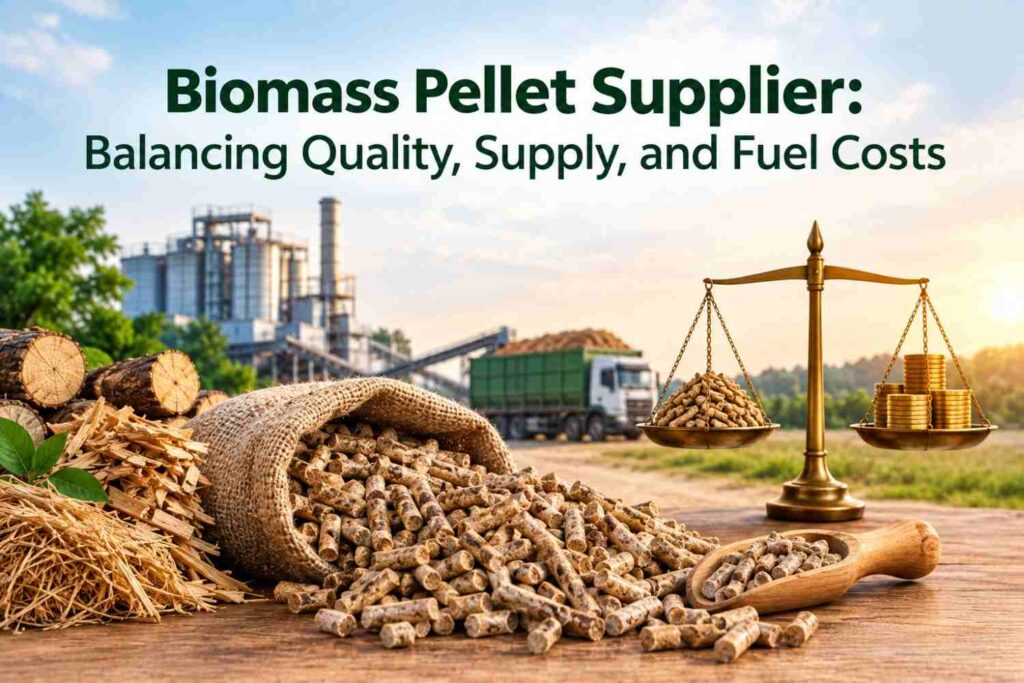
For industries that depend on solid fuels for boilers, furnaces, and heating systems, choosing the right fuel is an important part of managing daily operations. Biomass pellets have become a practical option for businesses looking to use renewable materials while maintaining a consistent fuel supply. However, selecting a suitable Biomass Pellet Supplier requires more than simply looking at the price per tonne.
Quality, availability, transportation, fuel performance, and overall supply reliability all influence the actual value of biomass pellets. A supplier offering a low initial price may not always provide the consistency needed for long-term industrial use. Understanding these factors can help businesses make better purchasing decisions and avoid unnecessary operational problems.
Understanding the Importance of Biomass Pellet Quality
Biomass pellets are produced by processing materials such as agricultural residues, wood waste, and other suitable plant-based materials. These raw materials are dried, processed, and compressed into a compact fuel form.
The quality of the finished pellets can vary depending on the raw material, manufacturing process, moisture level, density, and other production factors. For industrial users, consistency is particularly important because changes in fuel characteristics can affect combustion and overall heating performance.
Moisture is one of the factors worth considering when evaluating biomass pellets. Excessive moisture can affect storage, handling, and combustion efficiency. Similarly, ash content matters because higher ash levels may increase residue generation and require more frequent cleaning of combustion equipment.
Calorific value is another important consideration. It indicates the amount of energy that can be obtained from a particular quantity of fuel. Buyers should therefore consider the relationship between pellet quality and energy output rather than focusing exclusively on the purchase price.
Why Supply Reliability Matters
A good fuel strategy depends on having sufficient material available when it is needed. Industrial facilities may consume significant quantities of biomass pellets, making supply continuity an important consideration.
A Biomass Pellet Supplier should be able to understand the buyer’s expected consumption, delivery schedule, storage capacity, and order volume. Businesses with regular fuel requirements may benefit from discussing supply arrangements in advance instead of placing individual orders whenever stocks become low.
Reliable supply planning can also help industries manage storage more effectively. If deliveries are unpredictable, companies may need to maintain larger emergency stocks, which can require additional storage space and handling arrangements.
Before selecting a supplier, buyers can ask about production capacity, standard lead times, packaging options, transportation arrangements, and the supplier’s ability to handle larger or recurring orders. These details can provide a clearer picture of whether a supplier is suitable for long-term requirements.
Looking Beyond the Purchase Price
Fuel cost is naturally an important part of any industrial purchasing decision. However, the lowest quoted price does not necessarily represent the lowest overall operating cost.
For example, differences in moisture and calorific value can influence how much fuel is required to achieve a particular heating output. Transportation costs can also make a significant difference, especially when biomass pellets are purchased from a distant location.
Storage losses, handling requirements, ash disposal, and combustion performance may also affect the overall economics of using biomass pellets. This means businesses should consider the total cost of using the fuel rather than comparing only the price listed on a quotation.
A useful approach is to evaluate the fuel on the basis of quality, energy value, delivery cost, consistency, and expected consumption. This broader assessment can help buyers understand the practical value of different supply options.
Evaluating a Supplier Before Placing an Order
Choosing a Biomass Pellet Supplier becomes easier when buyers establish a clear checklist before requesting quotations.
First, consider the raw materials used to manufacture the pellets. Agricultural residues and wood-based materials can have different characteristics, so understanding the feedstock can provide useful information about the final product.
Next, ask about product specifications. Important details may include moisture content, ash content, pellet size, density, and calorific value. These specifications should be considered in relation to the equipment and application in which the pellets will be used.
Production capacity is also important for businesses requiring large volumes. A supplier may offer a suitable product but may not have the capacity to maintain the required supply schedule. Discussing expected monthly or annual requirements can help both sides determine whether the arrangement is practical.
Transportation should not be overlooked. Delivery distance, vehicle availability, unloading arrangements, and delivery schedules can influence the final cost and convenience of the fuel.
Finally, communication matters. A supplier that clearly discusses specifications, quantities, delivery expectations, and other commercial details can make the purchasing process more straightforward.
The Role of Consistent Manufacturing
Consistency is one of the most useful qualities a biomass fuel supplier can provide. Industrial equipment is generally designed to operate within certain fuel parameters, so significant variation between deliveries can create challenges.
Manufacturing controls can help maintain more consistent pellet characteristics. Proper drying, processing, and compression contribute to the physical quality of the finished product. Quality checks during production can also help identify variations before the pellets are supplied to customers.
Ecostan Biofuel focuses on biomass fuel manufacturing using agricultural, forest, and other plant residues. Its product range includes biomass pellets and briquettes designed for industrial fuel applications. By processing renewable biomass materials into compact solid fuels, the company supports businesses that are exploring alternatives to conventional fuels.
Matching Biomass Pellets With Industrial Applications
Not every biomass pellet is automatically suitable for every application. Industrial buyers should match the fuel specifications with their equipment and operating requirements.
Biomass pellets can be used in suitable boilers, furnaces, heating systems, and other thermal applications. They may also be considered by industries such as manufacturing units, food-processing facilities, brick-related operations, and other businesses with appropriate biomass combustion systems.
Before switching fuels or changing the fuel mix, companies should review equipment specifications and operating requirements. Factors such as feeding systems, combustion temperature, ash handling, and storage conditions can affect how effectively biomass pellets perform in a particular facility.
This application-focused approach can prevent problems caused by purchasing a fuel solely because it is inexpensive or readily available.
Bulk Purchasing and Long-Term Requirements
For businesses with high fuel consumption, bulk purchasing can make supply planning more structured. However, large orders should be based on realistic consumption forecasts and available storage capacity.
A Biomass Pellet Supplier working with industrial customers should understand whether the buyer needs a one-time shipment, monthly deliveries, or a longer-term supply arrangement.
Long-term purchasing discussions can also provide an opportunity to establish clear expectations regarding product specifications, order quantities, delivery schedules, and quality requirements. Both parties can then plan production and logistics more efficiently.
Businesses should also consider seasonal changes in fuel demand. Agricultural residue availability and transportation conditions can vary, so advance planning can be useful for maintaining adequate stocks during periods of higher consumption.
Finding the Right Balance Between Quality and Cost
The best purchasing approach is not necessarily to select the cheapest available fuel. Instead, industrial buyers should look for a reasonable balance between product quality, supply reliability, logistics, and cost.
A slightly higher purchase price may be worthwhile if the fuel provides consistent specifications, dependable delivery, and suitable energy performance. On the other hand, a premium product may not be practical if transportation costs or supply limitations make it unsuitable for the buyer’s location.
This is why businesses should evaluate suppliers using several factors rather than a single price comparison. A simple cost-per-tonne calculation may not provide enough information to understand the actual value of a biomass fuel.
Companies can compare quotations based on delivered cost, product specifications, expected consumption, delivery frequency, and other relevant operating factors. This approach provides a more realistic basis for selecting a supplier.
Building a Reliable Biomass Fuel Supply Strategy
Businesses planning to use biomass pellets regularly should treat fuel procurement as an ongoing supply strategy rather than a one-time purchase.
Maintaining communication with suppliers can help businesses plan upcoming orders and avoid unexpected shortages. Buyers should also monitor their own consumption patterns so that future requirements can be estimated more accurately.
Ecostan Biofuel provides biomass fuel solutions for businesses looking to incorporate agricultural and plant-based residues into their industrial energy requirements. Buyers can review their application, expected consumption, storage arrangements, and delivery needs before discussing suitable supply options.
Ultimately, the right supplier is one that can align product quality with the buyer’s operational requirements. Clear specifications, consistent manufacturing, dependable logistics, and transparent communication can all contribute to a more reliable fuel procurement process.
Conclusion
Selecting a Biomass Pellet Supplier involves balancing several factors, including quality, supply continuity, transportation, fuel performance, and overall cost. Instead of focusing only on the initial price, industrial buyers should evaluate the complete value of the fuel and its suitability for their equipment and operating conditions.
Careful supplier evaluation can help businesses establish a dependable biomass fuel supply while making productive use of renewable agricultural and plant residues. Ecostan Biofuel offers biomass pellet and briquette solutions for industrial applications, helping businesses explore practical options for their ongoing fuel requirements.
