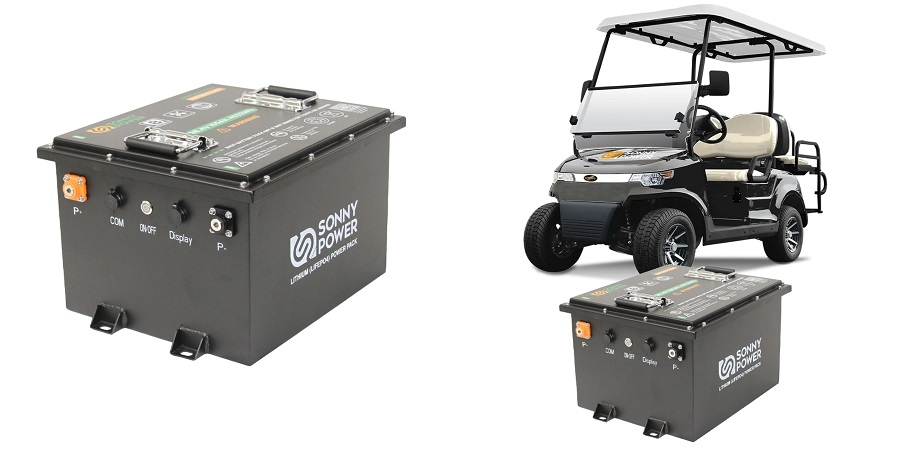
Owning a golf cart with a lead-acid battery comes with a ton of responsibilities. There’s checking water levels, cleaning corrosion off of terminals, and making sure the charger is doing its job. Though they don’t seem like much individually, they add up and require a good amount of time and effort. Replacing them with 36 volt lithium golf cart batteries pack eliminates most of these on a daily basis. Plug it in, walk away, go about the day. Fleet operators and golf courses feel this too — fewer battery chores across a dozen carts adds up to real labor saved.
Then there’s weight, which honestly surprises a lot of first-time buyers. Lithium just weighs less. Noticeably less, compared to most lead-acid equivalents sitting in the same spot. That lighter load means the cart isn’t dragging around dead weight anymore, so acceleration smooths out and hills stop feeling like such a fight for the motor. A 36 volt golf cart batteries upgrade tends to make the whole thing feel snappier the moment someone touches the pedal. Drivers who use their cart often notice this more with every round they put in.
Performance of 36 Volt Lithium Golf Cart Batteries
Anyone shopping for a replacement battery ends up asking about range sooner or later. A decent lithium pack doesn’t dump energy unevenly as it drains — it stays consistent, which means a driver actually knows how much juice is left rather than guessing. That’s the real appeal of a 36-volt lithium golf cart battery pack: planning a full round gets a lot less stressful. None of that erases the basics, though. Terrain still matters. So does how heavy the passengers are, how someone drives, and the capacity of the pack itself.
Acceleration can also tell us something. With lithium, you can get large currents without large drops in voltage that plague older lead-acid batteries. In layman’s terms, that means better acceleration, and more power to climb hills. A cart with lithium underneath just reacts faster leaving a stop sign or working up an incline — something that matters a lot more on a bumpy, uneven course than a flat one.
LiFePO4 chemistry shows up constantly in this conversation for good reason. It’s stable, it lasts through a ton of charge cycles, and pairing it with a solid battery management system means the charging process stays monitored and protected automatically. Families running one cart, commercial operators running twenty — either way, those safety features make day-to-day use a lot less of a headache.
Choosing 36 Volt Golf Cart Batteries for Your Cart
Build quality is its own rabbit hole. A pack worth trusting needs a solid enclosure and a battery management system that’s actually doing its job — watching the cells, stepping in during charging, catching problems before they become expensive ones. A bargain battery might look tempting on a price tag, but cheap components have a way of costing more lately, once something fails that shouldn’t have.
A 36-volt lithium golf cart battery pack also means a lot less fussing over the cart in general. Watering’s gone. Most of the maintenance checklist tied to lead-acid just vanishes. For someone who’s out on the cart constantly, that alone might be reason enough to make the jump — fewer little tasks to remember really does add up over a season.
Maintenance and Long-Term Value
Compare the maintenance side by side, and lithium wins easily. No water to add, no equalizing charges, no scrubbing terminals clean every few weeks. Owners get to just charge the thing correctly and follow whatever the manufacturer recommends — that’s basically the whole job. For a fleet running several carts at once, cutting out all those repetitive tasks saves genuine hours over the course of a season.
Charging itself stays pretty uncomplicated too, assuming the right charger gets used from the start. A lot of lithium packs ship with built-in management systems that handle monitoring and cell protection without anyone having to think about it. Installing a 36 volt lithium golf cart batteries pack doesn’t have to turn into some elaborate electrical project, either — not as long as the replacement actually matches what the cart already runs on.
