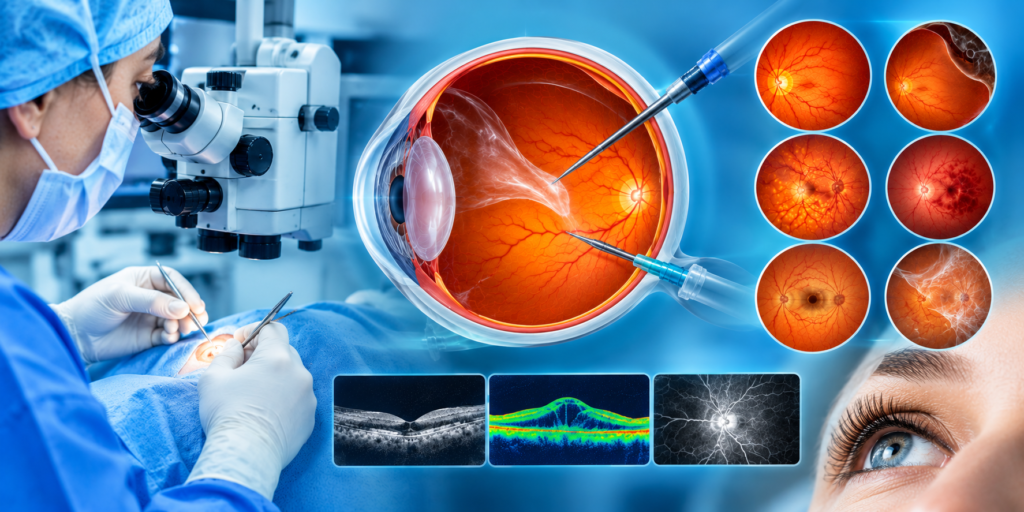
Our eyes depend on a healthy retina to send clear images to the brain. The retina is a thin layer of tissue at the back of the eye that detects light and helps us see shapes, colors, and details. The vitreous is a clear, gel-like substance that fills the inside of the eye and sits close to the retina.
Sometimes, problems affecting the retina or vitreous can cause blurred vision, dark spots, flashes of light, or even sudden vision loss. While some conditions can be managed with medication, injections, or regular eye exams, others may require surgery to protect vision or repair damage.
Vitreoretinal Surgery Provo may be a relevant search for people looking for specialized care for these conditions. Understanding when retinal surgery may be needed can help patients recognize warning signs and discuss the right treatment with a retinal specialist.
What Is Vitreoretinal Surgery?
Vitreoretinal surgery is a type of eye surgery used to treat problems involving the retina and vitreous. One common procedure is called a vitrectomy. During this procedure, a surgeon removes some or all of the vitreous gel to reach the retina and repair a problem inside the eye.
Depending on the condition, the surgeon may repair a retinal tear, remove scar tissue, close a hole in the retina, or use a gas bubble or silicone oil to help the retina stay in the correct position.
Not everyone with a retinal condition needs surgery. The decision depends on the type of problem, how much it affects vision, whether the condition is getting worse, and the risk of permanent damage. Some conditions need urgent treatment, while others can be monitored over time.
Conditions That May Require Vitreoretinal Surgery
Several eye conditions can affect the retina or vitreous. Surgery is considered when the problem cannot be managed well enough with other treatments or when a procedure is needed to prevent further damage.
1. Retinal Detachment
A retinal detachment occurs when the retina separates from the tissue that supports it at the back of the eye. This can interrupt its blood and nutrient supply and lead to permanent vision loss if treatment is delayed.
Common warning signs include sudden flashes of light, a sudden increase in floaters, or a dark shadow that looks like a curtain across your vision. Some people also notice blurred vision or a missing area in their field of sight.
Treatment depends on the size and location of the detachment. A small retinal tear may be treated with laser or freezing treatment before detachment develops. If the retina has detached, surgery may be needed to put it back in place. Options include vitrectomy, scleral buckle surgery, or a gas bubble procedure. A retinal detachment needs urgent medical assessment.
2. Macular Hole
The macula is the central part of the retina that helps you see fine details, read, recognize faces, and perform close-up tasks. A macular hole is a small opening in this area. It may develop as the vitreous pulls on the retina during age-related changes inside the eye.
People with a macular hole may notice blurred central vision, difficulty reading small print, or straight lines that appear bent or wavy. Some may see a dark or empty spot in the center of their vision.
When a macular hole affects vision, a surgeon may recommend a vitrectomy. The surgeon removes the vitreous gel, may gently remove a thin layer of tissue around the hole, and often places a gas bubble inside the eye to help the hole close. Patients may need to keep their head in a specific position during recovery, depending on the surgical plan.
3. Epiretinal Membrane or Macular Pucker
An epiretinal membrane is a thin layer of scar-like tissue that forms on the surface of the retina. When this tissue contracts, it can wrinkle or pull on the retina. This condition is also known as a macular pucker.
Mild cases may not cause noticeable problems and can often be monitored with regular eye exams. However, some people develop distorted vision, blurred central vision, or difficulty reading and recognizing details.
If these symptoms begin to interfere with daily activities, a retinal specialist may recommend surgery. During a vitrectomy, the surgeon removes the membrane from the retinal surface to reduce pulling and distortion. Surgery is not needed for every epiretinal membrane, so the decision depends on symptoms and examination findings.
4. Vitreous Hemorrhage
A vitreous hemorrhage occurs when blood enters the clear gel inside the eye. The blood can block light from reaching the retina, causing sudden blurry vision, dark spots, cobweb-like shapes, or a major reduction in sight.
Diabetic retinopathy, retinal tears, eye injuries, and abnormal blood vessels can cause bleeding inside the eye. The treatment depends on the cause and the amount of bleeding. In some cases, the blood clears on its own while the specialist monitors the eye. Other cases require injections, laser treatment, or surgery.
If the blood does not clear, or if a retinal tear or detachment is present, a vitrectomy may be needed. This procedure removes the blood-filled vitreous so the surgeon can examine the retina and treat the underlying problem. Sudden vision loss or new floaters should be assessed promptly.
5. Advanced Diabetic Retinopathy
Diabetic retinopathy develops when high blood sugar damages the small blood vessels in the retina. As the condition progresses, abnormal blood vessels may grow and bleed. Scar tissue can also form and pull on the retina, sometimes causing a tractional retinal detachment.
Many people with diabetic retinopathy can be treated with injections, laser therapy, and better control of blood sugar and other health factors. Surgery may be considered when there is significant bleeding inside the eye, scar tissue pulling on the retina, or a retinal detachment that threatens vision.
Vitreoretinal surgery can remove blood, release traction, and repair certain types of retinal damage. Early detection through regular dilated eye exams is important because diabetic retinopathy may progress before a person notices changes in vision.
6. Vitreomacular Traction
Vitreomacular traction occurs when the vitreous gel starts to separate from the retina but remains attached to the macula. This attachment can pull on the central retina and change its shape.
Symptoms may include blurred vision, distorted lines, or difficulty focusing on fine details. Some cases remain stable and can be monitored. In other cases, the pulling becomes strong enough to damage the macula or contribute to a macular hole.
A specialist may recommend vitrectomy if the traction causes significant vision problems or structural damage. The decision is usually based on an eye examination, optical coherence tomography (OCT) scans, and the effect of symptoms on daily life.
Common Conditions and Possible Treatments
The table below provides a general overview of conditions that may require retinal surgery. The appropriate treatment depends on each patient’s examination and diagnosis.
| Eye condition | Possible signs | Treatment that may be considered |
| Retinal detachment | Flashes, floaters, shadow in vision | Vitrectomy, scleral buckle, or gas bubble procedure |
| Macular hole | Blurred central vision, distorted lines | Vitrectomy, often with a gas bubble |
| Epiretinal membrane | Wavy lines, blurred central vision | Observation or membrane removal surgery |
| Vitreous hemorrhage | Dark spots, cobwebs, sudden blurred vision | Observation, injections, laser, or vitrectomy |
| Advanced diabetic retinopathy | Bleeding, scar tissue, reduced vision | Injections, laser, or vitrectomy |
| Vitreomacular traction | Distorted or blurred central vision | Monitoring or vitrectomy, depending on severity |
These treatments are not interchangeable, and surgery is not always the first option. A retinal specialist can explain which approach is appropriate for the condition.
How Do Doctors Decide If Retinal Surgery Is Needed?
A retinal specialist examines the eye to understand the cause and severity of the problem. The evaluation may include a dilated eye exam, which allows the doctor to view the retina, and an OCT scan, which creates detailed images of the retinal layers.
Ultrasound imaging may also be used when blood inside the eye blocks a clear view of the retina. Other tests may be needed depending on the diagnosis.
The doctor considers whether the condition is stable or progressing, how much vision has changed, and whether delaying treatment could increase the risk of permanent damage. Some conditions require urgent surgery, while others can be managed with observation, medication, injections, or laser treatment.
What Should You Expect After Vitreoretinal Surgery?
Recovery depends on the procedure and the condition being treated. Some patients go home on the same day, while others need additional monitoring. Your surgeon may prescribe eye drops and explain how to protect your eye while it heals.
If a gas bubble is placed inside the eye, you may need to maintain a specific head position. You must not fly or travel to high altitudes while the gas bubble remains in the eye unless your surgeon confirms it is safe. Gas can expand when air pressure drops and cause a dangerous rise in eye pressure. You may also need to avoid heavy lifting or strenuous activity for a period.
Follow-up appointments help the surgeon check healing, eye pressure, and retinal position. Contact your surgical team promptly if you experience worsening vision, severe pain, or new flashes and floaters after surgery.
When Should You Seek Emergency Eye Care?
Some retinal problems can worsen quickly and need immediate attention. Do not wait for a routine appointment if you notice sudden changes in your vision.
Seek urgent eye care if you experience a sudden increase in floaters, flashes of light, a dark curtain across your vision, or sudden loss of sight. These symptoms may indicate a retinal tear or detachment. Early assessment can help the specialist determine whether urgent treatment is needed.
Frequently Asked Questions
1. What is the most common reason for vitreoretinal surgery?
Retinal detachment, macular holes, epiretinal membranes, vitreous hemorrhage, and advanced diabetic retinopathy are among the conditions that may require vitreoretinal surgery. The need for surgery depends on the condition’s severity and its effect on vision.
2. Is vitreoretinal surgery always necessary for retinal problems?
No. Some retinal conditions can be managed with regular monitoring, medication, injections, or laser treatment. Surgery may be recommended when the condition causes significant damage, affects vision, or needs repair to prevent further complications.
3. How long does it take to recover from vitreoretinal surgery?
Recovery varies depending on the procedure and the condition being treated. Some patients recover over several weeks, while others need a longer period for their vision to stabilize. Following your surgeon’s instructions and attending follow-up appointments are important parts of recovery.
4. Can vitreoretinal surgery restore lost vision?
Vitreoretinal surgery can repair certain retinal problems and may improve or preserve vision. However, the results depend on the condition, the amount of retinal damage, and how early treatment is provided. Vision does not always return to its previous level.
5. How do I know if I need vitreoretinal surgery in Provo?
If you have been diagnosed with a retinal condition or have new symptoms affecting your vision, a retinal specialist can examine your eyes and explain the available treatments. Surgery is recommended only when it is appropriate for your specific condition.
Conclusion
Vitreoretinal surgery can play an important role in treating serious eye conditions, including retinal detachment, macular holes, vitreous hemorrhage, and advanced diabetic retinopathy. However, not every retinal problem requires surgery. The right treatment depends on the diagnosis, the severity of the condition, and the risk of further vision loss.
Recognizing warning signs and seeking timely medical attention can help protect your eyesight. If you are looking for Vitreoretinal Surgery Provo, the Retina and Vitreous Surgeons of Utah team provides specialized care for conditions affecting the retina and vitreous. A retinal evaluation can help determine the most suitable treatment for your eye health and vision needs.
