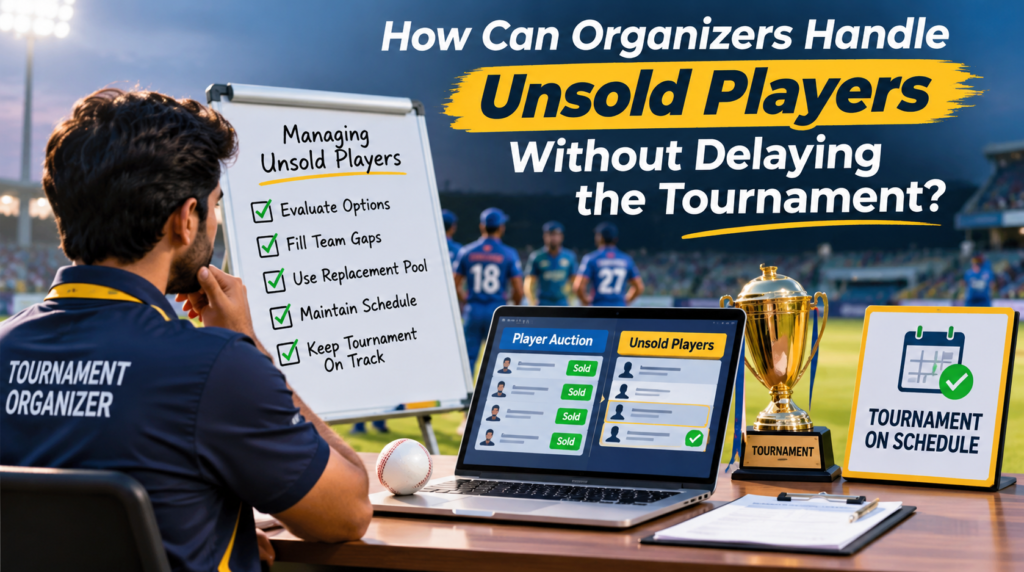
Unsold players are a normal part of cricket auctions, but poor handling can disrupt the entire schedule. Organizers can prevent delays by setting clear auction rules, tracking unsold players, managing reserve lists, and conducting structured review rounds. Cricket player auction software makes this process easier by keeping player records, bidding results, and team requirements organized in one place.
Why Do Players Remain Unsold in Cricket Auctions?
Players remain unsold when teams have limited budgets, completed their preferred selections, or cannot find a suitable role for a particular player. Sometimes, the issue is not player quality but a mismatch between team requirements and auction strategy.
For example, a team may need an experienced fast bowler but spend most of its budget on batters. A quality bowler might then remain unsold simply because teams have different priorities.
Common reasons include:
- Budget limitations: Teams cannot afford the player’s base price.
- Squad composition: Teams have already filled the required position.
- Role mismatch: The available player does not fit a team’s playing strategy.
- Auction timing: Teams may prioritize popular players early and leave fewer resources for later selections.
- Limited information: Organizers or team representatives may overlook players because of incomplete profiles.
Understanding these reasons helps organizers plan a better second-round process instead of treating every unsold player as an auction problem.
How Can Cricket Player Auction Software Help Manage Unsold Players?
Cricket player auction software helps organizers record unsold players automatically and maintain accurate auction information without interrupting live bidding.
Instead of relying on handwritten notes or separate spreadsheets, organizers can use a centralized system to monitor player status, team selections, available budgets, and remaining squad positions.
Maintain an Accurate Unsold Player List
Every player who receives no valid bid should be marked as unsold. The system should preserve important details, including:
- Player name and registration number
- Playing role and category
- Base price
- Auction status
- Relevant player information
This prevents confusion when organizers revisit the list later.
Track Team Requirements and Remaining Budgets
A player may remain unsold because teams have already filled a particular role. Tracking squad composition and available budgets helps organizers identify which teams could still benefit from that player.
For instance, if two teams still need wicketkeepers, organizers can identify those requirements before reopening bidding for unsold players.
The key is to make information accessible without giving any team an unfair advantage.
What Is the Best Way to Conduct an Unsold Player Round?
The best approach is to complete the initial auction first, review the remaining squad requirements, and then conduct a dedicated unsold player round under predefined rules.
A structured process prevents organizers from repeatedly stopping the auction whenever a player receives no bids.
Follow a Clear Review Process
A practical sequence looks like this:
- Complete the initial player list: Avoid unnecessary interruptions after every unsold result.
- Freeze the unsold list: Record all players who received no valid bids.
- Review team requirements: Check remaining squad, player roles, and available budgets.
- Announce the second round: Inform all team representatives about the process and timing.
- Reopen eligible players: Allow teams to bid according to the published auction rules.
- Finalize the results: Update player statuses and confirm squad lists.
For example, consider a tournament with eight teams and a fixed squad limit. After the main auction, organizers discover that several players remain unsold while three teams still have open squad positions.
Rather than reopening the entire auction, they can conduct one scheduled round covering eligible unsold players. This keeps the process focused and reduces unnecessary waiting.
Which Auction Rules Prevent Delays and Unfair Bidding?
Clear auction rules prevent disputes by explaining what happens when nobody bids, when players can return to the auction, and how teams can make further selections.
Organizers should publish these rules before bidding begins.
Important rules include:
- Unsold status: Define when a player is officially marked unsold.
- Second-round eligibility: Explain whether all unsold players or only selected categories can return.
- Reserve price: Clarify whether the original base price remains unchanged.
- Budget restrictions: Ensure teams cannot exceed their allocated purse.
- Squad limits: Prevent teams from selecting more players than permitted.
- Tie-breaking procedures: Establish how organizers resolve equal or disputed bids.
- Final selection deadline: Set a clear closing time for additional selections.
One common mistake is changing rules during the second round. Even a small adjustment to base prices or eligibility can create disagreements.
If an exception becomes necessary, organizers should communicate it to every team and apply it consistently.
How Can Organizers Keep the Auction Moving During Live Bidding?
Organizers can maintain momentum by separating player registration, bidding decisions, and unsold-player reviews into clearly defined stages.
The auctioneer should not spend several minutes discussing every player who receives no bids. Instead, they can announce the unsold status, record the result, and move to the next player.
A few practical measures make a noticeable difference:
Assign Clear Responsibilities
Give each person a defined role:
- The auctioneer manages bidding and announcements.
- The auction administrator records selections and unsold results.
- Team representatives monitor budgets and squad requirements.
- The tournament coordinator resolves procedural questions.
Use Real-Time Auction Records
Digital auction management reduces the need to repeatedly verify handwritten records. Organizers can quickly check which players are available, which teams have selected them, and how many squad positions remain.
This is particularly useful when several teams participate and the player list contains multiple categories.
Establish Time Limits
Set reasonable bidding windows and define how long teams have to confirm selections. Avoid leaving the auction open-ended because one team needs additional discussion.
What Common Mistakes Should Organizers Avoid?
Even a well-planned auction can experience delays when organizers overlook basic administrative details.
Some mistakes are especially disruptive:
- Reopening the auction repeatedly: Handle unsold players in scheduled rounds instead.
- Losing track of player status: Maintain one verified record of sold, unsold, and withdrawn players.
- Ignoring team budgets: Check available funds before confirming selections.
- Allowing unclear exceptions: Apply the same published rules to every team.
- Skipping final verification: Confirm squad limits and player details before announcing completion.
Another mistake is assuming that every unsold player must be selected eventually. Teams should retain the freedom to make decisions based on their budgets and playing requirements.
A fair auction does not guarantee every player a place. It guarantees that every eligible player receives the opportunity to be considered under consistent rules.
Conclusion
Unsold players do not have to become a reason for tournament delays. Organizers can manage them efficiently through clear auction rules, centralized records, scheduled bidding rounds, and proper team-budget tracking.
Using cricket player auction software makes these responsibilities easier by reducing manual recordkeeping and helping organizers monitor auction progress. The main takeaway is simple: plan the unsold-player process before bidding starts, and your tournament auction can remain fair, organized, and on schedule.
Frequently Asked Questions
Organizers should maintain a separate unsold list, complete the initial bidding round, and review team requirements before reopening eligible players. A scheduled second round keeps the process organized and avoids repeated interruptions.
Yes. Depending on its features, cricket player auction software can record bidding outcomes, update player statuses, and maintain centralized auction records. Organizers should verify that the system supports their specific auction rules.
Yes, if the tournament’s published rules allow it. A dedicated second round gives interested teams another opportunity to select available players while maintaining consistent pricing, eligibility, and budget restrictions.