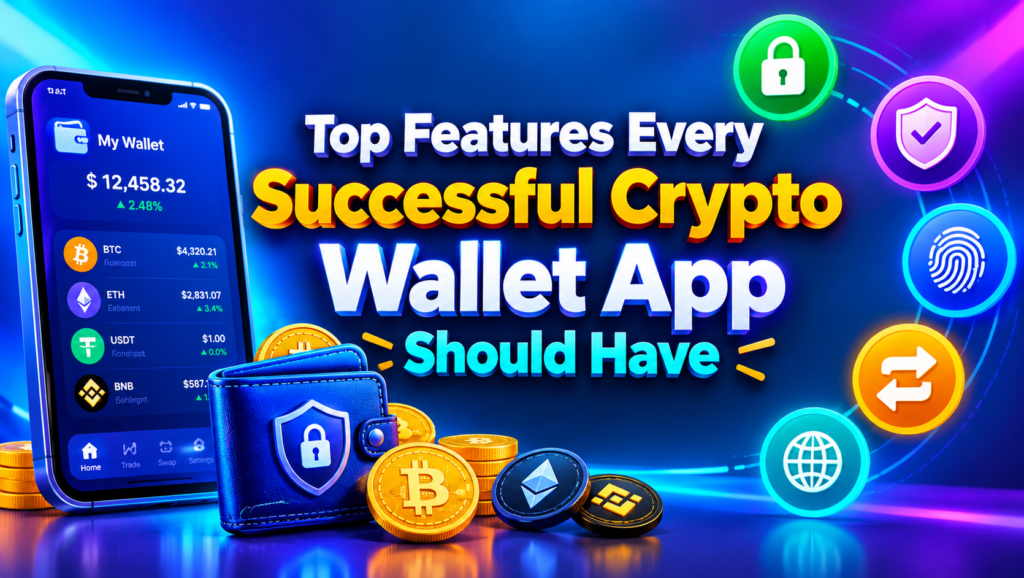
The cryptocurrency industry is evolving rapidly, and digital wallets have become an essential part of the blockchain ecosystem. From storing Bitcoin and Ethereum to managing NFTs and interacting with decentralized applications (dApps), crypto wallets allow users to manage their digital assets conveniently. As cryptocurrency adoption continues to expand, businesses are recognizing the importance of building secure, feature-rich, and user-friendly wallet applications.
However, launching a successful crypto wallet requires more than simply enabling users to send and receive digital currencies. Modern users expect advanced security, seamless transactions, multi-chain compatibility, and an intuitive interface. Businesses entering this competitive market must understand which features can make their wallet applications reliable, scalable, and attractive to users.
Whether you are a startup planning to launch your first cryptocurrency wallet or an established business expanding into Web3, choosing the right features is essential. In this article, we explore the top features every successful crypto wallet app should have and how they contribute to a better user experience.
1. Advanced Security and Private Key Management
Security is the foundation of every successful cryptocurrency wallet. Unlike traditional banking transactions, blockchain transactions are generally irreversible. Therefore, protecting users’ digital assets and private keys should be the highest priority during wallet development.
A reliable wallet application should incorporate multiple layers of security to prevent unauthorized access, data breaches, and potential financial losses.
Essential security features include:
- End-to-end encryption: Protect sensitive user information and communications.
- Secure private key storage: Keep private keys protected using appropriate device-level security or secure key management infrastructure.
- Two-factor authentication (2FA): Add another layer of verification before sensitive account activities.
- Biometric authentication: Allow users to access their wallets using fingerprint or facial recognition.
- Multi-signature authentication: Require multiple authorized approvals for selected transactions.
- Automatic session timeout: Reduce unauthorized access when users leave their wallets unattended.
For businesses, working with an experienced crypto wallet development company can help establish an appropriate security architecture based on the wallet’s custody model, target audience, and operational requirements.
2. Multi-Currency and Multi-Chain Support
Cryptocurrency users rarely limit themselves to a single digital asset or blockchain network. Many investors and traders manage different cryptocurrencies across multiple ecosystems.
A successful crypto wallet should support popular digital currencies such as Bitcoin, Ethereum, Litecoin, and other relevant cryptocurrencies. It should also provide compatibility with multiple blockchain networks.
Multi-chain functionality allows users to manage assets across supported networks without switching between different wallet applications.
Some important capabilities include:
- Support for multiple cryptocurrencies and tokens.
- Compatibility with popular blockchain networks.
- Cross-chain asset management.
- Token balance tracking across supported networks.
- Network selection and transaction fee visibility.
- Integration with decentralized applications across compatible ecosystems.
For example, a user holding Ethereum-based tokens and assets on other supported blockchain networks should be able to manage their portfolio through a unified interface.
Multi-chain compatibility also creates opportunities for businesses to expand their wallet offerings as blockchain ecosystems continue to develop.
3. User-Friendly Interface and Seamless Navigation
Even the most technologically advanced cryptocurrency wallet can struggle to attract users if its interface is complicated.
Many people entering the cryptocurrency market are unfamiliar with blockchain terminology, private keys, gas fees, and transaction confirmations. A wallet should make these processes understandable without overwhelming users.
An intuitive interface should include:
- Simple registration and onboarding.
- Easy wallet creation and import options.
- Clearly displayed cryptocurrency balances.
- Convenient send and receive functionality.
- Organized transaction history.
- Accessible settings and account management.
- Clear notifications and transaction status updates.
The overall design should prioritize simplicity while keeping advanced functionality accessible to experienced cryptocurrency users.
A well-designed interface improves user engagement, reduces transaction errors, and encourages users to continue using the application.
4. Fast and Secure Cryptocurrency Transactions
Transaction performance plays an important role in determining the overall quality of a crypto wallet application.
Users expect to send and receive digital currencies without unnecessary delays or confusing transaction processes. Although actual confirmation times depend on the underlying blockchain network, the wallet should make the transaction experience as smooth as possible.
Important transaction-related features include:
- Quick cryptocurrency transfers.
- QR code scanning for wallet addresses.
- Easy copy-and-paste functionality.
- Real-time transaction status tracking.
- Network fee estimation.
- Transaction confirmation notifications.
- Address validation and warnings.
The wallet should also provide a clear transaction summary before users approve any transfer. This summary should display the recipient address, asset, amount, network, and estimated fees.
For additional protection, transaction previews and risk warnings can help users identify suspicious requests before signing.
5. Biometric Authentication and Multi-Factor Security
Passwords alone may not provide sufficient protection for applications handling valuable digital assets.
Modern crypto wallet applications should offer additional authentication options that make unauthorized access more difficult while maintaining convenience for legitimate users.
Biometric authentication allows users to unlock their wallets using supported fingerprint or facial recognition technology.
Multi-factor authentication can provide additional verification through supported methods, such as authenticator applications or security keys.
These features are particularly useful for:
- Logging into wallet applications.
- Confirming sensitive account changes.
- Authorizing high-value transactions.
- Accessing private account information.
- Managing security settings.
However, biometric authentication should complement secure key management rather than replace it. A properly designed authentication system must protect both account access and the underlying cryptographic signing process.
6. Built-In Cryptocurrency Exchange Functionality
Modern cryptocurrency users often want more than basic storage and transfer capabilities. They also expect convenient ways to exchange one digital asset for another.
Integrating cryptocurrency exchange functionality can make a wallet application more versatile and improve user engagement.
Depending on the business model, developers can integrate centralized exchange services, decentralized exchanges (DEXs), or supported swap protocols.
Useful exchange features include:
- In-app cryptocurrency swapping.
- Real-time exchange rate information.
- Price comparison across supported providers.
- Transparent transaction fees.
- Exchange transaction history.
- Clear swap confirmations.
For example, a user holding Bitcoin may want to exchange it for another supported cryptocurrency without leaving the wallet application.
Integrating this functionality can improve convenience and create additional business opportunities. However, exchange integrations should be carefully evaluated for liquidity, security, regulatory requirements, and third-party dependency risks.
7. Real-Time Price Tracking and Portfolio Management
Cryptocurrency markets operate around the clock, and digital asset prices can change significantly within short periods.
Users therefore benefit from having access to real-time or clearly timestamped cryptocurrency market information directly within their wallet applications.
A comprehensive portfolio management feature should provide:
- Live cryptocurrency price information.
- Individual asset balances.
- Total portfolio valuation.
- Historical price charts.
- Asset allocation breakdowns.
- Portfolio performance tracking.
- Price alerts and notifications.
These features help users monitor their investments and make more informed decisions.
A visually organized dashboard can display all supported digital assets in one place, allowing users to understand their portfolio without navigating multiple screens.
Businesses can also improve engagement by offering customizable dashboards, watchlists, and personalized price notifications.
8. QR Code-Based Payments
QR code functionality makes cryptocurrency transactions faster and more convenient.
Instead of manually entering long wallet addresses, users can scan a QR code to retrieve the recipient’s payment information.
This feature is particularly useful for businesses accepting cryptocurrency payments, peer-to-peer transfers, and everyday digital transactions.
A well-developed QR payment system should support:
- QR code generation for receiving payments.
- QR code scanning for sending cryptocurrency.
- Automatic address recognition.
- Payment amount input.
- Network compatibility checks.
- Transaction confirmation before submission.
For merchants, QR-based payments can simplify checkout experiences and provide another option for accepting digital currencies.
9. Backup and Wallet Recovery Options
Losing access to a cryptocurrency wallet can result in serious consequences, especially when users do not have a reliable recovery mechanism.
A successful wallet application should provide secure backup and recovery options while clearly explaining the responsibilities associated with its custody model.
Important capabilities include:
- Recovery phrase generation and verification.
- Secure wallet backup instructions.
- Encrypted backup options where appropriate.
- Device migration support.
- Recovery procedures for lost or damaged devices.
- Clear warnings about protecting recovery credentials.
Non-custodial wallets should explain that users are responsible for safeguarding their recovery phrases. Custodial and MPC-based wallets may offer different recovery workflows depending on their architecture.
The recovery process should be carefully designed to prevent unauthorized account restoration while ensuring legitimate users can regain access.
10. DeFi and Web3 Integration
Decentralized finance (DeFi) and Web3 have expanded the functionality of cryptocurrency wallets beyond basic asset storage.
Users increasingly expect wallets to connect with decentralized applications and interact with blockchain-based services.
Integrating Web3 functionality can help businesses create more versatile wallet applications.
Some valuable integrations include:
- Decentralized exchange connectivity.
- DeFi lending and borrowing platforms.
- Staking functionality.
- NFT marketplace integration.
- Web3 dApp connectivity.
- Smart contract interaction.
- Token approval and management tools.
However, connecting to decentralized applications introduces additional risks. Wallets should display understandable permission requests, transaction details, and warnings before users approve smart contract interactions.
These capabilities can transform a basic cryptocurrency wallet into a broader digital asset management platform.
11. Push Notifications and Transaction Alerts
Keeping users informed about wallet activity is another important feature of a successful cryptocurrency application.
Push notifications help users stay updated without constantly opening the application.
A wallet can provide notifications for:
- Successful cryptocurrency transactions.
- Incoming and outgoing payments.
- Pending transaction confirmations.
- Significant asset price changes.
- Suspicious account activity.
- Security-related updates.
- Wallet login attempts.
Users should be able to customize notification preferences according to their needs.
Notifications should also avoid exposing sensitive account information on locked device screens. This helps maintain privacy while ensuring users receive important updates.
12. Scalability and Future-Ready Architecture
A cryptocurrency wallet should be designed to accommodate future business growth and changing blockchain requirements.
As the number of users increases, the application must continue delivering consistent performance, reliable transaction processing, and secure account management.
Scalable architecture should consider:
- Modular application development.
- Reliable blockchain node connectivity.
- Efficient API integrations.
- Secure backend infrastructure.
- Database optimization.
- Monitoring and performance management.
- Support for additional blockchain networks.
- Regular security updates.
Businesses should also consider how their wallet architecture will accommodate emerging technologies and new digital asset standards.
Building a scalable application from the beginning can reduce future redevelopment costs and make it easier to introduce additional features.
13. Regulatory Compliance and User Privacy
Regulatory requirements are an important consideration for businesses launching cryptocurrency wallet applications.
Depending on the wallet’s operating jurisdictions, custody model, and financial services, different legal and compliance obligations may apply.
Some applications may require identity verification, transaction monitoring, sanctions screening, or other compliance measures.
Important considerations include:
- Know Your Customer (KYC) requirements where applicable.
- Anti-Money Laundering (AML) controls where applicable.
- Data privacy and protection.
- Secure user information management.
- Transaction monitoring.
- Applicable regional licensing requirements.
It is important to understand that not every non-custodial wallet has the same compliance obligations as a custodial wallet or cryptocurrency exchange. Requirements should be assessed based on the specific product and jurisdictions in which it operates.
A compliance-focused approach can help businesses build trust and establish a sustainable presence in the digital asset industry.
How to Choose the Right Crypto Wallet Development Partner?
Selecting the right development partner is just as important as deciding which features to include in your cryptocurrency wallet.
A reliable crypto wallet development company should understand blockchain architecture, wallet security, smart contract integration, and the technical requirements of different cryptocurrency ecosystems.
Before selecting a development partner, consider the following factors:
1. Blockchain Development Expertise: Evaluate the company’s experience with different blockchain networks, cryptocurrency protocols, and wallet architectures.
2. Security Capabilities: Check whether the development team follows secure coding practices, performs security testing, and understands private key management.
3. Customization Options: Choose a partner capable of developing wallet functionality based on your business objectives and target audience.
4. Integration Experience: Ensure the team can integrate relevant APIs, payment gateways, exchange services, and decentralized applications.
5. Scalability and Technical Support: Consider whether the development partner can support future upgrades, performance optimization, and ongoing maintenance.
6. Portfolio and Industry Experience: Review previous projects, technical capabilities, and relevant client experience before making a decision.
Choosing the right partner can help reduce development risks and create a wallet application that meets both current and future business requirements.
Conclusion
Building a successful cryptocurrency wallet app requires a combination of advanced security, user-friendly design, efficient transaction functionality, and flexible blockchain integration.
Features such as multi-chain support, biometric authentication, private key protection, real-time portfolio tracking, DeFi connectivity, and reliable recovery options can significantly improve the overall wallet experience.
However, the ideal feature set depends on your target audience, business model, security requirements, and supported blockchain networks. A startup building a simple non-custodial wallet may have different priorities from an enterprise developing an institutional digital asset management platform.
This is where partnering with an experienced crypto wallet development company can make a difference. The right technical team can help transform your business idea into a secure, scalable, and feature-rich cryptocurrency wallet.