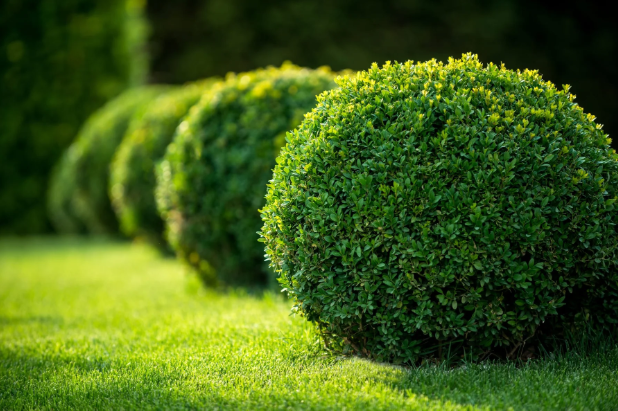
A boundary does more than separate one part of a property from another. It can guide movement, frame views, protect a seating area, and give the garden a defined outline. Living hedges or hedge plants perform these functions while adding foliage and habitat that a plain fence cannot provide. Their effectiveness depends on choosing suitable species and establishing them as a continuous planting rather than a row of unrelated specimens. Before buying, consider the intended height, available space, desired appearance, and amount of time available for trimming.
Decide what the hedge needs to do
The purpose of the planting should guide the selection process. A formal front boundary may require compact foliage that responds well to regular trimming. A garden screen may need taller growth and dense branching, while a low border can simply define a pathway or divide planting beds.
Different hedge plants serve different roles:
- Privacy screening: Evergreen varieties can retain foliage through the year and reduce direct views into the garden.
- Boundary definition: Compact shrubs can create a clear edge without taking up excessive space.
- Wind filtering: A suitably designed hedge can slow wind across an exposed area.
- Wildlife value: Flowering and berry-producing species can provide food or shelter for insects and birds, depending on the plant.
A hedge does not automatically block all noise or wind. Its performance depends on height, depth, density, continuity, and the surrounding landscape.
Select the right growth habit
Formal hedges are maintained through regular trimming to create a defined shape. They usually need plants with dense branching and the ability to produce new growth after pruning. Informal hedges retain more of their natural outline and may combine different flowering or foliage characteristics.
Evergreen species are useful when year-round coverage matters. However, they can require more consistent maintenance, and some conifers do not recover well if cut back into older, leafless wood. Deciduous shrubs offer seasonal variation and may be easier to renovate, but they provide less visual screening after leaf fall.
The mature form matters just as much as the foliage type. A naturally narrow plant may fit a restricted strip more effectively than a broad shrub that needs repeated cutting to stay within bounds.
Plan spacing before digging
Plant spacing is one of the most common causes of disappointing hedge development. If plants are placed too far apart, the boundary may take longer to close. If they are crowded excessively, their roots and canopies compete, potentially weakening growth and reducing airflow.
Use the recommended spacing for the selected species and consider its expected mature width. Formal hedges are often planted closer than informal arrangements, but there is no single spacing that suits every shrub. A nursery-grown plant’s current container size is not a reliable guide to the space it will eventually need.
Mark the planting line before installation. For a straight boundary, use a string line to maintain consistent alignment. Position the row far enough inside the property that future growth and maintenance will not encroach on neighboring land or public access areas.
Prepare the planting strip as one area
Instead of digging isolated holes in compacted ground, prepare the full planting strip where practical. Remove grass and weeds, loosen the soil, and incorporate suitable organic matter if the ground needs improvement. Avoid adding concentrated fertilizer directly into hedge plants’ planting holes, where it may damage developing roots.
Set each plant at its previous growing depth. Backfill around the root ball, firm the soil gently, and water thoroughly to settle it. Apply mulch along the row to limit weed growth and conserve moisture, leaving a gap around each stem.
Newly installed hedges need close attention during establishment. Water deeply when the root zone begins to dry, adjusting the schedule for rainfall and soil type. Plants should not remain waterlogged, particularly in heavy soils.
Conclusion
Inspect the row regularly for uneven growth, pests, disease symptoms, and dry patches. If one plant declines, identify the cause before replacing it; neighboring plants may be affected by the same drainage or watering issue. Use clean, sharp tools and avoid removing more foliage than the species can replace. A well-designed hedge is built gradually through appropriate selection, spacing, establishment, and pruning. Compare the available hedge plants at Plant Clearance with the dimensions and growing conditions of your site before making a choice. That preparation helps create a boundary that remains practical as it matures.