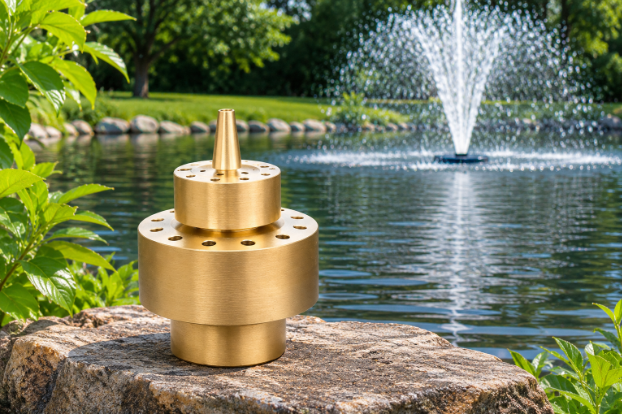
A fountain’s appearance depends on more than its pump and water supply. The component that shapes the outgoing stream also influences how the display looks and performs. Selecting a suitable brass nozzle requires attention to connection size, material, water flow, and the type of effect required. These details matter in decorative garden features as well as larger pond installations. A well-matched component can help create a steady, defined stream while fitting securely into the existing plumbing. Understanding the practical considerations behind nozzle selection makes it easier to plan a fountain system that operates consistently.
Why Brass Is Used in Nozzles
Material selection is an important part of fountain design because components remain exposed to water, changing temperatures, and continuous operation. Brass is commonly used for plumbing and water-feature fittings because it is a durable metal that can be machined into precise shapes and threaded connections.
A brass nozzle can be suitable for installations where a firm, clearly directed water stream is required. Its rigid construction helps the outlet retain its shape during normal use. This is useful for vertical jet displays, where an uneven or distorted outlet may affect the appearance of the stream.
Material alone, however, does not determine performance. The pump, pipework, water pressure, and nozzle opening all influence the final result. A durable fitting cannot compensate for a pump that is incorrectly sized or a system that supplies insufficient flow.
Understanding the 1.5-Inch Threaded Connection
Connection compatibility should be checked before purchasing a replacement part. The product referenced here has a 1.5-inch threaded connection, which makes the fitting relevant to fountain systems designed to accept that size.
The measurement should be compared with the actual connection on the pipe, fitting, or fountain assembly. Nominal pipe sizes and measured thread dimensions are not always identical, so checking the existing component is important. Buyers should also confirm that the thread type and fitting arrangement are compatible.
A secure connection helps prevent leakage and supports reliable operation. Forcing mismatched threads together can damage the fitting or create a poor seal. If the existing system uses an adapter, its dimensions and condition should be checked as well.
How Nozzle Design Affects the Water Display
The outlet shape determines how water leaves the fitting. A narrow, unobstructed opening can produce a more concentrated stream, while other nozzle designs may distribute water into wider or more decorative patterns.
A vertical jet is often selected when the goal is a straightforward column of water. Its appearance depends on several factors:
- Pump capacity: The pump must deliver enough water for the intended height and volume.
- Operating pressure: Pressure influences the force and stability of the stream.
- Outlet condition: Deposits or debris can interrupt the flow and create an irregular pattern.
- Installation position: A level and properly aligned fitting helps maintain the intended direction.
A brass nozzle should therefore be considered as one part of a complete hydraulic arrangement rather than as an independent solution. The expected display needs to be matched with the pump and pipework.
Installation and Maintenance Considerations
Before installation, turn off the pump and release pressure from the relevant section of the system. Inspect the connection for damaged threads, corrosion, or debris. Clean the mating surfaces and use a sealing method appropriate for the fitting and plumbing arrangement.
The fitting should engage smoothly. If resistance occurs immediately, check for cross-threading or incompatible connections instead of applying additional force. Once installed, restart the system gradually and inspect the joint for leaks.
Routine maintenance helps preserve consistent water movement. Mineral deposits, algae, and small particles can collect around an outlet, particularly in outdoor installations. Periodic inspection and careful cleaning can help prevent partial blockage. Avoid tools or abrasive methods that may damage the opening or threaded surfaces.
It is also useful to inspect the pump intake and filtration arrangement. Debris entering the plumbing can affect flow and may obstruct the outlet. Cleaning the wider system can be just as important as maintaining the fitting itself.
Matching the Component to the Fountain Application
The right selection depends on the fountain’s purpose and operating conditions. A small ornamental feature may require a different flow rate from a large pond display. Water depth, pump location, pipe diameter, and desired stream height should all be considered before choosing a replacement.
For an existing installation, checking the old component’s dimensions can help narrow the options. For a new project, the pump and plumbing should be planned together so the outlet receives a suitable supply of water. These checks reduce the likelihood of buying a part that fits physically but does not create the desired effect.
Conclusion
A fountain performs best when its fittings, pump, and plumbing work as a coordinated system. Material strength, thread compatibility, outlet condition, and water pressure all influence the final display. Checking these details before installation can prevent leaks, uneven flow, and avoidable replacements. Regular cleaning also helps maintain a clear stream and dependable operation. A carefully selected fountain nozzle supports the intended water effect while fitting the practical requirements of the installation.