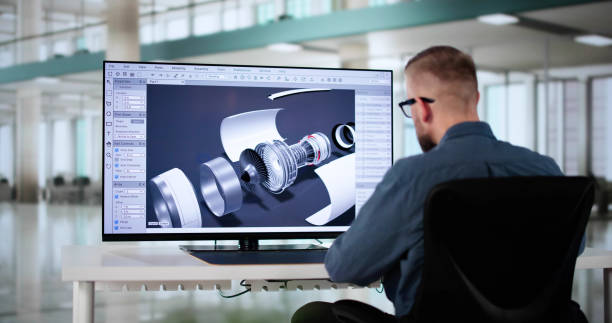
In the fast-paced world of manufacturing, staying ahead of the competition requires constant innovation and adaptation to new technologies. One such transformative technology is 3D CAD (Computer-Aided Design) product design solutions. By leveraging these tools, manufacturing industries can enhance productivity, precision, and flexibility, all while reducing costs and time-to-market. This article delves into the top benefits of adopting 3D CAD product design solutions, exploring how it revolutionizes product development, streamlines manufacturing processes, and improves overall product quality.
What is 3D CAD?
3D CAD design and manufacturing refers to the use of digital tools to create detailed three-dimensional models of products. These tools allow designers and engineers to create, analyze, and modify designs before production, providing a virtual representation of the product. CAD software has become essential for industries ranging from automotive to aerospace, as it facilitates efficient product design and development.
1. Enhanced Design Accuracy and Precision
One of the most significant advantages of 3D CAD product design solutions is the enhanced accuracy and precision they offer. Traditional design methods, such as hand-drawn sketches or physical prototypes, can introduce errors, leading to costly mistakes during manufacturing. With 3D CAD, however, the design is digital, allowing for exact measurements and precise specifications.
Engineers and designers can check for errors in real-time, making it easy to adjust dimensions, materials, and other variables. This results in fewer mistakes, faster prototyping, and reduced need for rework, ultimately ensuring that the final product meets the required specifications and performs optimally.
2. Improved Collaboration and Communication
In the past, product design required physical drawings and blueprints, which were often difficult to share and interpret, especially when teams were spread out across different locations. 3D CAD design solutions solve this problem by providing a digital platform that can be accessed remotely by designers, engineers, and stakeholders. This enables seamless collaboration among teams, improving communication and decision-making.
For example, with cloud-based CAD tools, team members can view, comment, and update designs in real-time, regardless of their physical location. This fosters better teamwork, ensures everyone is on the same page, and accelerates the decision-making process. The ability to easily share and revise designs also reduces the chances of miscommunication, further reducing errors in the final product.
3. Faster Time-to-Market
In a competitive market, time is a critical factor. Manufacturers need to get their products to market quickly to meet customer demands and capitalize on emerging trends. 3D CAD solutions streamline the design process, allowing manufacturers to create and test prototypes faster than ever before.
By using 3D modeling and simulation tools, designers can virtually test the product’s functionality, durability, and performance before physically creating it. This reduces the time spent on physical prototyping, testing, and revisions. In addition, the ability to use 3D printing for product design accelerates the prototyping phase, enabling companies to produce functional prototypes in a matter of days instead of weeks or months.
This quick turnaround time allows manufacturers to shorten their product development cycles, launch products faster, and stay ahead of the competition.
4. Cost Efficiency
Cost savings are a major driving force behind the adoption of 3D CAD design and manufacturing. The ability to simulate and test products virtually before committing to physical production significantly reduces the costs associated with traditional prototyping methods.
For example, with traditional manufacturing processes, creating a prototype often involves expensive materials and labor. With 3D printing for product design, manufacturers can print prototypes at a fraction of the cost, using less material and avoiding the need for large-scale production runs. Moreover, since errors can be caught and corrected early in the design process, manufacturers can avoid costly production delays and material waste.
In the long term, adopting 3D CAD design solutions leads to reduced operational costs, making it an investment that pays off by improving overall profitability.
5. Enhanced Product Innovation
3D CAD solutions open up new possibilities for innovation. Designers have more freedom to experiment with shapes, materials, and functions that might have been difficult or impossible to achieve using traditional methods. The digital nature of 3D CAD also allows for rapid iteration, enabling manufacturers to explore multiple design alternatives quickly and efficiently.
For example, the software can simulate the behavior of different materials under various conditions, helping designers select the most appropriate materials for their products. Additionally, by incorporating features such as generative design, where the software automatically generates design options based on specified parameters, manufacturers can discover new and innovative ways to solve design challenges.
This level of flexibility and experimentation fosters creativity and allows manufacturers to push the boundaries of product design, leading to more innovative products and a competitive edge in the marketplace.
6. Streamlined Manufacturing Process
3D CAD design solutions also enhance the manufacturing process by providing detailed, precise instructions for production. These solutions can generate 2D drawings, CNC (Computer Numerical Control) files, and other manufacturing documents directly from the 3D model. This eliminates the need for manual drafting, reducing the chances of errors during the production process.
In addition, 3D CAD software can integrate with other manufacturing systems, such as ERP (Enterprise Resource Planning) and PLM (Product Lifecycle Management) software, to create a fully digital workflow. This integration ensures that all departments involved in the production process—such as engineering, procurement, and manufacturing—are working with the same up-to-date design files, improving efficiency and reducing the risk of miscommunication.
Moreover, the digital nature of 3D CAD allows manufacturers to utilize advanced manufacturing technologies such as additive manufacturing (3D printing) and CNC machining. These technologies allow for highly customized, efficient production runs, enabling manufacturers to create complex parts with less waste and greater precision.
7. Better Customization and Personalization
The demand for customized and personalized products is growing, and 3D CAD solutions make it easier than ever to meet this demand. By using 3D CAD design tools, manufacturers can quickly adjust designs to meet specific customer requirements or create bespoke products without significant changes to the production process.
For example, a company might use 3D CAD software to design a custom part for a customer or modify an existing product to suit a particular application. This level of customization can be achieved more efficiently and cost-effectively compared to traditional methods, providing manufacturers with the flexibility to cater to niche markets or unique customer needs.
This ability to offer tailored solutions can also help companies differentiate themselves from competitors and build stronger relationships with customers.
8. Sustainability and Material Efficiency
Sustainability is becoming an increasingly important factor in product design and manufacturing. 3D CAD solutions play a key role in promoting sustainability by reducing material waste and optimizing designs for energy efficiency. Since 3D CAD models can be tested and refined digitally, designers can identify areas where materials can be minimized or replaced with more sustainable alternatives.
Furthermore, the integration of 3D printing for product design enables manufacturers to use only the material required for production, reducing waste and lowering overall environmental impact. 3D printing also allows for more efficient use of energy, as it is a layer-by-layer process that produces less waste compared to traditional subtractive manufacturing methods.
By adopting 3D CAD and 3D printing technologies, manufacturers can reduce their environmental footprint and contribute to a more sustainable future.
9. Simplified Maintenance and Support
After a product is manufactured, maintenance and support are essential to ensure its longevity and optimal performance. 3D CAD models can be used to create detailed service manuals, maintenance schedules, and parts diagrams, making it easier for manufacturers to provide ongoing support.
In addition, the digital models created during the design phase can be used to replicate parts that may need to be replaced over time. This capability is particularly beneficial for industries such as aerospace and automotive, where complex and high-precision parts are often required for repairs. By utilizing the original 3D CAD models, manufacturers can quickly produce replacement parts with the exact specifications, minimizing downtime and improving customer satisfaction.
Conclusion
The integration of 3D CAD product design solutions in manufacturing industries has revolutionized the way products are designed, developed, and produced. From enhanced design accuracy and faster time-to-market to improved collaboration and reduced costs, the benefits are clear. By adopting these innovative technologies, manufacturers can improve product quality, foster creativity, and stay ahead of the competition. As the industry continues to evolve, the use of 3D CAD design and 3D printing for product design will undoubtedly become even more integral to the success of manufacturers worldwide.
