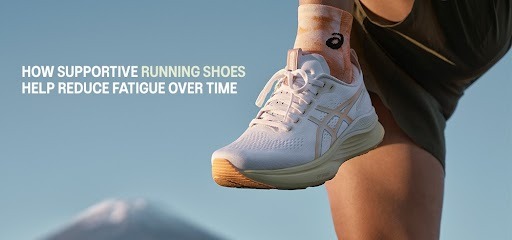
Fatigue is one of the most underestimated challenges in running. It rarely shows up all at once. Instead, it builds quietly over weeks of training, long runs, and daily mileage. Sore legs, heavy strides, slower recovery and a constant feeling of effort are often signs that the body is absorbing more stress than it should.
This is where supportive running shoes start to matter far beyond comfort. The right level of support helps the body move more efficiently, reducing unnecessary strain and allowing runners to conserve energy over time rather than fighting fatigue with every step.
Why Fatigue Builds Even When Training Feels “Normal”
Running is repetitive by nature. Every stride places load through the feet, ankles, knees, and hips. When alignment or stability starts to drift, even slightly, muscles work harder to compensate. Over long distances or frequent training, that extra effort adds up.
Supportive shoes are designed to guide the foot through a more balanced motion. By encouraging stable landings and smoother transitions, they help reduce the small inefficiencies that quietly drain energy. This can be especially noticeable during longer runs or later stages of training cycles.
Support Is About Balance, Not Restriction
There’s a common misconception that supportive shoes feel stiff or controlling. In reality, modern support is adaptive. It responds to how the foot moves as fatigue sets in rather than forcing it into a fixed position.
Shoes like the GEL-KAYANO™ 32 are designed with adaptive stability features that adjust as the runner’s stride changes. As legs tire and form begins to soften, this kind of support can help maintain balance and reduce the extra muscular effort needed to stay aligned.
How Stability Helps Save Energy
When a shoe provides consistent support, the body doesn’t need to constantly self-correct. This can:
- Reduce strain on stabilising muscles
- Help maintain posture over longer distances
- Improve confidence on tired legs
The GEL-KAYANO™ 32 running shoes for men use features like an updated outsole with ASICSGRIP rubber to improve traction, helping runners feel more secure with each foot strike. That sense of security matters when fatigue sets in, as it allows runners to focus on rhythm rather than constantly adjusting their movement.
Cushioning and Support Work Together
Support alone isn’t enough to fight fatigue. Cushioning plays a key role in absorbing impact and returning energy efficiently. Shoes that combine both elements tend to feel easier on the body over time.
The SUPERBLAST™ 2 EKIDEN is a good example of how energetic cushioning can reduce fatigue by doing more of the work underfoot. Its midsole blends FF BLAST™ PLUS and FF TURBO™ PLUS foams, creating a highly responsive feel that helps maintain momentum even as legs grow tired. Because the shoe is designed to be lightweight and bouncy, runners often experience less perceived effort during longer sessions.
When cushioning absorbs shock effectively, the repeated impact on joints and muscles contributes to cumulative fatigue is lessened.
Smooth Transitions Reduce Late-Run Strain
Fatigue often becomes most noticeable when transitions start to feel laboured. Heel-to-toe movement can slow down, and strides lose their flow.
Supportive running shoes aim to smooth out this transition phase. In shoes like the SONICBLAST™, the combination of responsive foam and the ASTROPLATE™ propulsion mechanism helps guide momentum forward. This forward assistance can feel subtle when you’re early in your run, but it becomes increasingly valuable later, when maintaining pace requires more effort.
By helping the foot roll efficiently, supportive designs reduce the energy lost with each step.
Breathability Also Plays a Role in Reducing Fatigue
Overheating and discomfort can contribute to fatigue just as much as impact and alignment. Supportive shoes are increasingly designed with breathable uppers to keep feet cool during longer runs.
The engineered mesh upper in the GEL-KAYANO™ 32 improves ventilation, helping maintain comfort over extended distances. When feet stay cooler and drier, runners are less distracted and more relaxed, which indirectly helps manage fatigue across training sessions.
Fatigue Management During Long Training Blocks
As weekly mileage increases, supportive running shoes become even more valuable. During marathon or half-marathon training, fatigue isn’t just about one run. It’s about how the body feels day after day.
Shoes with adaptive stability systems, like the 4D GUIDANCE SYSTEM™ found in the GEL-KAYANO™ 32, are designed to support this kind of cumulative training load. The reinforced tongue wing along the arch adds comfort and support where runners often need it most during long-distance efforts.
The new PLATINUM colourway also brings a refined, premium finish, but beneath the aesthetics, it’s the balance of lighter cushioning, higher midsole stack, and adaptive support that helps training feel smoother week after week.
Feeling Fast Without Feeling Drained
Not all fatigue comes from long, slow runs. Tempo sessions and faster training days can also leave runners feeling drained if shoes don’t offer enough support during higher-effort movement.
Lightweight, responsive options like the SONICBLAST™ and SUPERBLAST™ 2 EKIDEN are designed to support faster running without sacrificing stability. Their cushioning systems help create energetic rebound, which can reduce the muscular effort required to maintain speed. Over time, this can translate into better recovery and less lingering fatigue between workouts.
Support Builds Confidence as Much as It Saves Energy
One often overlooked benefit of supportive shoes is confidence. When runners trust their footwear, they tend to move more naturally. Hesitation, overthinking foot placement, or bracing for impact all consume energy.
Running shoes that provide reliable support and traction allow runners to relax into their stride. That relaxed movement pattern is one of the most effective ways to manage fatigue over time.
Why Support Matters More the Longer You Run
Short runs can hide a lot of inefficiencies. Long-term training exposes them. Supportive running shoes for men are designed to step in when the body starts to tire, helping maintain balance, comfort, and efficiency across miles and weeks of running.
ASICS design their supportive models with the understanding that fatigue is cumulative. By combining adaptive stability, responsive cushioning, breathable uppers, and thoughtful propulsion features, their running shoes aim to help runners stay fresher for longer.
