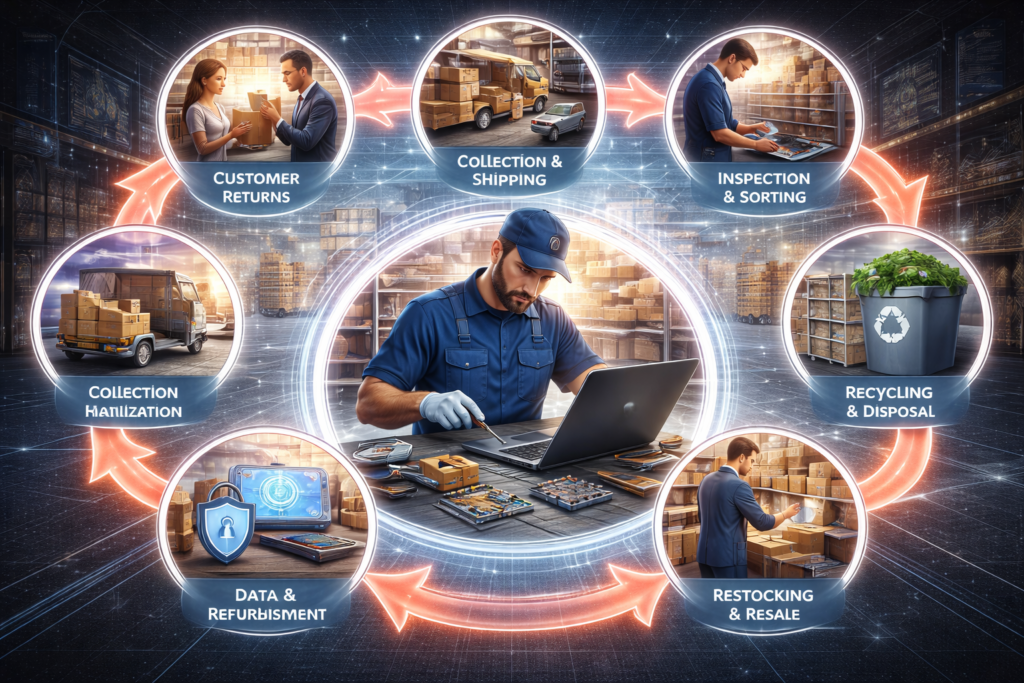
Reverse logistics for electronics is the process of moving products from customers back to manufacturers, distributors, or specialized facilities for repair, refurbishment, recycling, or disposal. Unlike traditional logistics, which moves products from production to consumers, reverse logistics works in the opposite direction. It is critical for electronics businesses due to product returns, end-of-life devices, and regulatory requirements. Efficient reverse logistics ensures safe handling, reduces waste, and helps companies recover value from products that might otherwise be discarded.
Implementing reverse logistics also boosts customer satisfaction. Customers expect smooth returns, quick repairs, or replacements. A streamlined reverse logistics process maintains trust, protects the environment, and extends the lifecycle value of electronic products.
Why Electronics Enter Reverse Logistics
Products are returned for several reasons, including defects, dissatisfaction, end-of-life processing, or unsold inventory. Understanding the reason for return is crucial, as it determines the next step—repair, resale, refurbishment, or recycling.
- Customer Returns: Defective or unwanted products returned by consumers.
- End-of-Life Electronics: Devices reaching the end of their lifecycle require recycling or safe disposal.
- Lease or Rental Returns: Rental electronics are returned for reuse or redistribution.
- Retail Stock Returns: Unsold items sent back from retail stores or distributors.
Recognizing why products re-enter the supply chain allows companies to handle them efficiently, recover value, and minimize environmental impact.
Steps in the Reverse Logistics Process
The Reverse Logistics for Consumer Electronics is structured to ensure efficiency, safety, and compliance:
- Collection and Return Initiation – Products are gathered through return programs, customer drop-offs, or prepaid return shipping. Clear instructions help speed up returns.
- Inspection and Sorting – Returned products are inspected to determine usability. Items are classified for repair, refurbishment, resale, recycling, or disposal.
- Repair and Refurbishment – Functional components are restored. Refurbished electronics re-enter the market, providing cost-effective solutions and sustainability benefits.
- Recycling and Material Recovery – Non-repairable items are dismantled to extract valuable metals and materials.
- Safe Disposal – Electronics that cannot be reused or recycled are disposed of following environmental regulations.
Following these steps ensures companies maximize value recovery, minimize waste, and improve operational efficiency.
Benefits of Reverse Logistics for Electronics
Reverse logistics provides both operational and strategic advantages.
- Value Recovery: Components from returned products can be salvaged or refurbished for resale.
- Sustainability: Recycling reduces electronic waste, supporting corporate environmental initiatives.
- Customer Satisfaction: A transparent, fast return process improves trust and loyalty.
- Compliance: Handling electronics responsibly ensures compliance with environmental regulations.
Companies that invest in reverse logistics save costs, enhance brand reputation, and contribute to a circular economy
Technology in Reverse Logistics
Technology enables smarter, faster, and more efficient reverse logistics for electronics.
- Track and Trace Logistics Systems: Using barcodes, RFID, or QR codes helps track every returned item’s status and location.
- Advanced Transportation Management Systems: Optimizes return routes, selects carriers, and ensures timely returns.
- Data Analytics and Intelligence: Analyzing return patterns helps predict volume, optimize repair processes, and manage inventory effectively.
Technology integration reduces errors, accelerates processing, and increases recovered value from returned electronics.
Challenges in Reverse Logistics
While beneficial, reverse logistics also presents several challenges:
- Product Variety: Electronics differ in type, condition, and complexity, requiring specialized handling.
- Cost Management: Repairs, transportation, and recycling can be expensive if not managed efficiently.
- Regulatory Compliance: Electronics contain hazardous materials, including batteries and heavy metals, which demand careful disposal.
- Tracking Visibility: Without proper systems, items can be lost or misclassified, reducing potential value.
Effective planning, clear workflows, and technology use are essential to overcome these challenges.
Supporting a Circular Economy
Reverse logistics is a cornerstone of the circular economy. Electronics returned for repair, refurbishment, or recycling remain in use longer, reducing the need for new materials. Refurbished products provide cost-effective options for consumers, while recycling recovers valuable resources. Companies implementing circular strategies not only reduce environmental impact but also create additional revenue streams, improve efficiency, and enhance brand credibility.
Best Practices for Implementing Reverse Logistics
Implementing reverse logistics effectively requires adopting certain best practices. Companies should establish clear return policies, provide detailed instructions to customers, and train staff in handling electronics safely. Collaborating with certified recycling and refurbishment partners ensures compliance with environmental regulations. Additionally, monitoring key performance metrics such as return time, refurbishment rate, and cost per return helps optimize the process. Integrating feedback from customers also improves the returns experience and identifies opportunities to reduce returns in the first place.
Future Trends in Electronics Reverse Logistics
The future of reverse logistics in electronics is increasingly technology-driven. Automation in inspection and sorting, predictive analytics for returns volume, and AI-driven quality checks are transforming the industry. Companies are also exploring circular business models, such as subscription services for electronics or device-as-a-service solutions, where reverse logistics is built into the lifecycle management from day one. Sustainability remains a top priority, with innovations in recycling processes and environmentally friendly disposal methods continuing to evolve.
Conclusion
Reverse logistics for electronics is no longer optional; it’s a strategic business necessity. By managing returns, repairs, refurbishment, recycling, and disposal efficiently, companies recover value, reduce waste, and enhance customer satisfaction. Integrating Advanced Transportation Management Systems, Track and Trace Logistics, and data-driven intelligence ensures faster processing, compliance, and operational efficiency. From handling defective products to managing end-of-life electronics, reverse logistics transforms a traditionally cumbersome process into a competitive advantage.
With careful planning, technology integration, and best practices, businesses can maximize the value of returned products while contributing to a circular economy. Investing in reverse logistics not only protects the environment but also strengthens brand loyalty, boosts profitability, and positions companies as leaders in sustainable electronics management.
