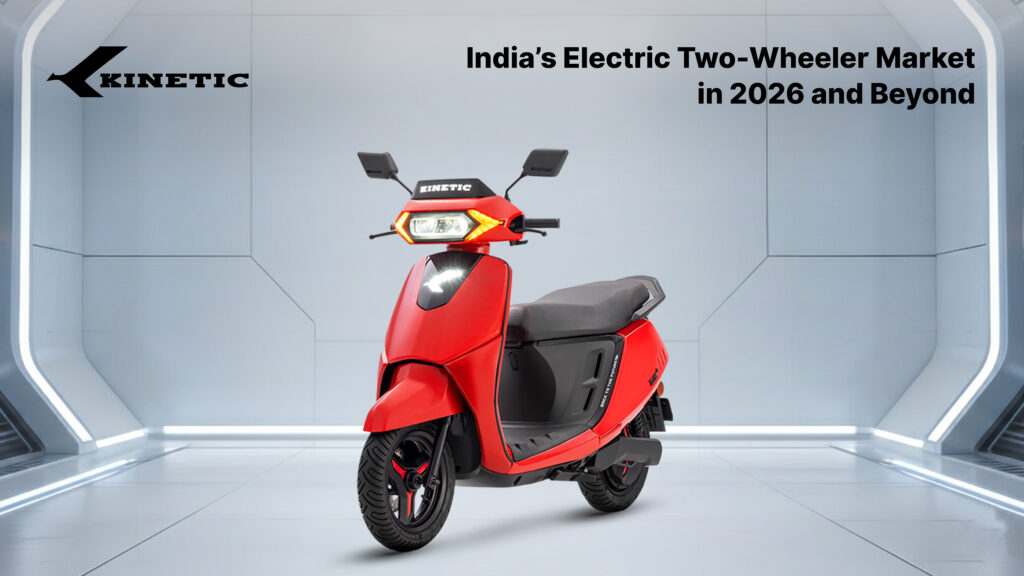
India Electric Two-Wheeler Market 2026 Trends
The study investigates how India will develop its electric two-wheeler market during 2026 through technology developments, changing consumer behavior, government regulations, and upcoming business prospects. The Indian electric two-wheeler market of 2026 has reached a point where it extends beyond its initial base of early users and technological fans. The movement for electric vehicles has now become a nationwide trend which develops into the main method for transportation in India. Indian citizens now view electric scooters and motorcycles as economical and sustainable replacements for petrol vehicles.
The mainstream market now accepts what used to be experimental. The transition to electric mobility has gained momentum because of rising fuel prices plus better charging infrastructure plus government backing plus enhanced product performance. The discussion has shifted from “whether EVs will succeed” to “how fast the market will grow.” The presence of electric two-wheelers has become common throughout multiple Indian urban centers. The move toward silent transportation has replaced traditional engine sounds while users increasingly prefer products that offer sustainability and affordable maintenance costs.
The Shift from Curiosity to Confidence
In 2020, most Indian consumers who were interested in buying electric scooters had concerns about factors such as battery life, charging availability, reliability, resale value, and service support. These uncertainties discouraged many consumers from switching to electric scooters. Although public hesitation has reduced over time, a certain level of caution toward electric scooters is expected to continue until 2026.
Modern electric two-wheelers provide improved range and enhanced performance and better construction and advanced technology. Various modern electric scooters can efficiently meet the requirements of daily urban commuting with great performance. Consumers now understand total ownership costs better since they found out that electric vehicles provide more financial savings through their operational lifespan than gasoline-powered cars. This shift in consumer behavior marked a major milestone for the industry. In 2026, electric two-wheeler buyers are no longer motivated solely by environmental concerns. Instead, their purchasing decisions are increasingly driven by the practical value these products provide.
Legacy brands are making their market presence stronger.
The electric two-wheeler market in India has developed into its current state through the entry of established automotive manufacturers into the market. Startups first established their dominance in the EV sector through their introduction of new technologies and their bold market disruption strategies. The market now includes traditional manufacturers who bring their superior dealer networks and manufacturing power and customer trust to compete against startups. The shift represents an important development because Indian consumers usually choose vehicles based on their assessment of the vehicle’s reliability and the quality of after-sales service. Two-wheeler industry veterans who have spent decades in the sector possess deep knowledge about Indian road conditions and customer needs and the behavior of customers during their vehicle ownership period. Their entry into the electric space is helping mainstream consumers feel more confident about transitioning to EVs. The rising competition in the market leads to product quality improvements in every product category. Consumers experience advantages from improved product designs which include enhanced safety features and better battery management systems and functional product elements.
Technology Is Becoming the Real Differentiator
The current technological advances function as the primary element which distinguishes different products from each other. The future of electric two-wheelers will depend on their price and their technological features. In 2026, buyers are paying close attention to features such as:
- Real-world riding range
- Fast charging capability
- Battery safety
- Mobile connectivity
- Navigation and ride analytics
- Regenerative braking
- Smart dashboards
- OTA (Over-the-Air) updates
- Vehicle tracking and anti-theft systems
Consumers expect their vehicles to provide smart features which enable seamless connectivity and intuitive operation. Battery technology is currently undergoing rapid development. Lithium Iron Phosphate (LFP) batteries, which possess superior thermal safety and durability, attract attention because they provide extended lifespan. The ongoing development of battery technology will lead to shorter charging periods and longer battery range abilities. This development will help people drive electric vehicles because it will decrease their range anxiety which currently prevents them from driving electric vehicles.
Charging Infrastructure Is Expanding Rapidly
A few years ago, charging infrastructure was considered one of the weakest links in India’s EV ecosystem. The current situation is experiencing gradual improvements. Public charging stations are becoming more accessible in metro cities, residential complexes, malls, office parks, and highways. Companies now offer home charging solutions which provide users with both accessible and cost-effective charging options. Battery swapping is gaining popularity as an effective solution which particularly benefits commercial riders and delivery fleets. Users can complete battery exchanges by replacing their used battery with a fully charged battery within a few minutes. This model brings about major improvements in operational efficiency to gig economy workers and high-usage riders. The growth of EV infrastructure will lead to increased EV adoption in tier-2 and tier-3 cities beyond current urban areas.
Delivery and Fleet Mobility Are Fueling Growth
The commercial mobility sector represents the main element which drives growth within India’s electric two-wheeler market. The companies which operate food delivery services and e-commerce platforms and courier companies and logistics businesses, are implementing electric fleets at a fast pace.
The reasons are straightforward:
- Lower operating costs
- Reduced fuel dependency
- Easier urban mobility
- Lower maintenance expenses
- Sustainability commitments
Electric mobility offers substantial cost savings for riders who spend extended time driving on the road. Fleet adoption serves as a critical factor which helps to develop ecosystem expansion. The growing demand for electric vehicles leads to increased requirements for charging stations and service centers and battery development and financing options. The complete electric vehicle ecosystem achieves higher sustainability through this process.
Sustainability Is Becoming a Core Conversation
The Indian transportation system needs sustainable solutions which have now become essential because they provide more than just economical and practical benefits to handle its future requirements. Environmental issues and increasing fuel usage, along with urban pollution, create a need for both consumers and decision-makers to adopt more environmentally friendly transportation options. The electric two-wheeler market presents a major business opportunity for India because two-wheelers constitute one of the biggest vehicle segments in the nation. The process of electrification creates a major effect which helps to decrease emissions while improving air quality in urban areas. The current focus of the industry now emphasizes practices which include battery recycling, development of ethical supply chains, use of renewable energy sources, and implementation of environmentally friendly production methods. The future of electric vehicle development requires more than just increased vehicle sales. The creation of a responsible circular ecosystem together with vehicle sales will determine their success.
What Can We Expect Beyond 2026?
The future of India’s electric two-wheeler market looks extremely promising. The industry will experience multiple significant changes during the upcoming years. The first development will increase electric vehicle adoption throughout India. The second development will create a new electric motorcycle market segment which offers high-performance products to enthusiasts and urban users. The next development will create charging technologies which will evolve to enable faster charging times while making charging experiences easier. The fourth development will enable electric vehicle adoption to grow in small towns and rural areas through rising public understanding and better infrastructure. The fifth development will create stronger governmental backing for market expansion through battery production and charging network development initiatives. The sixth development will enable future electric two-wheelers to use smart technology which connects to AI systems for machine diagnostics and system maintenance and navigation and ecosystem connectivity.
Conclusion
The market shows how India changes its views on transportation systems and environmental protection and public transit systems. The public now sees electric vehicles as advanced technological innovations. People now consider these vehicles to be mainstream transportation options that offer cost-effective operation, advanced features, and environmentally sustainable mobility. The future will present several operational challenges, including the development of new transportation infrastructure, effective battery recycling, and improving the affordability of electric vehicles. The current trend shows maximum support for electric vehicle development. India develops into a major global electric two-wheeler market through technological advancements and rising competition and increasing consumer trust. The upcoming years will determine which direction the national transportation system to take according to automotive brands and manufacturers and government officials and consumers. The electric two-wheeler revolution has become an enduring element of modern transportation systems. The electric revolution will keep transforming transportation systems so you should track both current industry progress and scientific research results.
