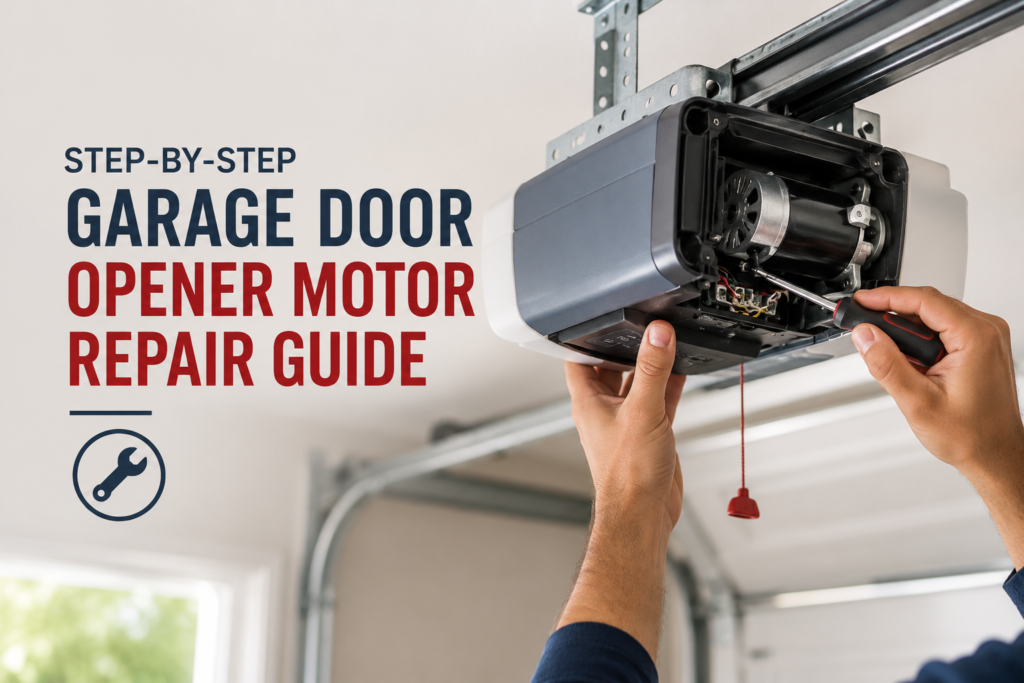
Introduction
A garage door opener motor is one of the most important parts of your garage door system. It provides the power needed to open and close the door smoothly. When the motor starts having problems, the door may become slow, noisy, or stop working completely.
While some motor issues require professional repair, many common problems can be identified and fixed with basic tools and a little patience. Understanding how the opener motor works and knowing what signs to look for can help you save time and avoid costly repairs.
This step-by-step guide explains how to inspect, troubleshoot, and repair common garage door opener motor issues safely. Whether your opener is making unusual sounds or not responding at all, these steps can help you find the cause of the problem.
How a Garage Door Opener Motor Works
The garage door opener motor is responsible for moving the garage door through a drive system. When you press the wall button or remote control, the motor receives a signal and starts turning. This movement is transferred through a chain, belt, or screw drive mechanism, which lifts or lowers the door.
The motor works together with other parts such as safety sensors, gears, wiring, and limit switches. If any of these parts fail, the opener may not work correctly, even if the motor itself is still in good condition.
Common Signs of Motor Problems
Before starting any repairs, it is important to recognize the symptoms of a faulty motor.
You may notice that the motor makes a humming sound but the door does not move. In some cases, the opener works only occasionally. Grinding or rattling noises may indicate worn gears or internal damage. A completely unresponsive opener could point to electrical issues, wiring problems, or a failed motor.
Identifying the exact symptom helps make troubleshooting easier and more accurate.
Safety Steps Before You Begin
Garage door systems contain heavy moving parts and electrical connections. Always follow proper safety procedures before starting any repair work.
Disconnect the opener from its power source before opening the motor housing. Pull the emergency release cord to separate the door from the opener mechanism. Make sure the garage door is fully closed and stable.
Wear safety glasses and work gloves while handling tools and components. Taking these simple precautions can help prevent injuries and equipment damage.
Tools You May Need
For most garage door opener motor repairs, you will need:
- Screwdrivers
- Adjustable wrench
- Socket set
- Pliers
- Voltage tester
- Flashlight
- Garage door lubricant
Having all tools ready before starting can make the repair process much smoother.
Garage Door Opener Motor Troubleshooting Table
| Problem | Possible Cause | Recommended Solution |
| Motor hums, but the door doesn’t move | Stripped gears or a bad capacitor | Inspect the gears and the capacitor |
| The door moves slowly | Lack of lubrication or worn parts | Lubricate moving components |
| Opener stops randomly | Loose wiring or overheating | Check electrical connections |
| No response from opener | Power issue or motor failure | Test outlet and wiring |
| Grinding noise | Worn gears | Replace damaged gears |
| The door reverses unexpectedly | Sensor alignment issue | Realign safety sensors |
Step 1: Check the Power Supply
Many garage door opener problems start with a simple power issue. First, make sure the opener is plugged into a working outlet. Test the outlet with another device to confirm it has power.
If the outlet is not working, check your home’s circuit breaker. A tripped breaker may be preventing the opener from receiving electricity. Also, inspect the power cord for signs of damage.
Step 2: Test the Remote and Wall Switch
Sometimes the motor is not the real problem. Weak remote batteries or faulty controls can prevent the opener from receiving commands.
Try operating the door with both the remote control and the wall switch. If the wall switch works but the remote does not, replacing the batteries or reprogramming the remote may solve the issue.
Step 3: Inspect the Safety Sensors
Garage door safety sensors are designed to stop the door if an object blocks its path. If the sensors are dirty or misaligned, the opener may not function properly.
Check that both sensors face each other correctly and that no dirt, dust, or objects are blocking them. Sensor indicator lights can also help identify alignment problems.
Step 4: Listen to the Motor
Reconnect power briefly and activate the opener. Listen carefully to the sounds coming from the motor.
A humming sound may indicate a bad capacitor or damaged gears. Grinding noises often point to gear wear. If there is no sound at all, the problem may be electrical, or the motor may have failed.
After testing, disconnect the power again before continuing.
Step 5: Open the Motor Housing
Remove the outer cover of the opener carefully. Most units are secured with screws that can be removed using a standard screwdriver.
Once open, inspect the inside of the housing. Look for loose parts, damaged wiring, worn gears, or signs of overheating. A visual inspection often reveals the source of the problem.
Step 6: Check the Drive Gears
The drive gears are among the most commonly damaged parts inside a garage door opener.
Look for:
- Missing gear teeth
- Cracks or damage
- Excessive wear
- Plastic debris inside the housing
If the gears are damaged, replacing them can often restore normal operation without replacing the entire opener.
Step 7: Inspect Electrical Connections
Loose wires can interrupt power flow and cause the opener to work inconsistently.
Check all visible wiring connections inside the unit. Look for loose terminals, damaged insulation, or signs of burning. Tightening connections and replacing damaged wires may solve the issue quickly.
Step 8: Examine the Capacitor
Some opener motors use a capacitor to help start the motor. When the capacitor fails, the motor may hum but not turn.
Inspect the capacitor for swelling, leaking, or visible damage. If it appears faulty, replacing it may restore proper motor operation.
Step 9: Lubricate Moving Parts
Proper lubrication reduces strain on the motor and helps the opener operate smoothly.
Apply lubricant to:
- Chains or belts
- Bearings
- Rollers
- Hinges
Avoid using heavy grease, as it can collect dirt and affect performance over time.
Step 10: Reassemble and Test
After completing repairs, reinstall the motor cover and reconnect power.
Run the garage door through several opening and closing cycles. Watch for smooth movement and listen for unusual noises. If everything operates normally, the repair was successful.
When a Motor Replacement Is Needed
Sometimes repairing the motor is not the best option. If the motor has severe internal damage or electrical failure, replacement may be more practical.
A new motor can provide smoother operation, improved reliability, and better energy efficiency. Comparing repair costs with replacement costs can help determine the most cost-effective solution.
Preventing Future Motor Problems
Regular maintenance can significantly extend the life of your garage door opener motor.
Inspect the system every few months for signs of wear. Keep moving parts lubricated and make sure all hardware remains tight. Check safety sensors regularly and ensure the garage door stays properly balanced.
A well-maintained system places less stress on the motor and reduces the chance of unexpected breakdowns.
Why Professional Help Can Be Important
While many homeowners can handle basic troubleshooting, some repairs require specialized knowledge. Electrical problems, motor replacement, and advanced diagnostics are often best left to trained technicians.
If your troubleshooting efforts do not solve the issue, professional garage door opener repair in Rochester can help identify the exact problem and restore reliable operation. Expert service also helps ensure that all safety features continue working properly.
Overview
Garage door opener motor problems can be frustrating, but many issues can be fixed with a careful step-by-step approach. By checking the power supply, sensors, gears, wiring, and other key components, homeowners can often identify the cause of the problem and make necessary repairs.
Routine maintenance remains the best way to avoid major breakdowns and extend the life of your opener. Whether you choose a DIY repair or seek professional garage door opener repair in Rochester, addressing problems early can help keep your garage door operating safely and efficiently for years to come.
Frequently Asked Questions
1. How do I know if my garage door opener motor is bad?
A faulty motor may produce humming sounds, fail to respond to controls, operate inconsistently, or stop working completely. Before replacing the motor, check the power supply, sensors, gears, and wiring to rule out other possible causes.
2. Can I repair a garage door opener motor myself?
Yes, many common issues, such as worn gears, loose wiring, sensor problems, and lubrication needs, can be handled by homeowners. However, electrical repairs and motor replacement may require professional assistance for safety and accuracy.
3. Why is my garage door opener making a grinding noise?
Grinding noises usually indicate worn or damaged gears inside the opener. Over time, gears can wear down from regular use. Inspecting and replacing damaged gears often resolves the problem and restores smooth operation.
4. How often should I maintain my garage door opener?
It is a good idea to inspect and maintain your garage door opener every three to six months. Regular lubrication, hardware checks, and sensor inspections can help prevent unexpected failures and extend the life of the motor.
5. When should I call a professional for garage door opener repair?
If the opener has electrical issues, severe motor damage, repeated breakdowns, or problems that remain after basic troubleshooting, contacting a professional is recommended. Expert technicians can safely diagnose and repair more complex issues.