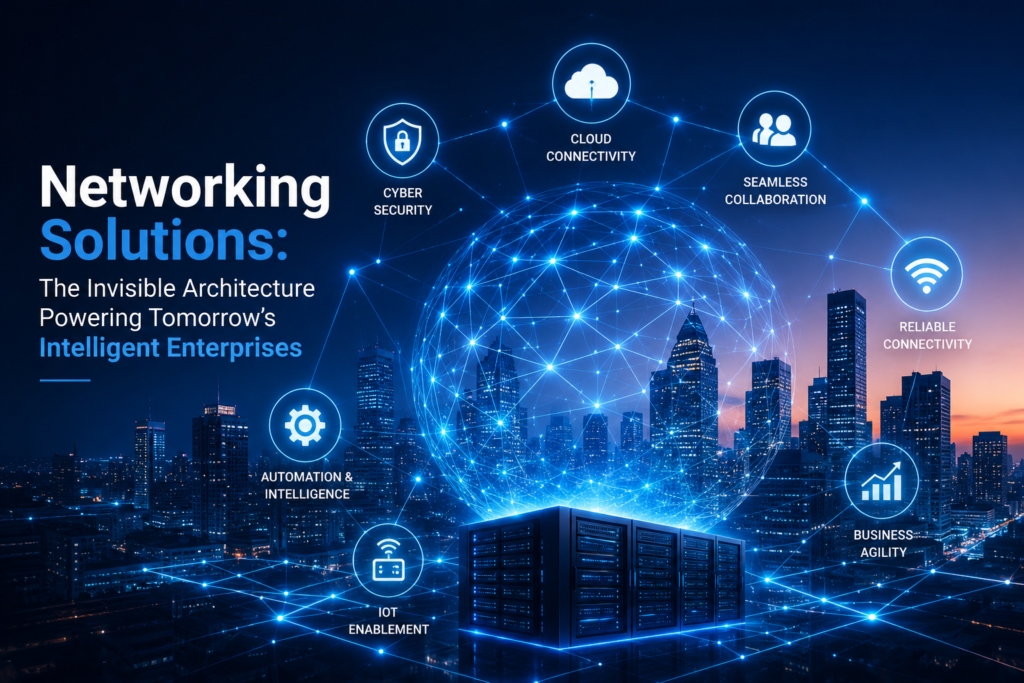
In today’s hyperconnected world, businesses rely on technology more than ever before. Every email sent, video conference conducted, cloud application accessed, and customer transaction processed depends on a reliable network infrastructure. Yet despite its critical role, networking often remains hidden behind the scenes. It functions as the invisible architecture that supports digital transformation, operational efficiency, and business innovation.
As organizations continue embracing cloud computing, artificial intelligence, remote work, and data-driven decision-making, the demand for advanced networking solutions continues to rise. Companies no longer view networking as a simple collection of cables and routers. Instead, they recognize it as a strategic asset capable of driving growth, improving security, and creating competitive advantages.
This article explores how modern networking technologies are reshaping enterprises, enabling intelligent operations, and preparing businesses for the future.
The Evolution of Networking:
Business networking has undergone a remarkable transformation over the past few decades. Traditional networks primarily focused on connecting computers within a single office. Their main objective was straightforward: allow employees to share resources and communicate efficiently.
However, technological advancements have significantly expanded networking capabilities. Modern enterprises now operate across multiple locations, utilize cloud services, support
remote employees, and manage vast amounts of data. Consequently, organizations require sophisticated networking solutions that provide seamless connectivity across diverse environments.
Furthermore, emerging technologies such as software-defined networking (SDN), automation, and artificial intelligence have introduced new levels of flexibility and intelligence. Networks no longer simply transport information. Instead, they actively optimize performance, identify potential threats, and adapt to changing business requirements.
As a result, networking has evolved from an operational necessity into a strategic business enabler.
The Digital Highway of Enterprise Communication
Every successful organization depends on effective communication. Employees collaborate across departments, teams interact with customers, and business systems exchange critical information continuously. Without reliable connectivity, productivity quickly declines.
Modern networking solutions serve as the digital highways that facilitate these interactions. High-speed data transmission enables real-time communication through video conferencing, instant messaging, and collaborative platforms. Consequently, employees can work together efficiently regardless of geographical location.
Moreover, networking infrastructure supports integration between various business applications. Customer relationship management systems, enterprise resource planning platforms, and cloud-based services depend on uninterrupted connectivity to deliver optimal performance.
When networks operate efficiently, organizations experience improved collaboration, faster decision-making, and stronger customer relationships.
Building Intelligent Enterprises Through Smart Networking
Today’s intelligent enterprises rely heavily on data. Organizations collect information from customers, employees, devices, and operational systems to make informed decisions. However,
data becomes valuable only when it can move quickly and securely throughout the organization.
Advanced networking solutions enable seamless data exchange across complex business environments. They support high-bandwidth applications, facilitate cloud connectivity, and ensure critical information reaches the right destination without delays.
Additionally, smart networking technologies leverage automation and analytics to optimize performance. Network administrators can identify bottlenecks, predict capacity requirements, and resolve issues proactively before they impact operations.
As businesses continue adopting artificial intelligence and machine learning technologies, networking infrastructure becomes even more important. Intelligent applications require rapid access to data, making network efficiency a key factor in organizational success.
The Role of Networking Solutions in Cloud Transformation
Cloud computing has fundamentally changed how businesses operate. Organizations increasingly migrate applications, data storage, and workloads to cloud environments to improve scalability and reduce infrastructure costs.
However, successful cloud adoption depends on reliable networking solutions. Networks must provide secure, high-performance connections between users, applications, and cloud platforms. Poor connectivity can result in slow application performance, reduced productivity, and customer dissatisfaction.
Furthermore, hybrid and multi-cloud environments require sophisticated networking architectures. Businesses often distribute workloads across multiple cloud providers while maintaining on-premises infrastructure. Consequently, networks must support seamless communication between these environments.
Modern networking technologies simplify cloud integration by providing centralized management, enhanced visibility, and automated traffic optimization. These capabilities help organizations maximize the benefits of cloud transformation while maintaining operational efficiency.
Cybersecurity Starts with Strong Network Architecture
Cyber threats continue growing in both frequency and sophistication. Businesses face risks ranging from ransomware attacks and data breaches to insider threats and phishing campaigns. Therefore, cybersecurity has become a top priority for organizations worldwide.
Effective networking solutions play a vital role in protecting digital assets. Modern network architectures incorporate advanced security features such as firewalls, intrusion detection systems, network segmentation, and encrypted communications.
Additionally, intelligent networking technologies continuously monitor network activity for suspicious behavior. Automated threat detection systems can identify potential attacks and initiate protective measures before significant damage occurs.
By integrating security directly into network infrastructure, organizations create stronger defenses against evolving cyber threats while maintaining seamless business operations.
Supporting the Modern Hybrid Workforce
The workplace has changed dramatically in recent years. Employees increasingly work from home, travel frequently, and collaborate across multiple locations. Consequently, organizations must provide secure and reliable access to business resources from virtually anywhere.
Modern networking solutions enable this flexibility by supporting remote connectivity, virtual private networks, and cloud-based collaboration platforms. Employees can securely access applications and data regardless of their physical location.
Furthermore, network optimization technologies ensure consistent performance across diverse devices and internet connections. Whether employees work from corporate offices, home environments, or public locations, they can remain productive and connected.
As hybrid work models continue evolving, networking infrastructure will remain essential for maintaining workforce efficiency and employee satisfaction.
The Rise of Software-Defined Networking and Automation
Traditional network management often required significant manual intervention. Administrators spent countless hours configuring devices, troubleshooting issues, and implementing policy changes. This approach became increasingly difficult as networks grew larger and more complex.
Fortunately, software-defined networking has revolutionized network management. SDN separates network control from hardware components, enabling centralized administration and automated configuration.
Modern networking solutions leverage automation to streamline operations, reduce errors, and improve efficiency. Administrators can deploy policies across entire networks from a single interface, dramatically reducing management complexity.
Moreover, automated systems continuously monitor performance, adjust traffic flows, and optimize resource utilization. As a result, organizations benefit from improved reliability, reduced operational costs, and greater agility.
Enabling the Internet of Things and Connected Technologies
The Internet of Things continues expanding across industries. Businesses deploy connected sensors, smart devices, industrial equipment, and intelligent systems to improve efficiency and gather valuable operational data.
However, supporting thousands of connected devices requires robust networking solutions. Networks must handle increased traffic volumes, maintain low latency, and ensure secure communications between devices.
Additionally, IoT deployments generate massive amounts of data that require rapid transmission and analysis. Modern networking architectures provide the scalability necessary to accommodate these growing demands.
As organizations continue investing in smart technologies, networking infrastructure will play a critical role in enabling innovation and maximizing the value of connected ecosystems.
Network Scalability:
Business growth often brings increased technological demands. More employees, customers, applications, and data create additional pressure on network infrastructure. Consequently, scalability has become a fundamental requirement for modern enterprises.
Effective networking solutions allow organizations to expand operations without sacrificing performance or reliability. Scalable architectures support increasing workloads while maintaining consistent user experiences.
Furthermore, flexible networking technologies enable businesses to adapt quickly to changing market conditions. Whether launching new services, entering new markets, or supporting additional users, organizations can scale resources efficiently.
This adaptability helps businesses remain competitive while reducing the risk of costly infrastructure limitations.
Artificial Intelligence and the Future of Networking
Artificial intelligence is transforming nearly every aspect of business operations, including network management. AI-powered systems analyze network performance, predict potential issues, and automate routine administrative tasks.
Advanced networking solutions increasingly incorporate machine learning algorithms that improve efficiency through continuous optimization. These technologies can identify unusual traffic patterns, forecast bandwidth requirements, and recommend infrastructure improvements.
Additionally, AI-driven analytics provide deeper insights into user behavior, application performance, and network health. Organizations can make more informed decisions while reducing operational complexity.
As artificial intelligence continues evolving, networking infrastructure will become even more intelligent, autonomous, and capable of supporting next-generation business technologies.
Sustainable Networking for a Greener Future
Environmental responsibility has become an important consideration for modern enterprises. Organizations seek technologies that reduce energy consumption, minimize waste, and support sustainability initiatives.
Innovative networking solutions contribute to these goals by improving operational efficiency and reducing resource requirements. Energy-efficient hardware, intelligent power management, and virtualization technologies help lower environmental impact.
Additionally, advanced network management systems optimize resource utilization, reducing unnecessary energy consumption across large infrastructures. Cloud-based networking services also help organizations minimize physical hardware requirements.
By embracing sustainable networking practices, businesses can support environmental objectives while achieving operational and financial benefits.
Conclusion:
While customers rarely see it and employees often take it for granted, networking remains one of the most important foundations of modern business success. It powers communication, enables innovation, protects data, supports remote work, and drives digital transformation initiatives.
As organizations continue embracing cloud computing, artificial intelligence, automation, and connected technologies, the importance of advanced networking solutions will only increase. Businesses that invest in intelligent, secure, and scalable network infrastructure position themselves for long-term success in an increasingly digital world.
Ultimately, networking is far more than technology infrastructure. It is the invisible architecture powering tomorrow’s intelligent enterprises, enabling organizations to innovate, compete, and thrive in a rapidly evolving digital landscape.