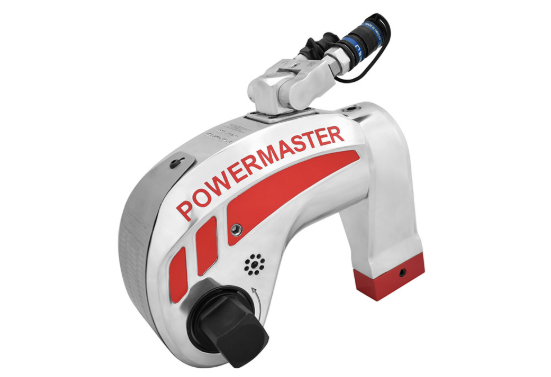
Turbine bolting is one of the most demanding jobs on a power plant floor. A single missed torque value on a turbine casing or coupling bolt can lead to vibration issues, unplanned shutdowns, or, worse, equipment failure during operation. This is why more power plants across India and globally are moving away from manual tools and adopting electric torque wrenches for this critical task.
Let’s discuss why power plants are switching to electric torque wrenches for turbine bolting.
The Problem With Manual Bolting on Turbines
Turbine assembly requires the installation of hundreds of high-tensile-strength bolts, with many requiring torque values up to several thousand newton-meters. Although manual torque wrenches may be good for less demanding tasks, they are not very kind to the person using them. Repeatedly exerting force on multiple bolts will eventually cause fatigue and fatigue will lead to a lack of consistency. Lack of consistency in torque applied to bolts within a turbine will ultimately affect the load distribution within the equipment.
Moreover, time is of the essence when it comes to power plants. Each hour a turbine is not generating power is costing money.
How Electric Torque Wrenches Change the Process
Electric torque wrenches are non-impacting hand-held power tools that apply a preset torque value with the push of a button. Once the target torque is reached, the tool stops automatically. This takes operator judgment out of the equation and replaces it with repeatable accuracy.
For turbine bolting, this matters in a few specific ways:
Precision at high torque
Turbine bolts often require torque values that would be exhausting to achieve manually. Electric torque tools are built for this range, delivering high torque output without relying on operator strength.
Repeatability across every bolt
Turbines have many bolted joints that all need to reach the same torque specification. Electric tools remove the variation between the first bolt tightened and the fiftieth, keeping every joint within an accurate tolerance.
Faster turnaround
As the tool does the heavy work, technicians can complete bolting sequences faster, which shortens maintenance windows and reduces downtime.
Operator safety
Manual torque tools on large bolts often need additional force through cheater bars or multiple operators pushing together. Electric torque wrenches reduce this physical strain and the safety risk that comes with it.
This is also why interest in electric torque wrench price in India has grown steadily. Plant procurement teams are weighing the upfront investment in electric torque tools against the recurring cost of rework, downtime and safety incidents caused by manual bolting errors.
Conclusion
In this process, there is no room for mistakes because power plants have found this out the hard way: manual systems fall short on precision and speed. The use of electric torque wrenches solves both these issues by providing accurate torque values for all bolts and saving time on maintenance activities. If your power plant needs torque wrenches for its turbine overhaul project, contact a trusted provider now.
