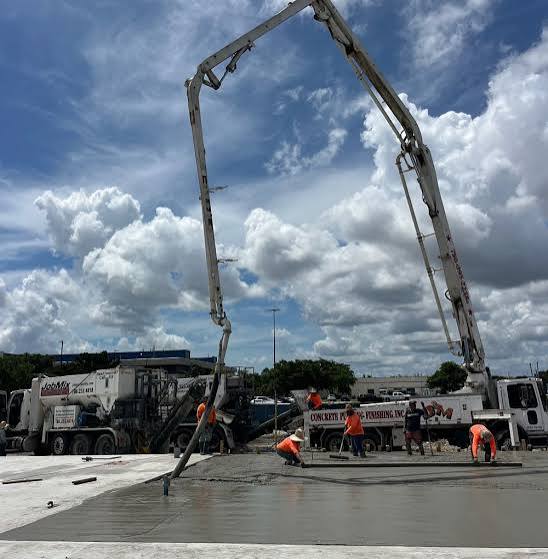
Deadlines rarely slip because of one major mistake. More often, it’s the smaller delays that pile up over the course of a project. A slow concrete pour can hold up framing, push back inspections, and leave other crews waiting. On active job sites across Florida, those lost hours matter. Industry estimates suggest concrete pumping can reduce concrete placement time by up to 50% compared with traditional methods on many projects.
That kind of improvement helps contractors keep work moving while maintaining consistent quality. For builders planning concrete pumping in Miami FL, speed is usually what gets the attention first. After using it on a few projects, though, many discover the biggest advantage is how much easier the entire pour becomes.
A smoother day on the job site
Every construction site has its own personality. Some offer plenty of space to work. Others are squeezed between existing buildings or surrounded by traffic, fencing, and equipment. Getting concrete exactly where it needs to go can turn into a job of its own. Pumping changes that.
Instead of relying on workers to move concrete across the site a load at a time, the material travels through a pipeline directly to the placement area. The crew spends more time finishing concrete and less time transporting it. That may sound like a small difference, but over the course of a full pour, those saved minutes quickly become hours.
Tight access doesn’t have to slow the project
Anyone who has worked in Miami knows that every property presents a different challenge. One job may involve a narrow residential lot. The next could be a commercial building with limited access or a waterfront site where equipment movement is restricted.
This is where concrete pumping in Miami FL is beneficial. Concrete pipelines can convey concrete past obstructions, confined areas, or even where trucks can’t reach. The work area remains more organized, equipment does not have to move as much and crews can concentrate on pouring concrete rather than working around logistics issues. Those practical benefits are just as vital as finishing the job quickly.
Building upward brings another challenge
Ground-level foundations are one thing. High-rise construction is something else entirely.
Moving concrete dozens of stories into the air demands precision. The flow has to remain steady from start to finish, especially when crews are placing structural walls, columns, and elevated slabs. Interruptions during a pour can create unnecessary complications that nobody wants to deal with later.
That is why high-rise concrete pumping has become standard practice on many multi-story developments. Boom pumps deliver concrete continuously to upper levels, helping crews maintain momentum throughout the pour while supporting consistent placement.
Small efficiencies add up
In construction, there are lots of little decisions that have a big impact on the schedule. One of these is to minimize the number of unnecessary handling. The greater the number of times concrete is moved prior to placement, the longer it takes and more waste is likely to occur. The pumping, which eliminates much of this additional handling, delivers the material where it belongs the first time. If the concrete is mixed at the job site to match the quantity needed, contractors do not order more than is necessary, thus making the process more efficient.
Conclusion
Staying on schedule is not all about putting in more effort. In most cases, it’s about finding techniques that eliminate unproductive delays in the first place. High-rise concrete pumping has become a reliable choice due to the actual problems concrete contractors face on a daily basis. It can be used on a residential foundation, a commercial building or a multi-story building and offers a convenient solution to placing concrete faster.
