You’ve got listings. Maybe five, maybe a dozen, spread across the usual directories a B2B consultant or agency owner ends up on eventually. And yet the phone doesn’t ring and the inbox stays quiet, even though you know for a fact people are searching for exactly what you offer.
Here’s the thing nobody tells you when you’re setting up a profile: a B2B buyer doesn’t browse a directory listing the way someone shops for a plumber. There’s no impulse decision here. Someone evaluating a vendor for their company is usually doing it on behalf of a boss, a budget, and a decision they’ll have to defend later if it goes badly. That changes what they’re actually looking for on your listing, and it’s rarely the same thing most businesses spend their time polishing.
This piece looks at how B2B buyers actually evaluate a listing they find on business directories: what they’re scanning for in the ten or fifteen seconds before deciding whether to click through, and what makes them stop scrolling and reach out instead of moving to the next name on the list.
They’re checking whether you’re specific, not whether you’re impressive
A lot of B2B profiles read like they were written to sound big. “Full-service marketing solutions.” “Comprehensive IT consulting.” “End-to-end business support.” None of that tells a buyer anything, and buyers know it. What they’re actually scanning for is whether you can name the exact problem they have.
A consultant who writes “I help mid-sized manufacturers cut inventory carrying costs by rebuilding their reorder logic” gets a second look from someone who’s dealing with exactly that headache. A consultant who writes “strategic operations consulting” gets skipped, because there’s no way to tell if that phrase means anything relevant to the reader’s actual problem. Specificity does the filtering work that vague, broad language can’t.
They’re cross-checking you against reality
Almost no serious buyer takes a directory listing at face value. The listing is the starting point of a quick verification pass, not the end of it. Within a minute of finding you, most buyers will open a new tab and check whether your actual website matches what the listing says, whether your LinkedIn shows you’re an active, real person doing this work right now, and whether anything about the two sources contradicts each other.
A listing that claims a company handles enterprise clients but links to a website that looks abandoned, or has no recent activity anywhere else online, reads as a red flag rather than a wash. It doesn’t need to be flashy. It needs to hold up.
This matters more the higher the stakes of the purchase get. Someone hiring a freelancer for a one-off logo redesign might tolerate a thin online presence. Someone evaluating a firm to handle their company’s compliance filings or manage a six-figure ad budget is going to dig further, because the cost of picking wrong is a lot higher than the cost of spending an extra five minutes checking.
They’re looking for proof, but not the kind you’d expect
Star ratings matter far less in B2B than they do for a restaurant or a local shop. A buyer evaluating a vendor is looking for something closer to evidence: a named client, a described outcome, a specific number if you have one you can stand behind. “Helped a regional logistics company reduce late deliveries by improving route scheduling” carries more weight than four and a half stars, because it tells a buyer this isn’t the first time you’ve solved their exact type of problem.
If your listing has room for a short case study, a client name (with permission), or even one line about a specific result, that space is worth more than a general description of your services ever will be.
They’re noticing what you left blank
Buyers read absence the same way they read content. A listing with no pricing range, no mention of typical project timelines, and no indication of company size isn’t neutral to a skeptical reader, it reads as evasive, even if the omission was just an oversight or a rushed setup. You don’t have to publish exact rates if that doesn’t fit your business, but a rough range, a minimum engagement size, or a typical project length answers a question the buyer is already asking themselves before they’ll reach out. Filling in that blank saves them a step, and buyers reward whoever saves them steps.
They’re gauging how easy you’ll be to actually reach
This sounds almost too obvious to mention, and yet it trips up more listings than it should. A buyer who’s ready to reach out wants a direct path: a phone number that’s answered, an email that isn’t buried behind a contact form nobody checks, a response time that seems realistic. A listing where the contact information is outdated, or routes through three clicks before anyone can actually message you, loses buyers who were genuinely ready to act. They don’t wait around. They move to whoever made it easy.
Putting this together
None of this requires rebuilding your listings from scratch. It means going back through what’s already there and asking, honestly, whether each piece would survive a skeptical buyer’s quick check. Swap vague service language for something specific enough to name the exact problem you solve. Make sure your website and LinkedIn actually back up what the listing claims. Add one concrete result if you have one, even a small one. And double-check that the fastest way to reach you actually works.
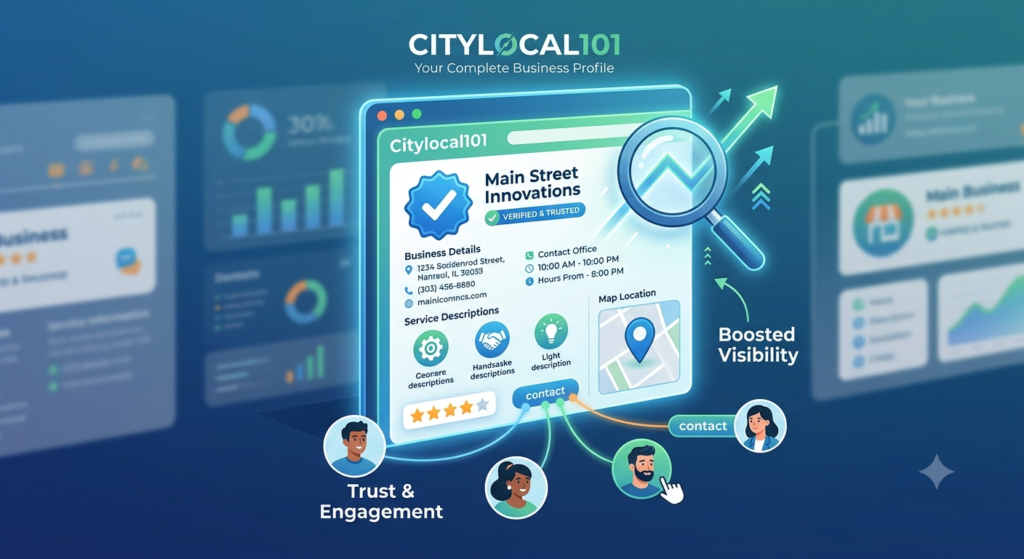
Directories that make this kind of detail easy to add tend to serve B2B service providers better than ones built mainly for retail categories. A platform like CityLocal101, where a services-based listing can include a fuller description alongside standard contact fields, gives a consultant more room to include the kind of specific, verifiable detail that actually moves a B2B buyer, rather than forcing everything into a format built for a storefront.
The buyers finding you through business directories aren’t looking for the flashiest profile in the category. They’re looking for the one that answers their actual question fastest: can this person solve my specific problem, and can I trust what they’re telling me about it. Everything above is really just different ways of answering yes to both.
