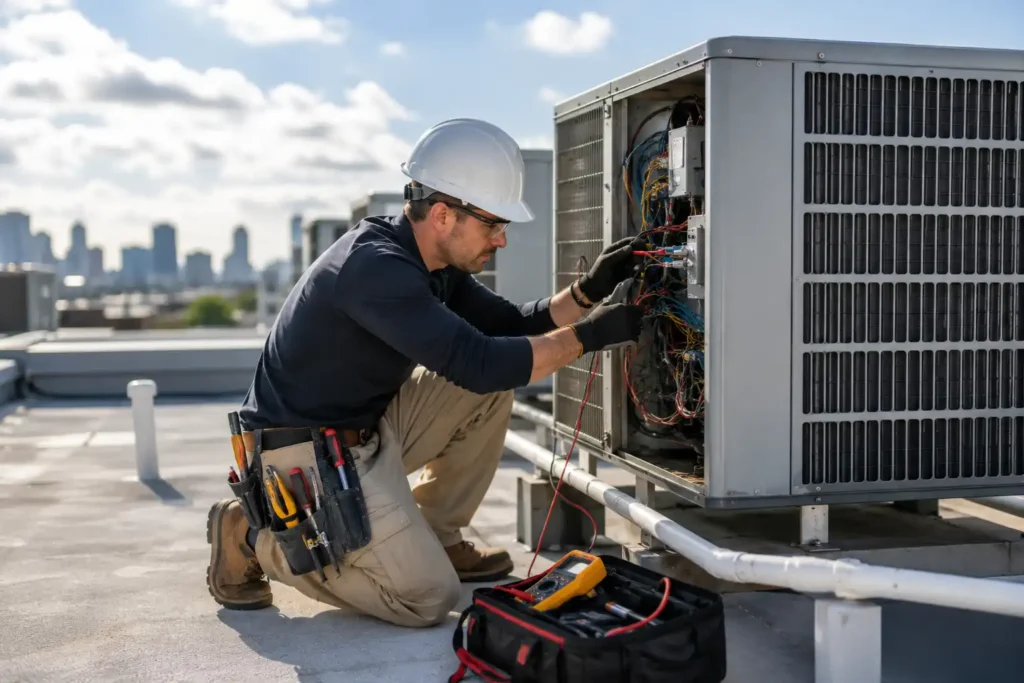
A commercial HVAC problem can quickly become more than an equipment issue. When heating or cooling stops working, it can affect employees, customers, inventory, equipment, and normal business operations. In some situations, waiting until the next regular service appointment can lead to more damage or unnecessary downtime.
That is where commercial HVAC emergency service becomes important. Emergency HVAC support is designed to help businesses respond when a heating or cooling system suddenly stops working or develops a serious problem that cannot safely wait. Knowing what to do during an HVAC emergency and understanding the warning signs can help you protect your business and get the system back to normal as quickly as possible.
What Is Considered a Commercial HVAC Emergency?
A commercial HVAC emergency can involve a complete system failure, serious electrical problem, major refrigerant issue, unusual burning smell, water leak, or equipment condition that could cause additional damage if the system continues operating. A sudden loss of cooling during extremely hot weather can also become an urgent concern, especially in businesses that depend on controlled temperatures.
Restaurants, healthcare facilities, retail stores, offices, warehouses, and other commercial properties can have different HVAC requirements. For example, a temperature problem in a restaurant can affect both employees and customers, while a refrigeration or cooling failure may put temperature-sensitive products at risk.
If the system is making unusual noises, repeatedly shutting down, producing a burning smell, or showing signs of an electrical problem, it is best to avoid attempting complex repairs yourself. Turning off the equipment when it is safe to do so and contacting a qualified professional can help prevent further problems.
Common Causes of HVAC Emergencies
Commercial HVAC systems contain several interconnected components, and a problem with one component can affect the performance of the entire system. Electrical failures are one common cause of unexpected breakdowns. Damaged wiring, failed capacitors, contactors, motors, or control components can prevent equipment from starting or cause it to shut down unexpectedly.
Refrigerant problems can also affect cooling performance. A system that is low on refrigerant may run for longer periods without properly cooling the building. Refrigerant issues should be professionally diagnosed because simply adding refrigerant may not address the underlying problem if there is a leak.
Dirty filters and coils can create another set of problems. When airflow becomes restricted, the HVAC system has to work harder to maintain the desired temperature. Over time, this additional strain can contribute to component wear and poor performance.
Mechanical failures involving compressors, fans, belts, bearings, or motors can also cause sudden system problems. Commercial equipment often operates for long hours, so regular inspection and maintenance are important for identifying worn components before they result in a major breakdown.
What Should You Do When Your HVAC System Fails?
The first priority during an HVAC emergency should be safety. If you notice smoke, a strong burning smell, exposed electrical components, or another potentially dangerous condition, stay away from the equipment and contact a qualified professional.
If there are no immediate safety concerns, you can check basic things such as the thermostat settings and whether the equipment has power. However, avoid opening electrical panels or attempting refrigerant repairs unless you are properly qualified to do so.
When contacting an emergency service provider, provide as much information as possible. Explain when the problem started, what the system is doing, whether the issue affects the entire building, and whether you noticed unusual sounds, smells, leaks, or temperature changes. This information can help the technician understand the situation before arriving.
When Do You Need Commercial HVAC Repair Near Me?
Searching for commercial hvac repair near me can be useful when you need a technician quickly, but choosing the closest company is not always enough. Commercial HVAC systems are often more complex than residential equipment, so it is important to find a service provider with experience working with commercial applications.
Consider the company’s experience, service area, emergency availability, equipment knowledge, and maintenance options. It is also helpful to work with a provider that can clearly explain the problem and the recommended repair instead of simply replacing components without identifying the cause.
Having a commercial HVAC service provider in place before an emergency occurs can make the process easier. You already know who to contact, what equipment they service, and what type of support they provide.
Why Regular Commercial HVAC Maintenance Matters
Emergency service is important when something goes wrong, but preventive maintenance can help reduce the likelihood of unexpected failures. Regular inspections allow technicians to check important components, identify wear, clean equipment, inspect electrical connections, and evaluate overall system performance.
A proper maintenance schedule depends on the type of equipment, operating hours, building conditions, and manufacturer’s recommendations. A system operating continuously in a busy commercial facility may require more attention than equipment used for fewer hours.
Maintenance records can also be valuable. Keeping track of previous repairs, inspections, component replacements, and recurring problems gives technicians useful information when diagnosing future issues.
Warning Signs You Should Not Ignore
Many HVAC emergencies provide warning signs before the system completely fails. Uneven temperatures throughout the building may indicate airflow, control, or equipment problems. Strange noises such as grinding, rattling, squealing, or repeated clicking can also indicate that a component needs attention.
A sudden increase in energy use can be another warning sign. If the system is running longer than normal but the building is not cooling or heating properly, there may be an issue affecting efficiency.
Water around indoor HVAC equipment, unusual humidity, weak airflow, or frequent cycling should also receive attention. Addressing these symptoms early may help prevent a smaller issue from becoming a more expensive emergency.
Choosing a Reliable Commercial HVAC Service
The right commercial HVAC provider should understand the importance of keeping your business operating. Look for professionals who have experience with commercial heating and cooling equipment and can provide both emergency repairs and preventive maintenance.
Good communication is also important. A professional technician should explain what was found, what caused the problem when it can be determined, and what repair options are available. This allows business owners and facility managers to make informed decisions about their equipment.
It is also worth considering long-term service rather than only calling someone after a breakdown. A consistent relationship with a commercial HVAC provider can make maintenance easier and help establish a clear history of your equipment.
Final Thoughts
A commercial HVAC failure can affect much more than indoor temperature. It can interrupt operations, create uncomfortable conditions, damage equipment, and potentially affect products or inventory. Responding quickly and safely is important when a serious problem occurs.
Professional commercial HVAC emergency service can help businesses address urgent heating and cooling problems, while regular commercial HVAC maintenance can help identify developing issues before they become major failures. If your system begins showing warning signs, seeking professional commercial hvac repair near me sooner rather than later can help reduce downtime and protect your investment.
FAQs
1. What situations require commercial HVAC emergency service?
Emergency service may be appropriate when a commercial HVAC system completely stops working, develops a serious electrical issue, has a major leak, produces a burning smell, or cannot maintain necessary building temperatures. If continuing to operate the equipment could create a safety concern or cause additional damage, professional help should be requested promptly.
2. How quickly should I call a commercial HVAC technician?
If the HVAC problem is affecting business operations, creating unsafe conditions, or getting worse, it is better to contact a professional as soon as possible. Early diagnosis can help prevent a developing equipment problem from becoming a larger and more expensive repair.
3. How can I find reliable commercial HVAC repair near me?
Look for a provider with experience servicing commercial HVAC equipment in your area. Consider their commercial experience, emergency service availability, range of equipment serviced, maintenance options, and ability to clearly explain repair recommendations.
4. Can regular commercial HVAC maintenance prevent emergencies?
Regular maintenance cannot guarantee that equipment will never fail, but it can help identify worn components, restricted airflow, electrical problems, dirty coils, and other developing issues. Addressing these concerns early can reduce the risk of unexpected breakdowns and help maintain reliable system performance.
5. What should I do if my commercial HVAC system suddenly stops working?
First, focus on safety and avoid opening electrical panels or attempting complex repairs. Check basic settings such as the thermostat and power only if it is safe, then contact a qualified commercial HVAC professional and explain the symptoms, when the failure started, and any unusual sounds, smells, or leaks you noticed.
