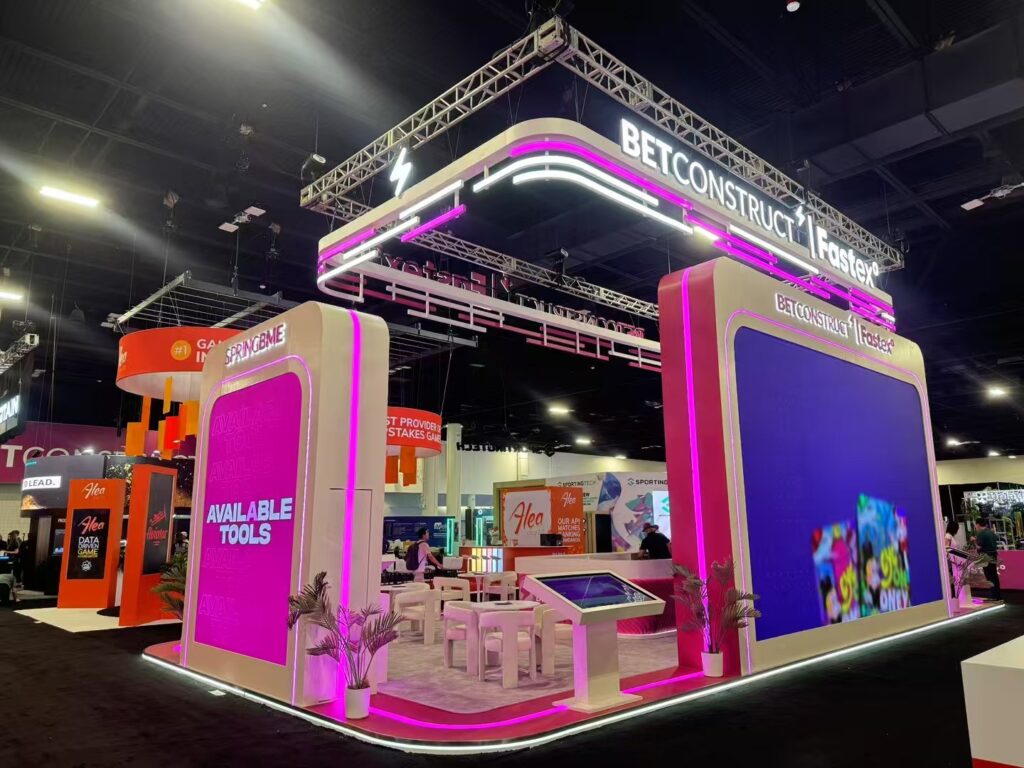
Every exhibit season, the same story plays out on show floors across the country: a company spends serious money on a striking booth for CES, MRO Americas, IWCE, or any of the hundreds of major U.S. exhibitions, gets genuine foot traffic and compliments all week – and walks away with a disappointing number of real leads. The booth looked great. It just didn’t work. This is one of the most common, and most avoidable, failures in exhibiting, and it points to a real gap in how many trade show booth design services approach the job. A beautiful booth and an effective booth are not automatically the same thing.
Why Aesthetics Alone Aren’t Enough
A visually striking booth earns attention – but attention isn’t the goal, conversion is. Attendees at U.S. trade shows walk miles of show floor over several days, and a booth that photographs well but doesn’t guide visitors toward a conversation, a demo, or a next step is essentially decoration. It draws people in and then gives them nowhere meaningful to go.
This gap shows up in a few predictable ways:
- Staff have nowhere structured to engage visitors beyond a quick hello
- There’s no clear path guiding attendees from “interested” to “captured as a lead”
- The booth prioritizes visual impact over functional flow, making it hard for staff to actually work the space
- Messaging is generic branding rather than a clear reason to stop and talk
The fix isn’t abandoning strong design – it’s making sure design and lead generation strategy are built together, not treated as separate problems.
What Lead-Generating Booth Design Actually Looks Like
The strongest exhibition booth design services approach a booth as a functional system, not just a visual statement. That means every element of the space is evaluated against a simple question: does this help convert a visitor into a lead?
Practically, that includes:
- Clear entry points that don’t require attendees to guess where to walk in
- Purposeful zones – a demo area, a casual conversation space, a private meeting spot for serious buyers – each designed for a specific type of interaction
- Visible, benefit-driven messaging that tells a passing attendee exactly why they should stop, within a few seconds
- Built-in lead capture – whether that’s a staffed check-in point, a scannable badge station, or digital touchpoints integrated into the booth itself
A booth built this way doesn’t just look good in photos – it actually does the job it was built for.
Where Construction and Strategy Intersect
Design intent only matters if it survives the transition into a real, physical structure. This is where working with experienced custom exhibit builders makes a measurable difference. A builder who understands lead-generation goals will construct the space to support them – sightlines that pull attendees toward the right zones, lighting that draws the eye to a demo station rather than just a logo wall, and layouts that keep staff positioned to engage rather than boxed in behind a counter.
Builders who treat construction as purely a fabrication exercise, disconnected from the strategy behind the design, are far more likely to deliver a booth that looks right on paper but underperforms once real attendees are moving through it.
Why This Matters More at Major U.S. Shows
At high-traffic events like CES in Las Vegas or MRO Americas in Orlando, the sheer volume of exhibitors makes this problem worse, not better. With thousands of booths competing for the same limited attention, a company that nails the visual impact but fumbles the conversion still loses – they’ve simply spent more to lose more visibly.
This is why tradeshow booth construction services with real show-floor experience matter. Builders who’ve worked major U.S. exhibitions understand crowd flow, peak traffic patterns, and how attendees actually move through a hall – insight that directly informs smarter booth layout decisions, not just prettier ones.
Questions to Ask Before Your Next Show
For exhibitors evaluating a partner for their next U.S. trade show, a few questions can help separate design-only vendors from those who think about performance:
- How do you design for lead capture, not just visual impact?
- Can you show examples of past booths and the engagement or lead results they drove?
- How does your team think about staff flow and visitor pathways within the space?
- Do you build in specific zones for different types of visitor interactions?
A provider offering genuine trade show design services should have clear, specific answers – not just a portfolio of attractive renderings.
Bringing Strategy and Construction Together
The exhibitors who consistently perform well at U.S. shows tend to work with a single accountable partner across the full process – from initial strategy through final construction – rather than piecing together a designer, a builder, and a marketing team with no shared plan. Comprehensive trade show exhibit services that combine design, fabrication, and lead-generation strategy under one roof reduce the risk of a beautiful booth that quietly underperforms, because the same team responsible for how it looks is also responsible for how it works.
The Bottom Line
A booth that turns heads but doesn’t turn conversations into leads isn’t a design success – it’s a missed opportunity, however good it looks in the photos. As competition on U.S. show floors keeps intensifying, exhibitors need trade show booth design services that treat aesthetics and lead generation as one connected discipline, not two separate deliverables. The booths that consistently deliver real business results are the ones built, from the ground up, around what happens after an attendee walks in – not just what they see when they do.