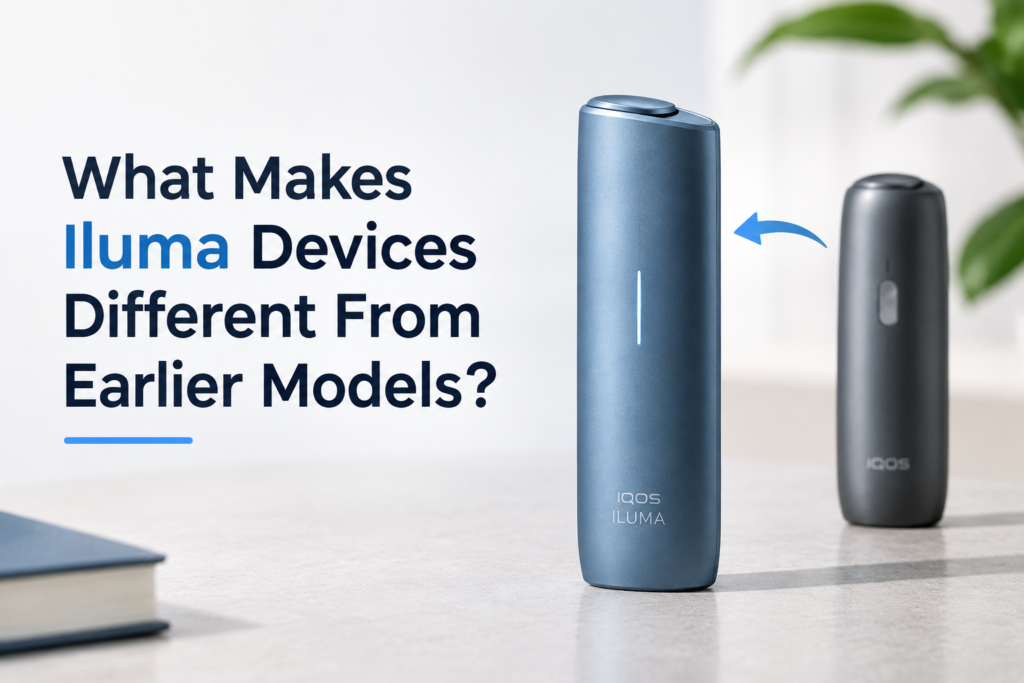
Heated tobacco technology has changed over the years, with newer devices designed to make the experience simpler and more convenient. Iluma Devices are part of this newer generation and are different from earlier models mainly because of the way they heat the tobacco.
Older heated tobacco devices generally used a small heating blade that was inserted into the tobacco stick. The newer system uses induction heating instead. This change affects the device design, the type of tobacco consumables used, cleaning needs, and the overall user experience.
Understanding these differences can make it easier to see what has changed between earlier models and the newer generation.
A New Way to Heat Tobacco
The main difference between Iluma Devices and many earlier models is their heating technology.
Earlier devices used a heating blade. When a compatible tobacco stick was inserted, the blade entered the stick and heated the tobacco from the inside. This process produced an aerosol without directly burning the tobacco.
Iluma Devices take a different approach. They use induction technology to heat a specially designed element inside the compatible tobacco consumable. The device creates an electromagnetic field, which heats this element and produces the aerosol.
This means the newer system does not need a traditional blade to heat the tobacco.
No Traditional Heating Blade
The lack of a heating blade is one of the clearest differences users may notice.
With older devices, the blade needed to enter the tobacco stick correctly. Because the blade came into direct contact with the tobacco, some residue could remain around the heating area after use. Regular cleaning was therefore an important part of device care.
Iluma Devices are designed without this traditional blade. Instead, the heating element is part of the specially designed consumable.
This change can make the device easier to use because there is no blade that needs to be inserted into the tobacco stick. It also changes the way the consumable and device work together.
Easier Cleaning and Maintenance
Cleaning is another area where the newer design can make a difference.
Traditional blade-based devices may collect tobacco residue around the blade and inside the heating chamber. Users generally need to clean these areas regularly to keep the device in good condition.
Since Iluma Devices do not use a conventional heating blade, there is less direct contact between the device’s heating component and the tobacco material. This can reduce the type of residue associated with blade-based systems.
However, the device still needs proper care. Users should follow the recommended cleaning and storage instructions and keep the device protected from moisture, dirt, and damage.
The blade-free design does not mean that the device should be ignored when it comes to maintenance. It simply changes what type of maintenance is needed.
Specially Designed Consumables
The heating system also means that newer devices use compatible consumables designed for induction heating.
Earlier models were made for tobacco sticks that worked directly with a heating blade. Iluma Devices are designed to work with consumables that contain the element needed for induction heating.
This is important for anyone considering a change from an older model. Consumables made for one heating system may not be suitable for another.
Before using a tobacco consumable, it is always important to check that it is designed for the specific device. Using the correct combination helps ensure that the device operates as intended.
A Different User Experience
Changing the heating system also changes how users interact with the device.
Older models require the tobacco stick to be positioned around a heating blade. Users need to insert the stick carefully to avoid problems with the blade or the heating process.
With Iluma Devices, the blade is removed from this process. The compatible consumable is designed to work with the induction system inside the device.
Some of the main differences users may notice include:
- No traditional blade needs to be inserted into the tobacco stick.
- The consumable is designed specifically for induction heating.
- The device and consumable work together as part of one heating system.
- There is less direct contact between the heating mechanism and tobacco material.
These changes can make the overall process feel more straightforward, especially for users who are already familiar with older heated tobacco technology.
Changes to the Device Design
The move to induction heating also affects the internal design of the device.
Older devices needed space for a heating blade and the components that supported it. With Iluma Devices, the internal structure is built around induction technology instead.
This gives manufacturers a different way to arrange the heating system and other internal components. Depending on the model, users may also notice changes in the device’s shape, controls, charging system, or general handling.
The exact features can vary between different models, but the main idea remains the same: the newer devices are built around a blade-free heating system.
How Earlier Models Compare With Iluma Devices
Looking at the main features side by side makes the differences easier to understand.
| Feature | Earlier Models | Iluma Devices |
| Heating method | Blade-based heating | Induction heating |
| Heating blade | Required | No traditional blade |
| Consumable design | Made for blade heating | Made for induction heating |
| Contact with tobacco | Heating blade enters the stick | Heating element is inside the consumable |
| Cleaning | Blade and chamber may need regular cleaning | Less residue around a heating blade |
| Device design | Built around a heating blade | Built around induction technology |
| User interaction | Stick needs to be positioned around the blade | Designed for blade-free use |
The table shows that the difference is more than a new exterior design. The heating system itself has been changed.
Why Induction Heating Is Important
Induction heating works by using an electromagnetic field to transfer heat to a suitable element. It does not require the heating source to physically touch the object in the same way as a traditional blade.
In Iluma Devices, this principle is used to heat the element contained within the compatible consumable.
This approach allows the heating process to work without a blade entering the tobacco material. As a result, the device, consumable, and heating system have been designed around a different method from earlier models.
For users, the most important point is that the newer technology changes how the entire system operates rather than simply adding a few new features.
What to Consider When Switching From an Older Model
Moving from an earlier device to an Iluma Device may require some adjustment because the heating system and consumables work differently.
Users should keep a few things in mind:
- Check that the consumables are compatible with the specific device.
- Follow the manufacturer’s instructions for use and care.
- Avoid trying to modify the device or use unsuitable consumables.
- Keep the device charged and stored in a suitable place.
- Understand that the newer system does not use the same blade-based process as older models.
Knowing these differences before switching can help users understand what to expect from the newer system.
The Evolution of Heated Tobacco Technology
The development of Iluma Devices shows how heated tobacco technology has moved beyond simply changing the outside design of a device.
Earlier systems focused on heating tobacco with a blade, while the newer approach changes the heating process itself. By using induction technology, the device can work with a specially designed consumable that contains its own heating element.
This change can influence several parts of the experience at once. It affects the device’s internal design, the consumables, cleaning requirements, and the way users prepare the device for use.
In this way, the newer generation represents a different approach rather than simply a small update to an earlier model.
Final Thoughts
Iluma Devices are different from earlier models mainly because they use induction heating instead of a traditional heating blade. This changes how the device interacts with the tobacco consumable and removes the need for a blade to enter the stick.
The newer design can also reduce the type of residue linked with blade-based systems and provide a simpler maintenance routine. At the same time, users need to use compatible consumables designed for the induction system.
For anyone comparing older and newer heated tobacco devices, understanding the heating method is the best place to start. The difference is not only in appearance or features but in the technology used at the heart of the device. For those exploring compatible products and options, FogFathers can also be a useful place to learn more about available choices.
