Charging your electric vehicle at home can make daily driving much easier. Instead of visiting a public charging station after work or planning trips around charging stops, you can plug in at home and charge overnight. Residential EV charger installation gives Houston homeowners a convenient way to keep an EV ready for the next drive while adding a dedicated charging solution to the property.
Before installing a charger, you need to consider your vehicle, electrical panel, available capacity, charger location, wiring distance, and local requirements. A professional electrical assessment can help you choose a setup that fits your home.
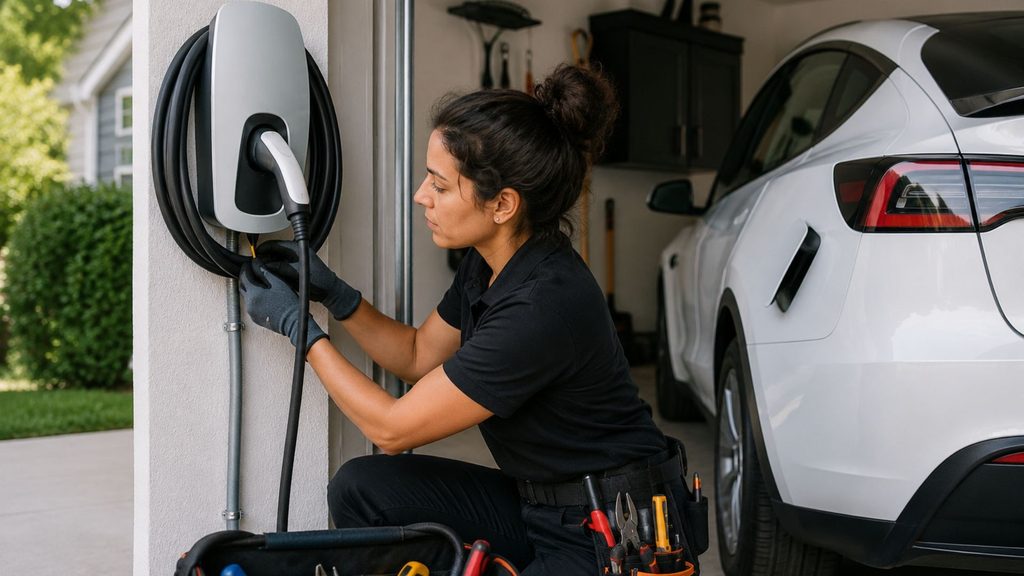
What Do You Need for a Home EV Charger?
A home EV charger needs more than a wall-mounted charging unit. The installation may require a dedicated circuit, suitable wiring, the correct breaker, proper grounding, and enough capacity in your home’s electrical system.
Level 1 charging can use a standard household outlet, but Level 2 charging is a common choice for homeowners who want faster charging. A Level 2 charger can provide more charging power than a standard household outlet, making it useful for drivers who use their EV regularly.
The right setup depends on your EV, charger specifications, existing electrical system, and where you park your vehicle.
Is a Level 2 Charger Better for Home Use?
For many EV owners, a Level 2 charger is a practical home option because it can charge much faster than a standard 120-volt outlet.
A Level 2 charger can be especially useful if you drive frequently, have a longer daily commute, or want to add more driving range during shorter charging periods.
However, faster charging does not automatically mean you need the highest-powered charger available. Your home’s electrical capacity and your vehicle’s charging capability should both be considered before selecting equipment.
Can Your Electrical Panel Handle an EV Charger?
Your electrical panel is one of the first things an electrician should check.
An EV charger adds a significant electrical load to your home. Your existing panel may have enough capacity, but that cannot be determined simply by looking at the number of unused breaker spaces. The home’s existing electrical demand also matters.
Air conditioning, electric ranges, dryers, water heaters, pool equipment, and other large appliances can already use substantial power. A professional load assessment can help determine whether the existing electrical service can support the additional EV charging load.
If the panel does not have enough capacity, an electrical panel upgrade may be needed before the charger is installed.
Why Hire a Home EV Charger Electrician in Houston TX?
Choosing a home ev charger electrician in houston tx can help you avoid problems caused by incorrect wiring, poor equipment placement, or an electrical system that cannot support the charger.
A qualified electrician can review your panel, determine the appropriate circuit, assess the charging location, and plan the wiring route. This is particularly important when the garage is far from the electrical panel or when the charger will be installed outdoors.
Professional installation can also help with permitting and inspection requirements. Houston-area requirements can vary based on the property and scope of the electrical work, so homeowners should confirm the applicable requirements before installation.
Where Should You Install an EV Charger?
The best charger location depends on where you normally park your vehicle.
A garage installation may provide convenient protection from weather and keep the charging equipment close to the vehicle. An outdoor installation can also work when the parking area is a driveway or carport.
The electrician should consider the distance between the panel and charger, cable routing, wall construction, weather exposure, and vehicle access.
A good installation location should allow you to connect the vehicle easily without creating a trip hazard or placing unnecessary stress on the charging cable.
What Happens During a Professional EV Charger Installation?
A professional installation generally starts with an electrical assessment.
The electrician reviews your vehicle and charger requirements, checks the existing panel, and determines the appropriate circuit and installation location. The wiring route is then planned based on the distance between the panel and charging point.
If the electrical system has enough capacity, the dedicated circuit and charger can be installed. If additional capacity is required, the electrician may recommend a panel upgrade or another suitable electrical solution.
After installation, the charger and electrical connections should be tested to confirm proper operation. Permitting and inspection may also be part of the process, depending on local requirements.
JN’L Electric provides residential EV charger installation for garages, driveways, and carports and can assess panel capacity as part of the installation process.
How Long Does Home EV Charger Installation Take?
A straightforward installation may be completed within a day, but the actual timeline depends on the property.
A short wiring run with an accessible electrical panel may take less time than an installation requiring a long cable route, outdoor work, trenching, or an electrical panel upgrade. Permit and inspection schedules can also affect the overall timeline.
For this reason, it is better to have the property assessed before expecting a specific installation time.
How Can You Prepare for Your EV Charger Installation?
Before the electrician arrives, know your vehicle make and model and decide where you normally park. If you already have a charger selected, keep its installation requirements available.
You should also tell the electrician about major electrical equipment in your home. This information can help with evaluating the home’s overall electrical demand.
Avoid buying a charger based only on its maximum charging speed. A professional can help determine whether your existing electrical system can support it and whether another charger may be more appropriate.
Why Does Professional Installation Matter?
An EV charger is connected to your home’s electrical system, so installation should not be treated like plugging in an ordinary household device.
Incorrect circuit sizing, unsuitable wiring, poor connections, or an overloaded electrical service can create safety and performance problems. Professional installation helps make sure the charger is connected correctly and that the home’s electrical system is assessed before additional load is added.
For Houston homeowners, local experience can also be useful when dealing with property layouts, outdoor installations, permits, and inspections.
Make Home EV Charging Easier
A home charging station can save time and make EV ownership more convenient, but the installation needs to match your vehicle and your home’s electrical system. A professional assessment can help you determine the right charger, installation location, circuit, and electrical capacity before work begins.
For Houston homeowners planning residential EV charger installation, JN’L Electric provides professional EV charging installations for homes, including Level 2 charging solutions for garages, driveways, and carports. With more than 20 years of electrical experience, the team helps homeowners select and install a charging setup suited to their property.
