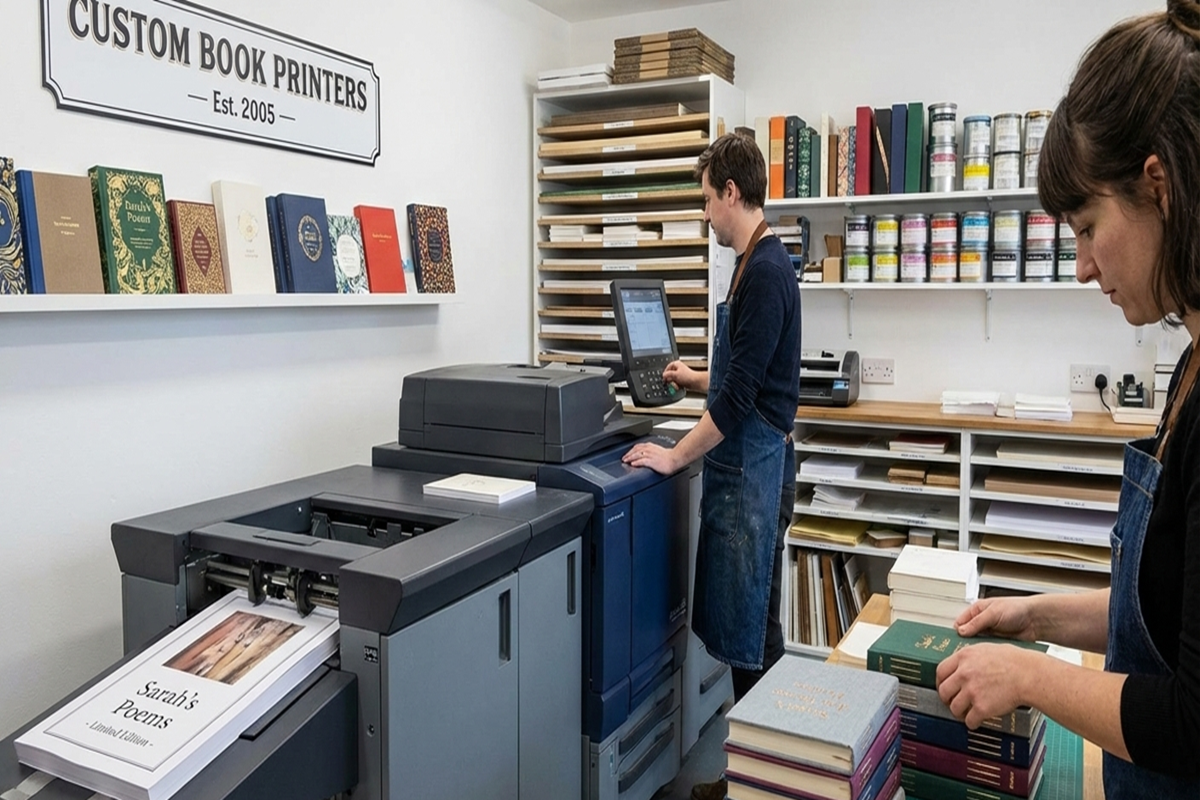
In our increasingly digital world, there’s something remarkably special about physical books. The weight of paper, the smell of fresh print, and the satisfaction of turning actual pages create an experience that screens simply can’t replicate. Whether you’re an artist showcasing your portfolio, a grandparent preserving family stories, or a business professional creating branded materials, custom book printing opens doors to possibilities you might not have considered.
This is your step-by-step guide to custom book printing in Australia and beyond. We’ll take you through personal and professional printing choices, discuss what it takes to be an ideal printing partner, and show you the nuts and bolts of making your imagination a reality. From getting your files right through to budgeting smart, you’ll learn how to make smart choices that guarantee your printed books live up to expectations.
Knowing Custom Book Printing: The Essentials
Custom book printing is no longer merely placing words on paper. It’s a high-tech procedure that allows you to have total control over the creation of your book. In contrast with traditional publishing, where standard formats and thousand-unit minimum print runs often confine you, custom printing allows you to print exactly what you require, in the manner in which you desire.
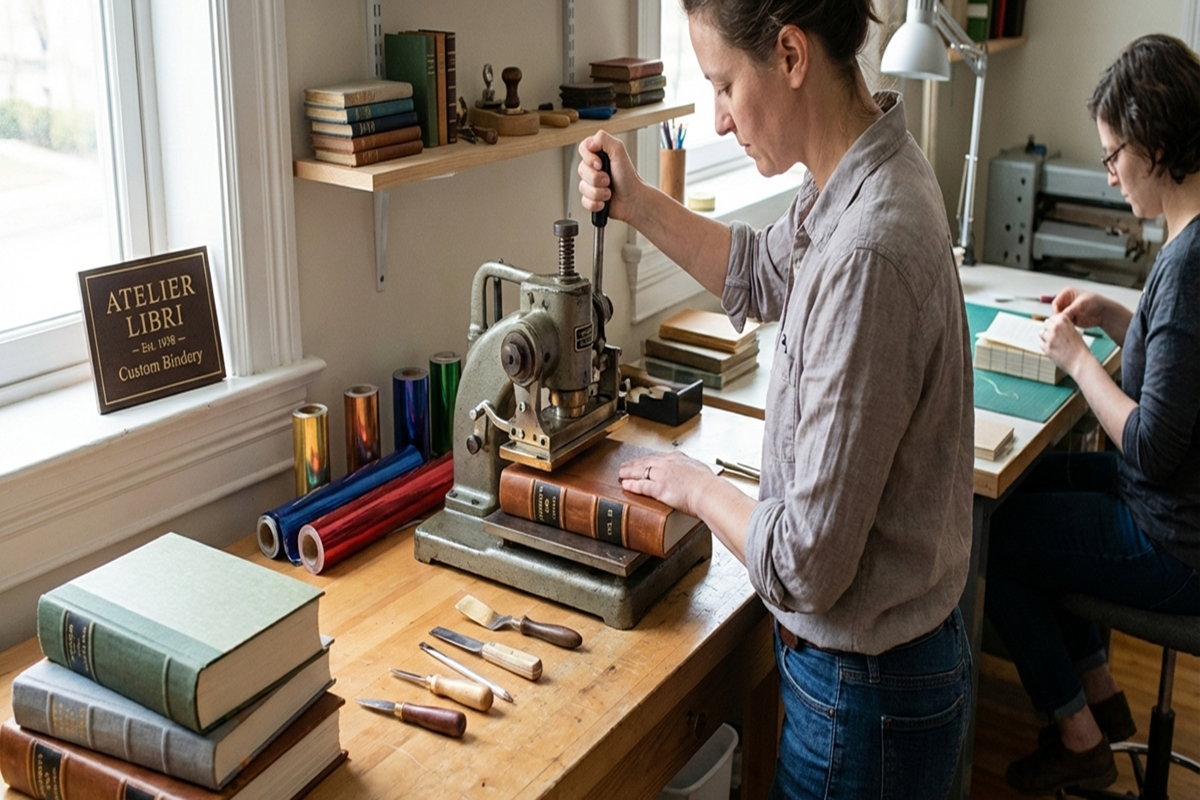
What really distinguishes custom book printing is the degree of personalisation on offer. You’re not limited to fixed sizes or paper formats. Want a square coffee table book with chunky, glossy pages? Fine. Want a pocket-sized poetry book printed on cream-coloured paper? That’s no problem either. You have control over the binding format, whether perfect bound for that professional feel, saddle-stitched for small books, or hardcover for extra ruggedness. The selection of paper weight, finish, and even specialty features such as foil stamping or embossing are all at your disposal.
Best Custom Book Printing Options for Personal Projects
Custom book projects take wondrously varied forms, and today’s printing facilities accommodate each individual requirement brilliantly. Family histories and genealogy books are now big sellers, enabling families to document their lives in professionally presented form equal to any bookshop publication. Such cherished mementos tend to meld text with photographs, family trees, and historical documents to create detailed records that will be treasured by generations to come.
Photo books are another huge sector in personal printing. Sticky photo albums with plastic covers are now a thing of the past. Today’s photo book printing provides museum-quality reproduction with rich colours and crisp details. Whatever you are capturing—a wedding, a year of foreign holidays, or your child’s first couple of years—such books bring digital memories into physical treasures. Most of these Australian printing companies now have easy-to-use design software that simplifies the process of creating layouts surprisingly easy, even for non-designers.
Professional Custom Book Printing Solutions
In business, custom book printing is a potent brand-building and client-conversation tool. Company portfolios and capability statements in the form of professionally printed hard-copy books instantly differentiate businesses from competitors using low-end brochures or digital presentations alone. These upscale materials convey professionalism and detail before you’ve even taken the stage in a meeting.
Employee handbooks and training guides are greatly aided by professional printing. Although electronic documents have their uses, hard copies provide everyone with access to important information no matter what technology problems arise. They’re especially useful for workshop materials, where attendees are able to mark up the pages right there. Professional printing in spiral binding lets books open flat, making them convenient for desktop use or hands-on training applications.
Local vs International Options for Custom Book Printing Australia
The Australian local book printing environment provides distinct benefits for local clients. Local printers are familiar with Australian norms, employ standard paper sizes, and avoid customs issues. You’re communicating in real-time without time zone compromise, and you’re working with firms subject to Australian consumer protection regulations. Buying from local businesses also returns money to the Australian economy and typically incurs a reduced carbon footprint for your project.
Yet international choices, especially from the Asian market, can provide superior price value on big print orders. The discount can be considerable – sometimes 40-50% less than native prices. But there are trade-offs with those savings. Shipping delays add weeks or months to your project schedule. Quality control is difficult when you cannot readily see the facility or ask for tangible samples. Language difficulties may complicate complicated projects, and issue resolution that spans national borders can be infuriating.
How to Get Your Files Ready for Custom Book Printing
File prep is what will either sink or swim your print job, but that’s where newbies get tripped up. The basis begins with resolution – anything that’s going to be printed must be a minimum of 300 DPI (dots per inch) when it’s trimmed to its finished size. That beautiful picture that’s perfect on your monitor may appear as a pixelated nightmare if it’s only 72 DPI. Text must be in vector form or very high resolution so it prints clean and readable.
Colour management is another important consideration. Your monitor shows colours in RGB (red, green, blue), but printers rely on CMYK (cyan, magenta, yellow, black). This inherent difference causes colours to change when printing. Professional printers will often supply colour profiles you can employ to get a preview of how your files will print. If colour precision is very important, think about sending for a printed proof prior to investing in the entire run. Converting your files to CMYK prior to submission allows you more control over the ultimate look.
Budgeting for Your Custom Book Printing Project
Knowing printing costs allows you to make sound decisions without foul surprises. The minimum price varies with a few factors: quantity, page size, paper quality, binding style, and color vs. black-and-white print. Typically, unit prices drop as quantity grows, with dramatic price breaks at specific levels. One book could cost $50, but 100 copies of the same book could cost $10 each.
Hidden expenses tend to blow your budget if you’re not vigilant. File preparation and design assistance increase costs if you cannot do them in-house. Proofing, particularly hardcopy proofs, comes at an additional cost but is worthwhile for significant projects. Shipping fees are heavy for heavy books or expedited shipping. Some presses charge set-up fees per distinct book, while others factor it into their price. Special treatments such as lamination, foil stamping, or dust jackets provide aesthetic value but are more expensive.
Conclusion
After venturing into the expansive territory of personal custom book printing possibilities, you now have the information to make your dream a reality. Translating digital file to printed book may appear a complicated process, but with a suitable printing ally and clear discernment of what you require, it becomes a thrilling artistic endeavour instead of a challenging project.
The most important thing to know is that custom book printing is no longer reserved for big publishers or big business. Whether you’re saving family memories, sharing your artistic creations, or taking your business materials to the next level, expert-quality print is more affordable and easier to access than ever. Local Australian printers versus overseas, digital versus offset printing, premium finishes versus standard – these are all based on your project needs, deadline, and budget.
