When building a home, most people focus heavily on cement, steel, and finishing materials. But one important decision that often does not get enough attention is the type of bricks used for construction.
Traditionally, clay bricks have been the go-to choice in India. However, cement bricks have steadily gained popularity over the years, especially in modern home construction. They offer a different set of benefits that can impact everything from structural strength to long-term maintenance.
Understanding where cement bricks work best, and where they may not, can help homeowners make smarter construction decisions.
What Are Cement Bricks?
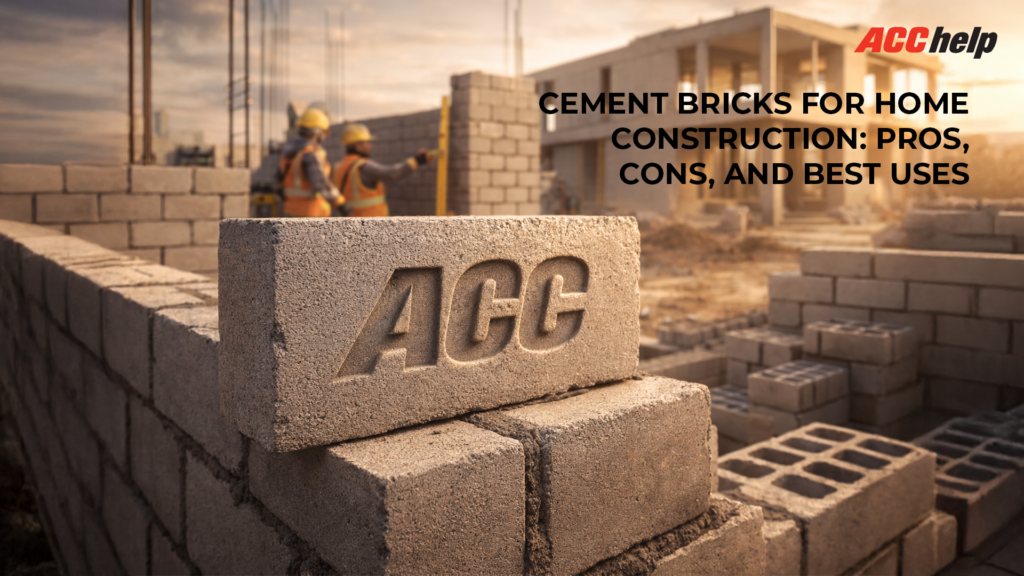
Cement bricks are manufactured using a mix of cement, sand, and aggregates. Unlike traditional clay bricks that are fired in kilns, these bricks are made using a controlled moulding and curing process.
This method produces bricks that are uniform in shape and size, have consistent strength, and a smooth surface finish.
Because they are machine-made, cement bricks are more standardized compared to traditional bricks. This helps reduce variations during construction and improves overall wall alignment.
The Key Advantages of Cement Bricks
Cement bricks bring several benefits that make them suitable for modern residential construction.
One of their biggest strengths is durability. They tend to be denser and stronger than many traditional clay bricks. This helps improve the load-bearing capacity of walls.
They also offer better resistance to moisture. In areas where dampness is a concern, cement bricks can reduce water absorption, lowering the chances of seepage over time.
Another advantage is uniformity. Because of their consistent size, they help reduce mortar usage and speed up construction. Cement bricks also contribute to sustainability. Since they do not require kiln firing, they help avoid the environmental impact associated with clay brick production.
The Cost Perspective
At first glance, cement bricks may appear slightly more expensive than traditional clay bricks. However, looking at the bigger picture often tells a different story. Their uniform size reduces the need for excessive plastering. Their smoother finish can also lower finishing costs.
Additionally, better strength and moisture resistance may reduce future repair costs, crack treatments, and waterproofing needs, making the ACC price of cement bricks a worthwhile investment. Over time, these savings can balance out the initial material cost.
Where Cement Bricks Perform Best
Cement bricks are particularly suitable for certain parts of home construction. They work well in load-bearing walls due to their higher compressive strength. This helps improve structural stability. They are also effective in areas exposed to moisture such as basements, bathrooms, and external walls. Because they absorb less water, they help maintain wall integrity over time.
In urban construction where precision and speed matter, cement bricks also help streamline the building process.
Some Limitations to Consider
While cement bricks offer many benefits, they may not be ideal in every situation.
- They can be heavier than clay bricks, which may increase handling effort during construction.
- Their thermal insulation properties are sometimes lower compared to traditional clay bricks. This means they may transfer heat more easily in certain climates.
- Proper curing during manufacturing is also essential. Poorly made cement bricks can develop surface cracks or lose strength over time. This is why the quality of raw materials and manufacturing standards is critical.
Impact on Construction Speed
Cement bricks can contribute to faster construction timelines. Their uniform dimensions reduce the need for adjustments during bricklaying. This helps create straight walls with minimal corrections.
The smooth surface also means less plaster thickness required and reduced finishing time. This can help accelerate project completion without compromising structural quality.
Long-Term Durability
One of the biggest advantages of cement bricks lies in their long-term performance. They are less prone to cracking, warping, and water damage so over time, this helps maintain the integrity of the structure.
Best Use Cases for Cement Bricks
Cement bricks are particularly effective in:
- Structural walls
- Moisture-prone areas
- Urban housing projects
- Boundary walls
They are also commonly used in modern residential developments where precision and durability are priorities. However, combining them with proper design and quality materials is important to achieve the best results.
Making the Right Choice
In order to choose the right bricks for your project, it is important to understand how the material will perform over the life of the home. Cement bricks offer strength, uniformity, and moisture resistance that make them suitable for many modern construction needs.
The Bigger Picture
Every construction decision impacts the long-term strength and maintenance of a home. Cement bricks provide a reliable alternative to traditional options, especially in environments where durability and precision matter.
By understanding their advantages, limitations, and ideal applications, homeowners and builders can make informed choices that support both structural safety and long-term value.
