The Silent Threat Costing Bangalore Businesses Every Day
Picture this: a customer walks into your restaurant in Koramangala, glances at the ceiling, and spots a fly buzzing near the food counter. They pull out their phone, leave a one-star review, and walk out. You never see them again.
This is not a hypothetical. It happens every single day across food businesses, hospitals, warehouses, and commercial kitchens in Bangalore, and most business owners do not realise that the problem has a precise, affordable, and highly effective solution.
Flies are not merely a nuisance. In a city like Bangalore, with its warm climate, rapid urban growth, and high-density commercial zones, fly infestations represent a direct threat to public health, regulatory compliance, and brand reputation. According to the World Health Organization, houseflies are capable of carrying over 100 different pathogens, including Salmonella, E. coli, and typhoid-causing bacteria. For food-adjacent businesses, a single inspection failure triggered by pest evidence can result in fines, closures, and irreparable reputational damage.
The good news? Solving this problem does not require expensive pest control contracts, toxic chemicals, or constant manual intervention. The modern electric fly catcher machine has redefined what smart pest control looks like, and Bangalore businesses are rapidly making the switch.
This guide will walk you through everything you need to know: why fly control matters more than ever in 2026, what to look for in an electric fly catcher machine, how to choose the right solution for your specific environment, and why Flintron Tech has become a trusted name for fly catcher solutions in Bangalore.
Why Fly Control Is a Business-Critical Issue in 2026
Bangalore’s commercial landscape has changed dramatically over the past decade. The city now hosts over 11,000 registered restaurants and cloud kitchens, thousands of healthcare facilities, large-format warehouses serving the e-commerce boom, and a rapidly expanding hospitality sector.
Each of these environments shares one common vulnerability: exposure to flying insects, particularly houseflies and fruit flies, which thrive in Bangalore’s largely tropical climate with temperatures that rarely drop below comfortable breeding ranges.
What has changed is the regulatory environment. FSSAI (Food Safety and Standards Authority of India) guidelines have become increasingly stringent about pest control documentation for food businesses. Zomato and Swiggy hygiene audits now factor in visible pest control measures. And consumer awareness amplified by social media means that a single viral image of a fly in a restaurant can undo years of brand building.
The result is that fly control is no longer a back-of-house afterthought. It is a front-line operational priority.
Understanding Electric Fly Catcher Machines: How They Work and Why They Are Superior
Before exploring how to choose the right product, it is worth understanding what makes electric fly catcher machines a superior alternative to traditional fly control methods.
The Technology Behind Modern Fly Catchers
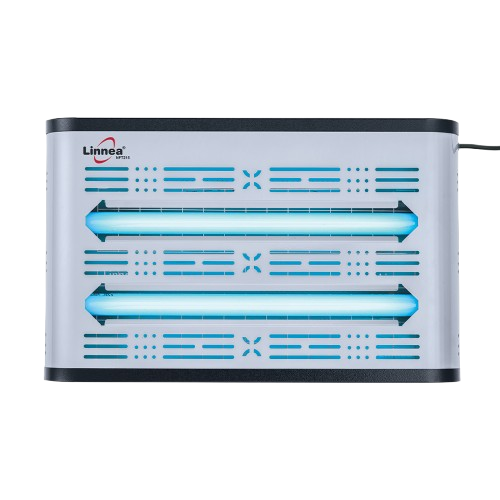
Electric fly catcher machines, also called UV fly traps or electric insect killers, work by emitting ultraviolet light at wavelengths (typically 365nm) that are highly attractive to flies and other flying insects. When insects approach the UV source, they are either electrocuted by a high-voltage grid (in zapper models) or trapped on a glue board (in glue trap models).
The key advantages over traditional methods include:
- No chemicals or sprays — zero risk of food contamination or harm to humans and pets
- Continuous 24/7 operation — unlike manual swatters or periodic spraying, these machines work around the clock
- Silent or near-silent operation — modern units designed for commercial use operate with minimal disruption
- Measurable effectiveness — catch trays provide visible evidence of the machine’s performance
- Cost efficiency — a quality electric fly catcher machine typically pays for itself within weeks when compared to recurring pest control service fees
Glue Board vs. Electric Grid: Which Is Right for Your Space?
Glue board fly catchers are the preferred choice for food processing areas, open kitchens, and hospitals. They trap insects without scattering insect fragments — a critical consideration in food hygiene environments.
Electric grid (zapper) models are better suited for warehouses, storage areas, outdoor commercial spaces, and environments where food exposure is not a concern. They tend to handle higher insect volumes and require less frequent maintenance.
Key Factors to Evaluate When Buying a Fly Catcher in Bangalore
The market for fly catchers in Bangalore has grown considerably, and not all products are created equal. Here are the factors that matter most:
1. Coverage Area Rating
Every electric fly catcher machine is rated for a specific coverage area, typically expressed in square feet or square metres. A unit designed for a 500 sq. ft. space will be largely ineffective in a 2,000 sq. ft. kitchen or warehouse. Always match the machine’s coverage specification to your actual space and consider purchasing units rated slightly above your requirement for consistent performance.
2. UV Lamp Quality and Lifespan
The UV lamps are the heart of any fly catcher. Lower-quality lamps lose their attractive wavelength output long before they visibly dim meaning your machine appears to be working while its effectiveness has significantly degraded. Look for machines that clearly specify lamp replacement intervals (typically every 6–12 months for quality products) and for which replacement lamps are readily available.
3. Build Quality and IP Rating
In commercial kitchens, humidity and cleaning chemicals are constant. Fly catchers used in these environments should carry an appropriate IP (Ingress Protection) rating to ensure longevity. For open kitchen or food prep areas, an IP44 rating or above is advisable.
4. Ease of Maintenance
The catch tray or glue board must be accessible for regular cleaning. Machines that require tools to open or are awkward to clean tend to go unmaintained, which defeats the purpose. Look for designs with front-access trays and clear cleaning instructions.
5. Certifications and Compliance
For FSSAI-audited food businesses, fly control equipment that comes with documentation of its pest control efficacy adds a layer of compliance support. Quality brands will provide product documentation suitable for audit purposes.
Choosing a Fly Catcher in Bangalore: The Local Context
Bangalore presents some specific challenges that general product guides tend to overlook.
The city’s microclimates vary significantly. Areas like Whitefield, Electronic City, and the outer ring road industrial zones experience higher insect pressure due to proximity to vegetation and water bodies. Central commercial areas like Brigade Road, MG Road, and Indiranagar have different challenges driven by high foot traffic and food density.
Seasonal variation also matters. The pre-monsoon and post-monsoon periods (roughly April–May and October–November) are peak fly breeding seasons in Bangalore, and businesses that are not adequately equipped during these windows tend to face their most serious pest pressure.
This is why sourcing from a supplier with local knowledge and the ability to provide on-site guidance is genuinely valuable — not just a marketing talking point.
Flintron Tech: A Bangalore-Based Solution for a Bangalore Problem
Flintron Tech has established itself as a reliable provider of commercial and industrial pest control technology for businesses across Bangalore and the broader Karnataka market.
Their range of electric fly catcher machines is designed with the Indian commercial environment in mind — accounting for local voltage requirements, humidity conditions, and the specific insect species most prevalent in urban Karnataka settings.
What sets Flintron Tech apart from generic e-commerce listings is the combination of product quality, availability of replacement parts (particularly UV lamps and glue boards), and the ability to advise businesses on placement strategy and coverage calculations specific to their premises.
For business owners searching for a dependable fly catcher in Bangalore, Flintron Tech offers both product-level quality and the kind of local accountability that makes a material difference when you need support post-purchase.
Their product range covers solutions for restaurants and cloud kitchens, hospitals and clinics, pharmaceutical and food processing facilities, warehouses and logistics centres, and retail and hospitality environments.
How One Bangalore Restaurant Solved Its Fly Problem
Consider a mid-sized South Indian restaurant in Jayanagar, seating approximately 80 covers. Despite regular pest control visits every fortnight, the kitchen and dining area continued to experience fly presence, particularly during the evening service period when the kitchen was at peak heat.
The root problem was that the periodic chemical treatment was addressing flies already present, but doing nothing to prevent new flies from entering through the service entrance and dining area doors.
After installing two appropriately rated glue board electric fly catchers, one in the kitchen prep zone and one near the dining entrance and following a structured placement strategy, the restaurant reported a dramatic reduction in fly sightings within the first week. The FSSAI hygiene inspection conducted two months later noted the fly control measures as a compliance positive.
The total cost of the two units was a fraction of three months’ pest control contract fees. The machines continue to operate with only periodic glue board replacement.
Future Trends in Commercial Pest Control: 2026–2030
The commercial pest control technology space is evolving rapidly. Several trends are worth tracking for business owners planning their pest management strategy beyond the immediate term.
Smart monitoring integration is emerging as the next frontier. IoT-enabled fly catcher machines that log catch data and send alerts when trays require servicing are already available at the premium end of the market. As component costs fall, these features will become standard in mid-range commercial products.
Energy efficiency improvements in UV lamp technology are extending lamp life while reducing power consumption — an important consideration for businesses with multiple units running continuously.
Regulatory tightening around chemical pest control in food environments is expected to accelerate globally, including in India, as food safety authorities push for more documentation-friendly and residue-free pest management approaches. Electric fly catcher machines are well-positioned to become the default standard.
Localised product development — machines designed for specific climatic and insect-profile conditions in Indian markets — is an area where domestic suppliers like Flintron Tech have a structural advantage over imported generic products.
Frequently Asked Questions
Q1: How many fly catcher machines do I need for my restaurant? This depends on your floor area and layout. As a general rule, plan for one appropriately rated unit per zone (kitchen, dining area, storage). A professional supplier can help you calculate the right coverage based on your specific dimensions.
Q2: Are electric fly catcher machines safe to use around food? Glue board models are specifically designed for food environments and are considered safe when positioned and maintained correctly. They should be placed away from direct food preparation surfaces and never directly above open food.
Q3: How often do I need to replace the UV lamp? Most quality commercial fly catchers require UV lamp replacement every 6 to 12 months, even if the lamp appears to still be illuminated. UV output degrades before visible light output, so timed replacement is important.
Q4: Can I use a fly catcher machine outdoors? Certain models are rated for semi-outdoor or covered outdoor use. Look for appropriate IP ratings and weather-resistant housing. Standard indoor units should not be used in direct exposure to rain or moisture.
Q5: Where is the best placement for a fly catcher in a commercial kitchen? Typically near entry points (doors, windows), in the transition area between receiving and prep zones, and away from direct food contact surfaces. Placement height matters — most flies travel at between 1 and 2 metres above floor level, so mounting in this range maximises effectiveness.
Conclusion
Flying insects are one of the most underestimated operational risks for commercial businesses in Bangalore. The combination of the city’s climate, regulatory expectations, and consumer scrutiny makes effective fly control not a luxury but a baseline requirement for any food, healthcare, or commercial facility that takes its reputation seriously.
The modern electric fly catcher machine offers a cleaner, safer, more cost-effective, and more consistent solution than traditional approaches and choosing the right product and supplier makes all the difference in long-term results. For businesses across Bangalore looking for dependable, commercially rated fly control solutions, Flintron Tech is worth evaluating as your first call. Their product range, local expertise, and commitment to ongoing customer support make them a credible partner for businesses that want to solve this problem properly once, and for good.
