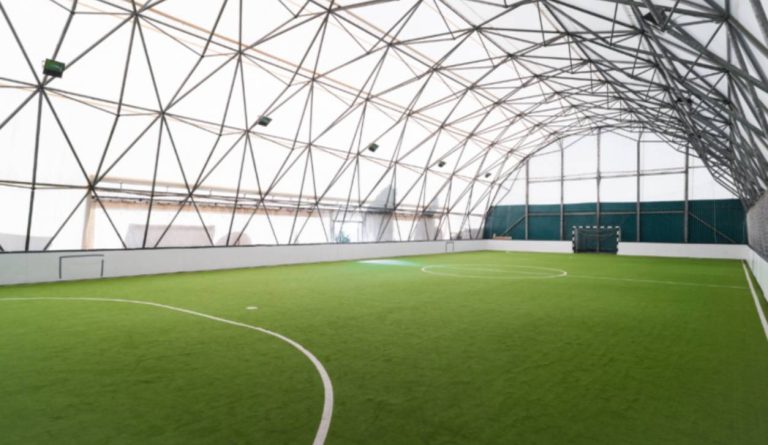
Sports facilities are vital community hubs in the United States, fostering civic engagement, athletic development, and communal bonding. They provide social and physical benefits, including teaching teamwork to youth, offering safe after-school spaces, and promoting lifelong health and wellness.
Investing in sports facilities is a significant capital expenditure for city councils, school boards, and private owners, requiring meticulous planning, engineering understanding, and community needs assessment for a high return on investment.
The Landscape: Types of Sports Facilities
Facilities are broadly categorized into outdoor and indoor environments, each with unique construction challenges. Modern facility construction prioritizes multi-sport adaptability for year-round usage and broad demographic catering.
Outdoor Environments
- Multi-use synthetic turf fields (Football, Soccer, Lacrosse)
- Baseball and softball diamonds with precision grading
- Track and field complexes for sanctioned meets.
- Pickleball, tennis, and basketball hard courts
Indoor Environments
- Multi-use fieldhouses with versatile flooring
- Specialized indoor turf arenas
- Community ice rinks and aquatic centers
- High-performance gymnasiums
The Five-Stage Construction Process
Constructing a premier facility is a precision engineering feat that follows a rigorous timeline.
- Planning and Permits: Feasibility studies, architectural renderings, and navigating local zoning laws. Ensuring compliance with environmental regulations like stormwater runoff is paramount.
- Site Preparation: Land clearing and precise topographical grading. Advanced subsurface drainage systems prevent water pooling, a critical factor in diverse US climates.
- Foundation and Surfacing: Laying crushed stone bases for hard courts or shock pads for turf. Precision at this stage is the difference between athlete safety and injury.
- Fencing, Lighting, and Amenities: Installation of safety netting, advanced LED lighting for night play, and the integration of scoreboards and seating.
- Quality Control: Final laser-testing for grade accuracy and measuring turf shock absorption (G-max testing) before handover.
Material Matters: Selecting the Right Surface
The surface is the athlete’s primary interface with the facility. Choosing the right material impacts performance, safety, and long-term costs.
Acrylic & Synthetic Turf
Acrylic Surfaces are standard for tennis and pickleball, offering vivid colors and weather resistance. Increasingly, cushioned systems with rubber particles are chosen for joint protection.
Synthetic Turf has revolutionized field sports, particularly in drought-prone regions like Texas or California. It offers all-weather usability and saves millions of gallons of water annually. Modern turf often includes cooling infills for hotter climates.
High-Performance Materials
- Recycled Rubber: Used for running tracks; excellent shock absorption and eco-friendly.
- Asphalt & Concrete: Durable foundations that require expert engineering to survive freeze-thaw cycles.
- Northern Hard Maple: The “Gold Standard” for indoor basketball, requiring strict climate control.
Modern Trends: Sustainability and Technology
Today’s facilities are smarter and greener than ever before. Key trends include:
- Eco-Conscious Construction: Permeable pavements for filtration and solar-powered infrastructure are becoming industry standards.
- Smart Facility Tech: LED systems controlled via smartphone apps allow for automated schedules and significant energy reduction.
- Universal Accessibility: Moving beyond basic ADA compliance to inclusive playgrounds and sensory-friendly zones for spectators.
The Partner Choice: Local Expertise
Choosing a construction partner with “Hometown Advantage” is critical. Local firms understand regional soil compositions, humidity levels, and seasonal variations. They hold established relationships with municipal zoning boards, which can significantly accelerate the permitting process.
When selecting a partner, ensure they specialize specifically in athletic construction, as the tolerances are much tighter than standard commercial building. Always tour past local projects to assess how the surfaces have aged over 3-5 years.
Final Thoughts: Quality as a Cost-Saver
Expert construction is the ultimate long-term value. While a low upfront bid from an inexperienced contractor might be tempting, poor site preparation or inadequate drainage can lead to catastrophic structural failure.
Investing in top-tier engineering today prevents the heavy costs of remediation tomorrow—especially when working with experienced firms like Arrant Construction.
Local sports facilities are more than just venues; they are the bedrock of community identity and youth development. Build them to last.
