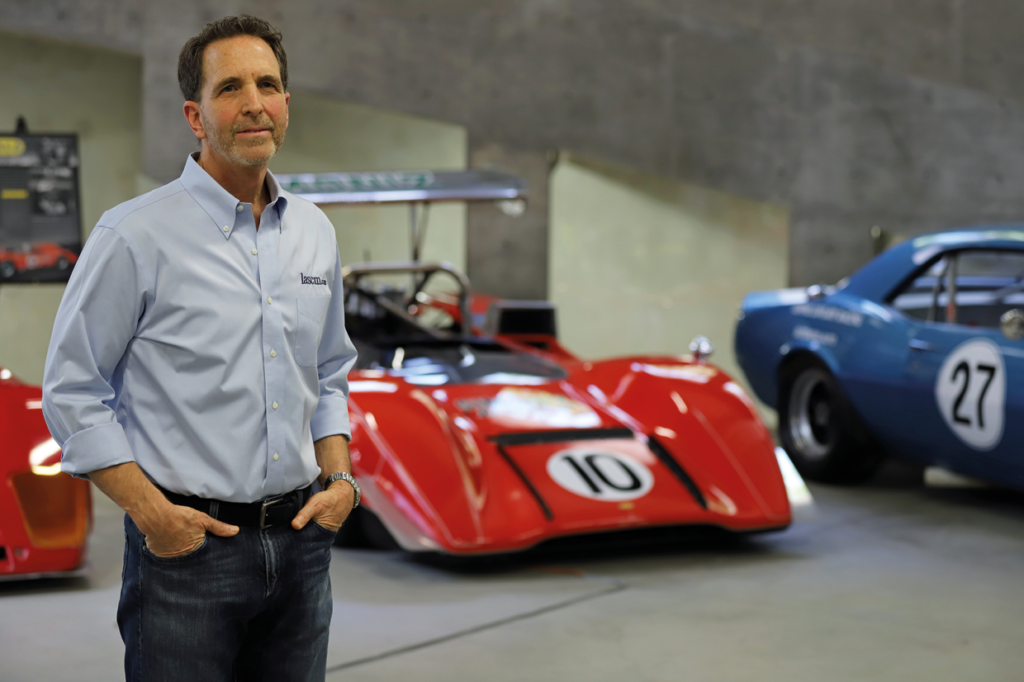
Most people drive past West Hollywood without knowing what sits above the Sunset Strip. One building holds over 4,000 vintage slot cars, rare model kits, and decades of American racing history. Scott Bader Los Angeles is not just a name, it represents one of the most remarkable private collections in the world. If you love classic cars, racing history, or the golden era of the 1960s, this museum was built for people like you.
The Man Who Never Stopped Collecting
Scott Bader grew up in Los Angeles during the 1960s. Back then, slot car racing was everywhere. He rode his bicycle to a local indoor racing track near Los Angeles as a kid. His first slot car was a 1:24-scale Porsche 904. That one small purchase lit a fire that never went out.
He built a successful career as the CEO of a construction supply company, a role he has held for over four decades. In the early 2000s, he stepped back from business. That break gave him time to return to his two real loves classic cars and slot cars. By 2010, when he returned full-time to his company, the collection had already grown into something far bigger than a hobby.
Scott Bader Los Angeles: What Makes This Museum One of a Kind
The Los Angeles Slot Car Museum sits inside Bader’s private residence in West Hollywood, California. He designed the building himself. It includes multiple floors connected by a large internal lift. The facility functions as a home, a museum, and a working restoration shop all at once.
No other private collection matches it in scale or depth. The museum focuses on American slot car racing from 1961 to 1973 the era when the hobby exploded across the United States. Bader captured that moment in time and preserved it with rare precision.
What You Will Actually See Inside
Walking into the main display room changes how you think about this hobby. Over 4,000 slot cars, kits, parts, and accessories fill the space. Most items remain mint in their original 1960s packaging. The colors, the box art, the typography all of it is frozen in time.
The collection covers rare and historically significant items including:
- Trade packs and prototypes never released to the public
- Personal racing cases owned by famous professional slot car drivers
- Original advertising materials, posters, and hobby publications
- Artifacts that go back to 1913
You will also find hundreds of vintage model kits. The depth of that section alone makes a strong case for renaming it the Los Angeles Slot Car and Model Kit Museum.
The Experience Goes Beyond Looking
Bader designed the museum visit to engage all your senses. Twelve glass-screen monitors connect together to play a continuous video montage of vintage slot car racing history. Classic 1960s music plays in the background throughout the tour.
Here is the detail that surprises most visitors. Oil of wintergreen, a tyre additive used during the 1960s racing era gets pumped through the building’s air system. That scent alone triggers memories in people who grew up in that period. The museum uses atmosphere, not just display cases, to tell its story.
The display environment maintains controlled temperature and humidity. Every item receives full identification and condition inspection before it enters the collection.
The Full-Size Car Collection You Did Not Expect
The museum is only part of what the property holds. Bader’s full-size classic and race car collection occupies the same facility. These are not decorative pieces. Each car connects to a chapter of American motorsport history.
The collection includes a 1969 Can-Am racer, a 580bhp Trans-Am Camaro Z/28, a 1966 Corvette that became the most successful car of its class in B Production racing, and Ronnie Peterson’s 1971 Formula One car that finished second in the World Championship that year. These machines raced hard. They carry real history.
The Online Museum Makes It Accessible to Everyone
Not everyone can visit West Hollywood. Bader solved that problem by building one of the most comprehensive online archives dedicated to vintage electric model car racing. The digital museum holds a massive bank of visual and technical information. Collectors worldwide use it to identify rare items, research values, and connect with the hobby’s history.
If you collect slot cars or simply want to learn, the online platform gives you access to resources that do not exist anywhere else in this form.
Access Is Limited and That Matters
The physical museum opens to the public only a handful of times each year. Entry works by Lucky draw and appointment. Spots fill quickly. If you want to visit, you need to plan ahead and act fast when opportunities open.
This is not a tourist trap. It is a private collection that Bader opens to genuine enthusiasts with purpose and care. That selective access protects the collection and keeps each visit meaningful for the people who attend.
Why This Collection Represents More Than a Hobby
Bader financed a major collector’s book on the history of American slot car racing — a six-figure project built purely out of passion. He serves on the Model Car Hall of Fame Selection Committee for the slot car category. His work has shaped how the hobby gets recognized and preserved across the country.
Scott Bader Los Angeles stands for something larger than one man’s collection. It represents a commitment to preserving a cultural moment that shaped how an entire generation of kids experienced cars, speed, and competition.
Plan Your Visit
If this collection speaks to you, do not wait. Visit the official website to learn about upcoming open dates, Lucky draw registration, and how to book your appointment. Spots are limited and demand is real. Visit us and experience one of the most unique collections in the United States firsthand.
Frequently Asked Questions
What is the Los Angeles Slot Car Museum?
It is a private museum in West Hollywood, California, housing over 4,000 vintage slot cars, model kits, parts, and racing memorabilia from the 1960s era.
Who owns the LA Slot Car Museum?
Scott Bader, a Los Angeles-based entrepreneur and CEO, owns and personally curated the entire collection over several decades.
Is the museum open to the public?
Yes, but access is limited. The museum opens a few times each year by Lucky draw and appointment only.
What years does the collection focus on?
The collection centers on American slot car racing from 1961 to 1973, with some artifacts originating as early as 1913.
Can I explore the collection online?
Yes. The museum operates a detailed online archive where collectors can browse the collection and access vintage slot car research and identification resources.
