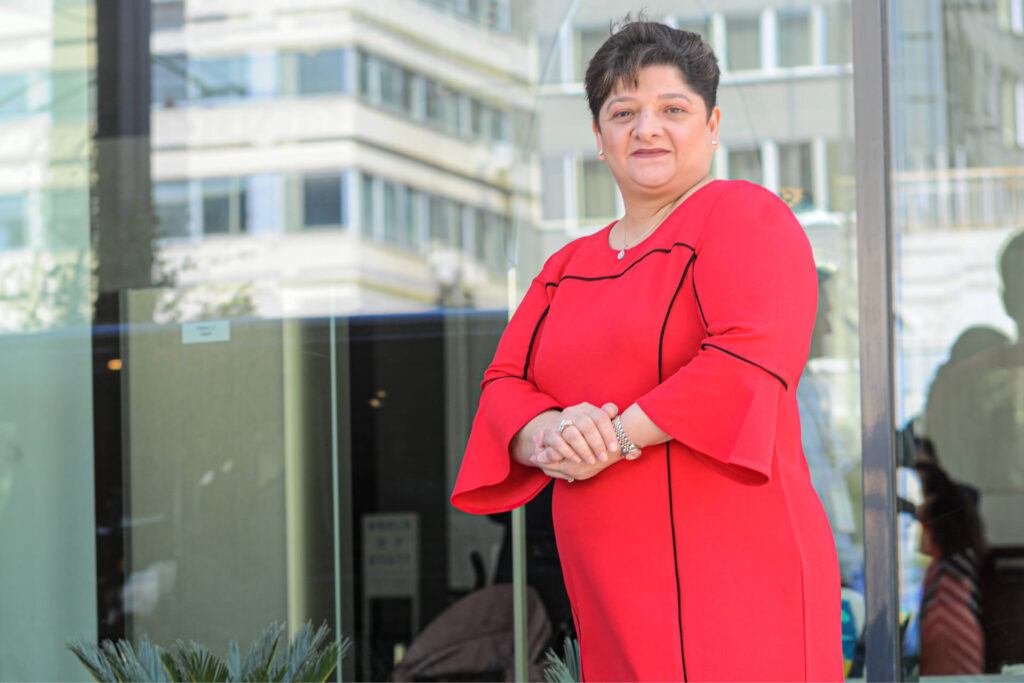
Leadership often looks impressive from the outside. Titles, expansion, public recognition. Yet the real test of leadership shows in day to day decisions. It shows how teams work together when no one is watching. At LAS Group and its aviation services division, that steady hand can be seen in the approach taken by Humin Daver.
Her leadership is not loud. It is structured. Measured. Thought through.
LAS Ground Force operates in a demanding space. Aviation ground services leave very little room for error. Aircraft turnarounds must be smooth. Timelines must be met. Safety cannot be compromised.
In such an environment, leadership must be practical, not theoretical. This is where the framework behind Humin Daver’s approach becomes clear.
A Vision That Feels Real, Not Decorative
Lots of leaders discuss vision. Few make it usable. The direction is obvious in this case. The emphasis is on consistency, working performance and trusted collaborations in airport systems.
The organisation does not focus on quick headlines but on creating a reputation that is here to stay.
That clarity removes confusion. Teams understand what matters. They know that performance is not just about speed, but about consistency. When goals are grounded in reality, people can align around them without second-guessing.
Humin Daver places strong emphasis on ensuring that strategy translates into daily behaviour. Vision is not framed on a wall. It is reflected in how teams operate on the ground.
People at the Centre of Performance
Aviation is process driven. But processes do not run themselves. People do.
One of the defining elements of Humin Burzin Daver’s leadership style is the weight given to human capital.
Training is not treated as a tick-box exercise. It is seen as a long-term investment. When employees understand procedures deeply, they perform with confidence.
There is also an understanding that pressure comes with the territory. Airports are fast-paced. Unexpected situations arise. In such moments, a well-supported team responds better than one that simply follows orders.
Humin Burzin Daver has consistently reinforced the importance of professional development. Mentoring and accountability are inseparable. This makes it a culture of having high standards without necessarily being oppressive.
Discipline Without Rigidity
Ground handling operations demand structure. There are checklists, compliance measures and tight schedules. However, structure does not mean inflexibility.
Under the leadership of Humin Daver, operational discipline is treated as a backbone, not a burden. Standard procedures exist to reduce risk and improve consistency. Yet teams are encouraged to think, assess and respond when situations change.
That balance matters. Too much rigidity slows progress. Too little structure invites chaos. The framework here sits in the middle. Expectations are clear. Results are measured. Learning is ongoing.
Growth That Respects Capacity
Expansion can be tempting, especially in sectors linked to aviation growth. However, scaling too quickly often exposes weaknesses.
A notable feature of this leadership approach is restraint. Growth is pursued, but not recklessly. Infrastructure, staffing and operational readiness are evaluated before stepping into new opportunities.
This careful pacing builds stability. It ensures that service quality does not decline during expansion. It also strengthens trust with airport partners and airline clients.
Accountability as a Habit
In many organisations, accountability surfaces only when something goes wrong. Here, it functions as a daily discipline.
Performance reviews, feedback loops and operational assessments are part of the routine practice. Challenges are examined openly. Improvements are discussed without drama.
This steady reflection prevents small issues from becoming larger ones. It also reinforces responsibility at every level.
Conclusion
The leadership approach of Humin Daver rests on clarity, operational discipline and genuine investment in people. It avoids noise. It avoids unnecessary complexity. Instead, it focuses on building capability that lasts.
In a sector where pressure is constant and margins are tight, that steady framework makes a difference. It creates resilience. It supports growth. Most importantly, it builds a culture where performance is not accidental, but intentional.
