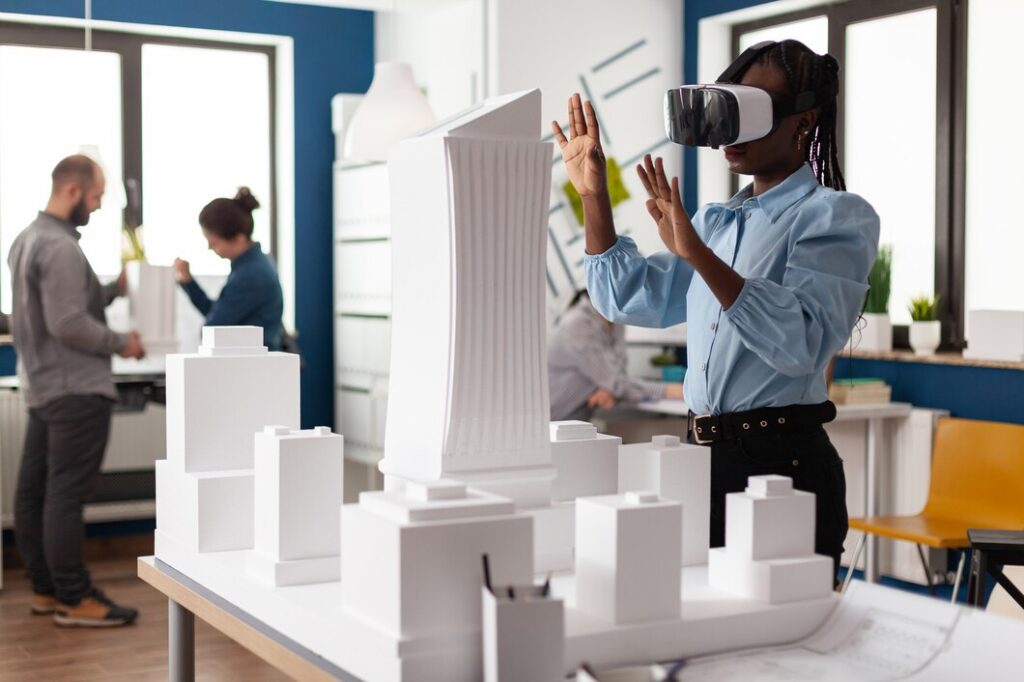
The digital transformation in the real estate industry is going on fast. Buyers do not need to use brochures, photographs, or physical visitation to discuss property anymore. Rather, the use of immersive technologies is transforming the process of marketing and exploring properties. Virtual Reality in Real Estate is emerging as an effective tool where potential buyers can stroll around properties anywhere in the world.
This is not just a trend for real estate developers, brokers, and property marketing firms. It is a strategic investment. Virtual tours ensure that the process of buying is frictionless, enhance customer interaction, and speed up property sales. VR in Real Estate is rapidly turning into a competitive edge as digital-first customers insist on being able to interact with their choices.
The Rise of Virtual Reality in Real Estate
During the last several years, the tendency for house shoppers to begin their search online has been growing. Based on a number of real estate technology research findings, most buyers would like to have digital viewing capabilities first, prior to making an appointment to visit the location. This has led to the expectation that companies should embrace the use of VR Solutions that offer a three-dimensional experience when exploring the property.
Virtual Reality in Real Estate allows one to tour a property in a VR headset, a mobile phone, or a desktop. They are able to navigate the rooms, view the designs, and get the sense of the space that can not be realized by traditional photos.
This technology has several benefits:
- Interactive and immersive experience of the property.
- Fewer physical requirements to visit physical sites.
- The layout of the property is more easily traced.
- Growth in the confidence level of buyers before purchase.
The advantages that such companies have are the reason why VR is being incorporated into marketing strategies by real estate firms all over the world.
Why Real Estate Companies Are Adopting VR Property Tours
1. Enhancing Buyer Experience
Conventional property advertisements are usually dependent on static photographs and plans. Although very handy, they are not able to capture the size or the feel of a property.
VR in Real Estate alters this by providing walkthroughs that are immersive. Customers can move virtually across the world, out of the living room to the kitchen, around bedrooms, and even to the balcony.
2. Reaching Global Buyers
The real estate market has also managed to get more international. Investors usually buy properties that are not easily accessible in the cities.
Virtual Reality in Real Estate allows foreign buyers to view houses from a long distance. The real estate companies are able to display properties to customers in various nations without them having to travel.
3. Faster Sales and Shorter Decision Cycles
Before a buyer decides on property sales, he/she usually takes several visits to the site. Virtual tours eliminate this friction as they enable the prospects to assess the property beforehand.
Once the buyers know the layout and feel of a property due to the use of the VR Solutions, a physical visit is now a confirmation process as opposed to an exploration process.
4. Marketing Properties That Are Still Under Construction
Marketing of properties before they are built is also one of the greatest struggles in real estate marketing. Customers tend to have difficulties envisioning what the completed house will resemble.
This is the place where Extended Reality in Real Estate comes in very handy. Virtual reality, augmented reality, and digital simulations are integrated into extended reality technologies to present future developments.
The Role of VR Try-On Solutions in Property Customization
One more new trend is utilizing VR Try On Solutions when customizing a real estate. Customers are more demanding when it comes to custom-made houses, which will be personalized in accordance with their wishes.
Using VR customization software, the buyer is able to test various interior designs prior to the property being developed.
For example, they can:
- Modify textures and wall color.
- Test furniture layouts
- Investigate the lighting differences.
- Visualize decor styles
The buying customers can make quality decisions when customizing their designs, and developers can deliver customized properties through these virtual design experiences.
Conclusion
Virtual Reality and Real Estate are changing the property market at a rapid pace. VR technology is transforming buyer-developer dynamics through the ability to provide a real-world experience in property tours, high global access, expedited decision-making, and custom design experiences.From virtual in Real Estate marketing strategies to the high-tech XR in Real Estate simulations and VR Try On Solutions, the immersive technology is proving to be an essential instrument to current businesses in the property sector.
