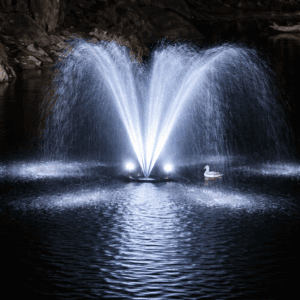
A pond that looks lively and stays healthy usually has one thing in common: steady water movement. Without it, surface water can grow stagnant, oxygen levels can drop, and the pond loses much of its appeal. For medium to large ponds, a 3/4 HP pond fountain often provides the circulation needed to change that. This guide explains how these fountains work, what features to look for, and how to match one to your space. Along the way, you will also find practical tips on spray patterns, lighting, and placement.
Why Circulation and Aeration Matter
A fountain lifts water into the air and returns it to the surface, which improves oxygen levels and reduces stagnant areas. Better circulation supports fish and plants and can benefit water clarity over time. Ponds that are medium to large in size often need more power than a smaller unit can provide to maintain consistent water movement across the surface. That is where a higher horsepower motor becomes valuable.
What a 3/4 HP Model Delivers
A 3/4 horsepower motor is a step up from smaller units. Floating systems in this class move about 6,600 gallons per hour and run on standard 120V power. A 100-foot electric cord allows flexible placement, so the fountain can sit where it looks best and performs best. Because this 3/4 HP pond fountain design floats, it adjusts with changing water levels, and a mooring rope helps hold it in position. Many systems also include a debris protection bag over the pump to help keep intake areas clear.
Spray Patterns and Nozzles
Spray patterns shape how a fountain looks and how it moves water. Interchangeable nozzles let you change the display without replacing the entire system, and complete kits often include five different nozzles. Taller, narrower sprays create a dramatic focal point, while wider patterns spread water across more surface area. Consider pond size, depth, and the look you want, then experiment to find the pattern that fits. Wind exposure also matters, since a tall spray may drift more than a low, wide one.
Lighting for Nighttime Appeal
Lighted versions turn a functional feature into an evening centerpiece. Typical kits use a three-light LED set with 12V, 6-watt bulbs, available in white or color-changing options. White light offers a clean, classic look, while color-changing sets add variety for entertaining or seasonal themes. Lights improve nighttime visibility around the water, but they do not change how well the fountain circulates and aerates. Lighted and non-lighted models perform the same in that respect, so the choice is purely visual.
Choosing and Installing the Right Fit
Start by estimating your pond’s surface area and depth, then decide how much movement you need. When you compare each 3/4 HP pond fountain option, check the pump rating, cord length, included nozzles, and whether lights are part of the kit. Floating designs are typically straightforward to install: assemble the unit, attach the mooring rope, place it in the water, and plug it into a protected outlet.
Care and Seasonal Upkeep
Regular maintenance keeps performance strong. Rinse or clean the pump debris bag as needed, check the nozzles for buildup, and inspect the cord and connections for wear. Remove leaves and floating debris that could reach the intake. If your climate includes freezing temperatures, plan how you will handle the fountain during winter so equipment stays protected.
Conclusion
A well-chosen fountain improves circulation, adds oxygen, and gives a pond a lively focal point. Match the power to your pond size, pick a spray pattern that suits your space, and plan for safe electrical setup. If evening ambiance matters to you, water fountain LED lights can turn the same fountain into a glowing centerpiece after dark without affecting performance. Take your time comparing features, and keep up with basic maintenance.
