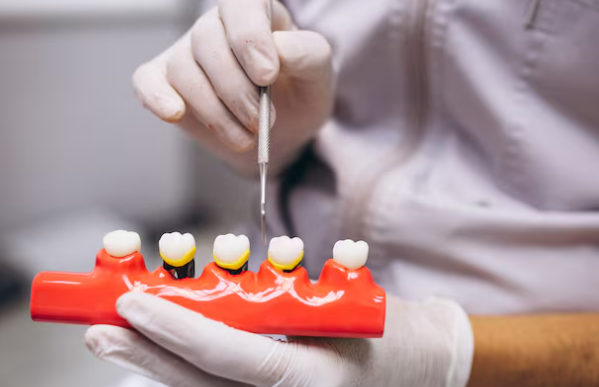
Replacing a missing tooth involves more than restoring the visible appearance of a smile. The replacement should also help restore everyday functions such as chewing and speaking while fitting comfortably with the surrounding teeth. A porcelain restoration is one option used in fixed tooth replacement because ceramic materials can closely resemble natural enamel. Understanding how a porcelain teeth bridge works, who may benefit from it, and what the treatment involves can help patients have more informed conversations with their dentist.
What Is a Porcelain Bridge?
A dental bridge is a fixed restoration designed to replace one or more missing teeth. It generally consists of an artificial tooth, called a pontic, supported by neighboring teeth or other structures. The American Dental Association notes that bridges may be made from porcelain, metal alloys, gold, or combinations of materials.
Porcelain is particularly valued for its tooth-colored appearance. Modern ceramic materials can provide a more natural visual result than traditional metal-based restorations, although the specific material selected depends on factors such as the location of the missing tooth, bite forces, and available support. The ADA notes that newer porcelain tooth bridges offer increasing options for combining aesthetics with strength.
How Does the Treatment Work?
Treatment typically begins with an examination of the missing tooth area and the teeth that may support the restoration. The dentist evaluates the condition of the gums, remaining teeth, bite, and available support before determining whether a fixed bridge is appropriate.
For a conventional bridge, the supporting teeth, known as abutment teeth, are prepared so the restoration can fit securely. Impressions or digital scans are then used to create the bridge. A temporary restoration may be placed while the permanent bridge is being fabricated.
At a subsequent appointment, the finished bridge is checked for fit, appearance, bite, and comfort before being permanently attached. The ADA describes fixed bridges as restorations that generally require preparation of the supporting teeth and more than one dental visit.
When Can a Porcelain Bridge Be Considered?
A porcelain teeth bridge may be considered when one or more adjacent teeth are missing, and the surrounding teeth can provide adequate support. However, not every missing-tooth situation is suitable for the same bridge design.
The condition of the potential abutment teeth is especially important. Teeth affected by significant decay, fractures, or inadequate supporting structures may not provide a reliable foundation. Gum health also matters because inflammation or periodontal disease can compromise the supporting tissues.
An implant-supported bridge represents another approach. Instead of relying primarily on neighboring natural teeth, implants can provide support for replacement teeth. The choice between conventional and implant-supported treatment depends on oral health, bone conditions, the number and location of missing teeth, and the patient’s treatment goals.
What Are the Benefits?
One major advantage of porcelain is its ability to resemble natural tooth structure. Ceramic restorations can provide tooth-colored aesthetics, and advances in dental materials have expanded the range of ceramic options available for fixed restorations.
A fixed bridge also remains in place during normal activities, unlike a removable partial denture. It can help restore chewing and speaking after tooth loss while filling the visible gap.
However, porcelain is not indestructible. Ceramic materials can be susceptible to fracture or chipping, particularly when exposed to excessive stress. Material selection therefore needs to account for the position of the restoration and the forces placed on it.
How Should It Be Maintained?
Daily oral hygiene remains important after bridge placement. Patients should brush thoroughly and clean around the supporting teeth and beneath the artificial tooth. Because the area underneath the porcelain teeth bridge can be difficult to reach with an ordinary toothbrush, a dentist or hygienist can demonstrate suitable cleaning techniques.
Regular dental examinations are also important. They allow the dentist to monitor the supporting teeth, gums, bridge fit, and surrounding oral tissues. Maintaining healthy abutment teeth is particularly important because the stability of a conventional bridge depends on its supporting foundation.
Conclusion
A missing tooth can affect both oral function and appearance, but the most suitable replacement depends on individual circumstances. Material, bridge design, supporting teeth, bite, gum health, and long-term maintenance should all be evaluated before treatment. For patients considering a dental bridge, discussing these factors with a qualified dentist can clarify whether porcelain is appropriate and which restoration design best suits the condition of the mouth.
