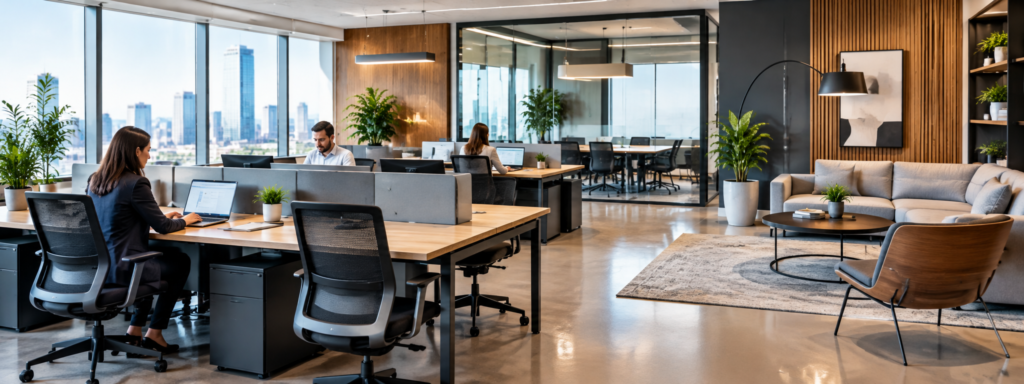
The modern workplace has evolved far beyond traditional rows of closed cubicles and rigid seating arrangements. Today, organizations recognize that the physical layout of an office directly influences employee morale, daily efficiency, and long term business success. Creating an environment that balances open collaboration with private focus areas requires careful spatial planning and a deep understanding of how teams operate.
Strategic office planning involves more than simply filling a room with desks and chairs. It requires a holistic assessment of traffic flow, natural lighting, acoustic management, and brand identity integration. Companies that invest professional effort into layout optimization often notice dramatic improvements in cross department communication and overall job satisfaction.
Ergonomic Workplace Solutions and Employee Productivity
Workplace wellness has rightfully taken center stage in contemporary office planning strategies. Physical health and mental well being are deeply intertwined with the indoor environment, making ergonomic investments essential rather than optional. Standing desks, active seating options, and well positioned lounge areas encourage movement and prevent the sluggishness associated with prolonged sitting.
Providing personalized ergonomic adjustments empowers workers to tailor their personal workstations to their specific physical preferences. Adjustable monitor arms, lumbar support chairs, and tactile desk accessories reduce repetitive strain injuries and foster better posture. When staff members do not have to struggle against uncomfortable seating or poorly angled displays, their overall focus sharpens significantly.
The Office Is Becoming a System of Work Areas
A modern office can be understood as a collection of different environments rather than one large room. Each area can serve a specific purpose.A focused workstation supports individual work. A meeting room supports structured discussion. A lounge can encourage informal conversations. A shared table can support short collaborative sessions.
This approach gives employees more choice without requiring a huge building. The challenge is finding the right balance. Too many specialized spaces can make an office complicated and expensive, while too few can force employees into environments that do not suit their work.
Designing Furniture Around Activities
The first question should not be “Which desk should we buy?” It should be “What activities need to happen here?”
Different activities create different furniture requirements.
For example:
- Concentration requires appropriate visual and acoustic conditions.
- Collaboration requires surfaces where people can gather comfortably.
- Meetings require seating and technology access.
- Informal work benefits from relaxed furniture.
- Storage needs to be close enough to remain convenient.
Once activities are identified, furniture becomes a tool for supporting them.
Building Zones Without Building Walls
Furniture can help divide an office into functional zones without permanent construction. Low storage units, screens, shelving, plants, and seating arrangements can create visual boundaries while preserving openness.
This can be particularly useful for organizations that expect their teams to change over time. Permanent walls can be expensive to modify, whereas furniture based zoning can be adjusted more easily.
Balancing Privacy and Openness
Open offices are often criticized for creating distractions, but the problem is not always openness itself. The bigger issue can be a lack of choice. If every employee has to work in the same environment all day, the layout cannot accommodate different tasks.
A better workplace may combine open collaborative areas with quieter spaces. Employees can then select the environment that matches the work they need to complete.
What Good Corporate Furniture Design Actually Solves
Furniture design should solve practical workplace problems. It should not be driven solely by appearance.
A useful design may help solve issues such as:
- Employees struggling to find meeting space
- Teams needing temporary project areas
- Excessive desk clutter
- Lack of storage
- Poor circulation
- Inadequate technology support
- Limited privacy
- Workstations that cannot adapt to different users
For example, a mobile storage unit can provide organization while also creating a flexible boundary between two areas.
The Growing Importance of Flexible Furniture
Business needs can change quickly. A company may hire new employees, reorganize departments, introduce hybrid work, or reduce its office footprint. Flexible furniture gives organizations more options when these changes occur.
Mobile tables are particularly useful because they can be rearranged for workshops, training, or project meetings. Modular workstations can allow teams to expand or contract without replacing an entire furniture system. This flexibility can make a workplace more resilient.
Technology Should Influence the Furniture Plan
Technology is now built into almost every workplace activity. Employees use laptops, monitors, video conferencing equipment, charging devices, and shared displays. Furniture needs to accommodate this technology without allowing cables and equipment to take over the space.
Conference tables may need integrated power access. Collaborative areas may require screens. Individual workstations may need monitor arms or cable management. Technology should therefore be considered during the furniture design stage rather than added as an afterthought.
Creating Better Meeting Areas
Meeting spaces need to support more than traditional boardroom discussions. Employees may need quick conversations, private calls, team presentations, interviews, or remote meetings.
Corporate workplaces can benefit from a mixture of:
- Small meeting rooms
- Medium team rooms
- Open collaboration areas
- Private phone spaces
- Informal meeting corners
The furniture in each area should match the activity.
A small meeting space might use a compact round table, while a larger team room could require a configurable table system and display technology.
Designing for Movement
Movement is an overlooked part of furniture design. Employees should be able to move between workstations, meeting rooms, storage areas, and shared spaces without constantly navigating obstacles.
A well designed layout usually has clear primary pathways and secondary routes connecting different areas. Furniture should not create unnecessary bottlenecks near doors or high traffic locations.
Why corporate design furniture Should Be Connected to Workplace Strategy
Businesses researching corporate design furniture should look beyond individual products and consider how the complete furniture system supports organizational goals.
A visually impressive desk does not automatically create a productive office. The furniture needs to work with the floor plan, employee activities, technology, storage, and future changes.
This is why workplace furniture decisions are strongest when designers, facility managers, technology teams, and business leaders contribute to the planning process.
Making Furniture Comfortable for Different Users
A corporate office can include employees with different heights, working habits, and physical preferences. Fixed furniture may not work equally well for everyone. Adjustable chairs and desks can provide greater flexibility. Monitor positioning and keyboard placement should also allow users to make appropriate adjustments.
Comfort should not be treated as a luxury. Employees who spend long periods at workstations need environments that support healthy working positions and reasonable movement throughout the day. Encouraging employees to change positions and move between work areas can also make the workplace more dynamic.
Using Furniture to Support Company Culture
Furniture can reinforce how a company wants employees to interact. An organization that values teamwork may provide accessible collaboration areas and shared project tables. A company requiring confidentiality may prioritize enclosed rooms and acoustic separation.
Neither approach is universally correct. The furniture should reflect the company’s actual work patterns rather than copying a fashionable office from another industry.
Sustainability and Long Term Value
Corporate furniture decisions also affect environmental impact. Replacing furniture frequently can create unnecessary waste, particularly when existing products could have been reconfigured or repaired.
Organizations can consider:
- Product durability
- Repairability
- Reconfiguration options
- Material quality
- Reuse potential
- Responsible disposal
These factors can become part of the procurement process rather than being considered after furniture reaches the end of its life.
Making a Furniture Project Easier to Manage
A corporate furniture project can become complicated when too many individual decisions are made independently. A stronger process establishes design principles first. For example, an organization might decide that every workstation should provide adjustable seating, adequate storage, convenient power, and sufficient circulation.
Once these principles are established, product decisions become easier. The project can then be evaluated against the overall workplace strategy rather than personal preferences.
The Value of Testing Before Buying Everything
When possible, businesses should test furniture before making a large purchase. A chair may look comfortable but feel different after several hours. A meeting table may look attractive but provide insufficient space for laptops and documents.
A small pilot area can reveal practical problems before the complete office is furnished. Employees can provide useful feedback about comfort, storage, movement, privacy, and technology.
Preparing for the Next Workplace Change
The office of five years from now may not look like the office of today. That uncertainty makes flexibility valuable. A modular workplace can adapt to new team structures, different occupancy levels, and evolving technology. It can also help businesses make better use of expensive commercial space.
Closing Thoughts
Corporate furniture design has moved beyond choosing attractive desks and chairs. It is now closely connected to workplace planning, employee experience, technology, flexibility, and long term business needs. A successful corporate environment gives people appropriate places to concentrate, collaborate, meet, communicate, and take short breaks from focused work. Furniture can help create those choices when it is planned as part of the wider workplace strategy.