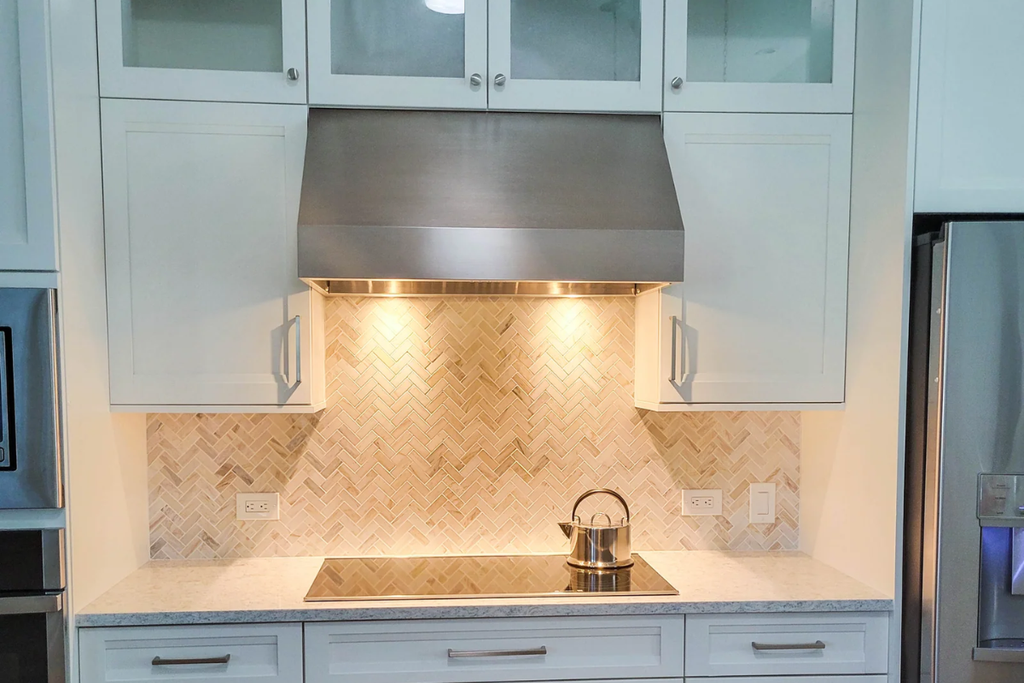
Not every kitchen has access to an exterior ventilation duct. Apartments, older homes, and compact kitchens may have structural limitations that make traditional exhaust systems difficult to install. However, cooking still produces grease particles, smoke, moisture, and odors that can affect indoor air quality and everyday comfort.
For kitchens without an existing exhaust route, ductless under cabinet range hoods provide an alternative ventilation approach. Rather than transporting cooking air outdoors, these appliances draw air through filtration systems before returning it to the kitchen.
Understanding how recirculating ventilation works, what pollutants it can filter, and where these systems can be installed helps homeowners make informed decisions about kitchen ventilation.
What Are Ductless Under Cabinet Range Hoods?
A ductless under-cabinet range hood is a kitchen ventilation appliance installed beneath overhead cabinetry without requiring an exterior exhaust duct.
Unlike ducted systems, which transport cooking emissions outside the building, ductless models recirculate filtered air back into the room.
Most recirculating range hoods use two primary filtration stages:
- Grease filters: Capture a portion of the airborne grease particles generated during cooking.
- Activated carbon filters: Adsorb some odor-producing compounds and gaseous contaminants.
After passing through the filters, the air returns to the kitchen through designated ventilation openings.
This design makes recirculating range hoods useful in properties where installing exterior ductwork is impractical or restricted.
However, filtration effectiveness varies by model, filter condition, and the types of pollutants generated during cooking.
How Do Ductless Range Hoods Remove Cooking Odors?
The operation of ductless under cabinet range hoods depends on mechanical airflow and filtration.
When the fan is activated, it draws cooking emissions toward the hood’s intake area. The air first passes through a grease filter designed to capture larger grease droplets and particles.
It then typically moves through an activated carbon filter.
Activated carbon contains a porous structure with a large internal surface area, allowing certain gaseous substances and odor molecules to attach to its surface through adsorption.
The filtered air is subsequently released back into the kitchen.
Although this process can reduce some cooking odors and grease particles, it does not eliminate every contaminant.
In particular, recirculating range hoods do not exhaust excess moisture or combustion gases outdoors. Their ability to remove fine particles and gaseous pollutants also depends on the filtration technology.
What Are the Benefits of Ductless Kitchen Ventilation?
Recirculating range hoods offer several practical advantages for kitchens with limited installation options.
No Exterior Ductwork Required
One of the main advantages is the absence of an external exhaust duct. This can reduce the need for wall penetrations, ceiling modifications, and extensive duct routing.
Suitable for Compact Kitchens
Under-cabinet designs fit beneath existing kitchen cabinetry, helping preserve storage space and maintain a compact kitchen layout.
Flexible Installation Options
Certain models can be configured for either ducted or recirculating operation, depending on their design and compatible filtration accessories.
Reduced Installation Complexity
Without external ductwork, installation may involve fewer structural modifications. However, proper electrical connections, mounting clearances, and manufacturer requirements still apply.
These advantages make ductless under cabinet range hoods worth considering when conventional exterior ventilation is unavailable.
Can Ductless Range Hoods Be Installed Outdoors?
Although recirculating ventilation can be practical indoors, standard ductless range hoods are generally unsuitable for outdoor kitchens.
Outdoor grills often generate substantial smoke, heat, and grease particles. A recirculating system cannot exhaust these emissions away from the cooking area, which can allow smoke to accumulate beneath covered patios and outdoor structures.
Additionally, indoor-rated appliances may lack protection against moisture, humidity, temperature fluctuations, and weather exposure.
For covered outdoor kitchens, a properly sized, outdoor-rated ducted ventilation hood is generally more appropriate. It can capture cooking emissions and direct them away from the occupied cooking area.
Homeowners should also verify the appliance’s environmental rating, mounting requirements, and electrical safety specifications before installation.
What Are the Limitations of Recirculating Range Hoods?
Despite their installation flexibility, ductless under cabinet range hoods have several limitations worth understanding.
First, they cannot directly remove cooking-generated moisture from the building. This can be particularly important in smaller kitchens where steam and humidity accumulate quickly.
Second, charcoal filtration becomes less effective as the filter approaches saturation. Regular replacement is necessary to maintain its intended odor-reduction performance.
Third, filtration does not provide the same pollutant removal as exhausting contaminated air outdoors.
The U.S. Environmental Protection Agency recommends outdoor-vented range hoods whenever possible to help reduce exposure to cooking-related particulate matter.
For households that frequently cook at high temperatures or use gas appliances, these differences deserve particular attention.
How Do You Maintain a Ductless Under-Cabinet Range Hood?
Regular maintenance is essential for keeping a recirculating ventilation system operating as intended.
Grease filters should be inspected frequently and cleaned according to the manufacturer’s instructions. Accumulated grease can restrict airflow and increase maintenance concerns.
Activated carbon filters generally require periodic replacement because their adsorption capacity decreases with use.
Homeowners should also:
- Keep air intake and recirculation openings unobstructed.
- Wipe exterior surfaces to prevent grease buildup.
- Inspect the fan for unusual noises or reduced airflow.
- Check filter compatibility before purchasing replacements.
- Follow the recommended mounting height and operating instructions.
These practices can help maintain consistent filtration and extend the usable life of the appliance.
Conclusion
Kitchen ventilation should be selected according to the cooking environment, available installation space, and the type of pollutants generated. Recirculating systems can offer a practical alternative where exterior ductwork is unavailable, but their filtration capabilities should not be confused with outdoor exhaust ventilation. A common installation question is, Can I install a ductless range hood outside? In most situations, standard ductless models are not appropriate for outdoor cooking areas because they cannot exhaust smoke and moisture away from the space and may not be designed for outdoor exposure. For indoor kitchens with limited ducting options, ductless under cabinet range hoods can provide grease filtration and some odor reduction when correctly installed and maintained. Understanding their limitations helps homeowners choose ventilation equipment that suits their kitchen’s layout, cooking habits, and air-quality requirements.