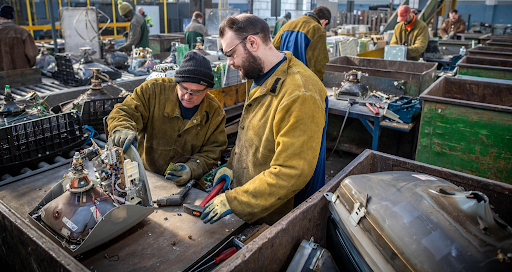
Businesses rely on computers, servers, printers, smartphones, and other electronic devices to maintain daily operations. However, technological advancements and frequent upgrades cause equipment to become outdated, damaged, or unnecessary. Improper disposal can create environmental hazards, waste valuable materials, and expose confidential business information. Establishing effective corporate ewaste solutions helps organizations manage obsolete electronics through secure handling, responsible recycling, and material recovery.
A structured approach also supports data protection, reduces unnecessary waste, improves asset management, and encourages sustainable business practices while ensuring retired electronic equipment reaches appropriate recycling and disposal facilities.
Understand What Counts as Corporate E-Waste
Corporate electronic waste includes equipment used across offices, warehouses, data centers. Common examples are desktop computers, laptops, servers, hard drives, printers, monitors, tablets, smartphones, projectors, and networking devices.
Create an inventory before arranging disposal. Record each item’s type, quantity, serial number, location, condition, ownership, and data-storage status. Separate equipment that may be repaired or redeployed from devices at the end of their useful life. Accurate records help estimate collection needs, identify sensitive assets, and maintain accountability.
Establish a Clear E-Waste Management Policy
A written policy gives employees consistent instructions for retiring electronic equipment. Define who approves disposals, how assets are reported, where devices are stored, and which teams coordinate collection. Include rules for removing equipment from desks, server rooms, and storage areas.
Assign responsibilities to IT, procurement, facilities, and information security teams. IT can verify asset details and data risks; facilities can coordinate secure storage; procurement can consider supplier take-back options. A named coordinator should oversee records, vendor communication, and completion documents. Clear ownership reduces misplaced devices and informal disposal.
Protect Sensitive Information Before Equipment Leaves
Data security must be addressed before a storage device is transferred, reused, sold, or recycled. Deleting files or formatting a drive does not necessarily make information unrecoverable. Identify devices containing customer records, employee details, financial information, credentials, or intellectual property. Choose a documented sanitization method suited to the media and its intended next use.
Methods may include verified data wiping, degaussing for compatible magnetic media, or physical shredding when reuse is not intended. Keep devices controlled until processing is complete. Use sealed containers, restricted access, and item-level tracking during handling and transport. Request evidence such as serial-number logs and a certificate of destruction.
Choose Reuse Before Recycling Where Appropriate
Responsible management considers whether equipment can safely serve another purpose before dismantling. Functional laptops, monitors, and other devices may be redeployed after inspection, approved data removal, repairs, and software updates.
Reuse can extend product life and reduce demand for new materials, but it should not override data protection or operational needs. Assess condition, energy use, compatibility, repair cost, and remaining support life. Equipment that is unsafe, unreliable, unsupported, or uneconomical to repair should enter an appropriate recycling route. Record the decision and destination for each asset.
Work With a Qualified Recycling Partner
Choose a provider with relevant approvals, suitable facilities, trained personnel, transparent processes, and commercial electronics experience. Ask how it collects, transports, sorts, dismantles, and processes equipment. Confirm how storage media is protected, whether materials reach appropriate downstream facilities, and what documentation is issued.
Organizations seeking corporate ewaste solutions Dubai should assess local collection coverage, regulatory knowledge, secure handling, and the ability to manage different equipment volumes. Do not rely on price alone. Request details about certifications, municipal approvals, chain-of-custody controls, and recycling practices.
Plan Collection, Sorting, and Material Recovery
Schedule collections around office moves, technology refreshes, or asset reviews. Tell employees what can be included, where equipment should be placed, and how data-bearing devices must be identified. For larger projects, coordinate access, loading, asset counts, and collection windows across locations.
After collection, equipment should be inspected and sorted by condition and material type. Reusable components can be separated for refurbishment. Other items may be dismantled so metals, plastics, and glass enter suitable recycling streams. Hazardous or restricted components require appropriate handling. Ask the provider how it prevents uncontrolled disposal and manages residual materials.
Maintain Documentation and Measure Results
Keep records from asset approval through final processing. Useful documents include inventory lists, collection notes, transfer records, data destruction certificates, recycling certificates, and reports showing quantities processed. Match certificates to the relevant asset list and retain them under company recordkeeping policies. Documentation demonstrates what happened to retired equipment and helps identify gaps.
Track indicators such as devices collected, material weight recovered, percentage reused, storage devices sanitized or destroyed, and project completion time. Use consistent definitions and reliable records for meaningful comparisons. Review results periodically to improve purchasing, repair, redeployment, employee awareness, and collection planning.
Build Employee Awareness and Prevent Future Waste
Employees influence how quickly obsolete equipment is identified and safely handled. Explain why devices must not go into ordinary bins, leave the workplace without approval, or pass to informal collectors. Provide a simple reporting route for damaged or surplus equipment.
Prevention also begins with purchasing. Consider durability, repairability, upgrade options, energy efficiency, warranties, and supplier take-back arrangements. Standardized device models can simplify maintenance and spare-part management. Check whether teams can share or redeploy suitable equipment before ordering replacements. These choices reduce unnecessary purchases and slow the flow of electronics into the waste stream.
Conclusion
Managing electronic waste requires more than arranging collection when storage areas become crowded. Businesses need consistent processes to identify outdated equipment, protect confidential information, evaluate reuse, and select qualified recycling partners. Maintaining accurate records and encouraging responsible purchasing also strengthens sustainability efforts. Implementing effective corporate ewaste solutions helps organizations reduce environmental risks, recover valuable materials, and support responsible resource management.
For responsible electronic waste management, Planet Green Recycling offers collection, sorting, secure data destruction, material separation, and recycling documentation. Their services help businesses manage retired IT equipment safely, protect confidential information, and recover valuable materials. Organizations can benefit from responsible disposal practices while supporting environmental sustainability. Contact Planet Green Recycling today to discuss your corporate recycling requirements and arrange convenient electronic waste collection across Dubai and the UAE.