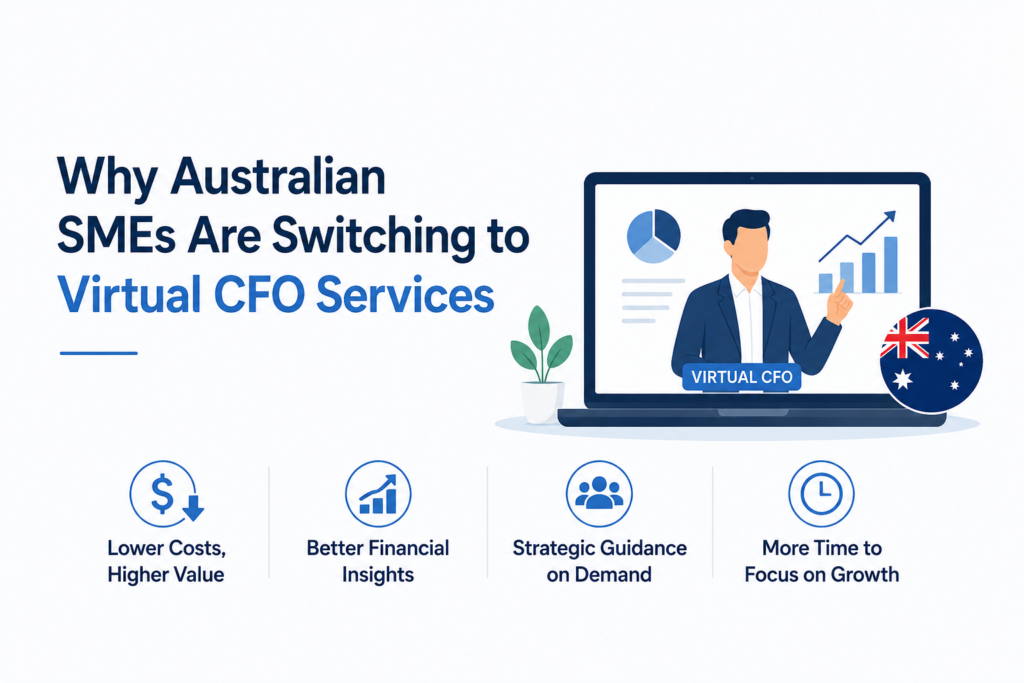
Small and medium-sized businesses in Australia are changing how they manage their finances. Instead of hiring full-time senior finance leaders, many are now choosing flexible financial support. This shift is mainly driven by the need for better planning, lower costs, and stronger financial control. A growing number of businesses are now using a virtual CFO in Australia to handle important financial decisions and planning in a smarter way.
This change is not just about saving money. It is also about getting expert financial guidance that helps businesses grow in a stable and planned way. As business challenges become more complex, SMEs are looking for support that is both practical and flexible.
What is a Virtual CFO?
A virtual CFO is a financial expert who works with a business remotely or on a part-time basis. They perform the same important tasks as a traditional CFO but without being a full-time employee in the office.
Their main role includes managing budgets, planning finances, tracking cash flow, and helping business owners make better financial decisions. They also support long-term planning and help businesses understand their financial position clearly.
Instead of focusing only on daily accounts, a virtual CFO looks at the bigger picture and helps guide the business in the right direction.
Why SMEs Are Moving Toward Virtual CFO Services
Many SMEs are switching to this model because it fits their needs better than traditional financial hiring methods. Business owners want expert advice without high fixed costs or long-term commitments.
Here are some key reasons behind this shift:
- Lower financial cost compared to hiring a full-time CFO
- Access to experienced financial guidance when needed
- Better control over cash flow and budgeting
- Improved financial planning and forecasting
- Flexible support that grows with the business
These factors make the virtual CFO in Australia model highly attractive for growing companies that need expert help but want to stay cost-efficient.
Cost Advantage for Growing Businesses
One of the biggest reasons SMEs choose virtual CFO services is cost savings. Hiring a full-time CFO requires a high salary and additional employee-related expenses. For many small businesses, this is not practical.
With a virtual CFO, businesses only pay for the level of service they need. This allows them to access senior financial expertise without adding a permanent salary burden.
This flexible cost structure helps businesses invest more in growth areas like marketing, operations, and product development instead of high fixed finance costs.
Better Cash Flow Control and Planning
Cash flow is one of the most important parts of running a business. Even profitable companies can face problems if cash flow is not managed properly. Many SMEs struggle with delayed payments, uneven income, and unexpected expenses.
A virtual CFO helps businesses plan cash flow more effectively by reviewing income and expenses in detail. This leads to better financial stability and fewer surprises.
With proper cash flow planning, businesses can make better decisions about hiring, expansion, and investment without risking financial stress.
Traditional CFO vs Virtual CFO
| Feature | Traditional CFO | Virtual CFO |
| Employment type | Full-time employee | Part-time or remote support |
| Cost | High fixed salary | Flexible and based on need |
| Availability | Always in-office | Remote and scheduled support |
| Scalability | Limited flexibility | Easily adjustable services |
| Suitability | Large corporations | SMEs and growing businesses |
This comparison shows why many SMEs prefer a virtual CFO in Australia instead of hiring a full-time finance leader.
Improved Decision-Making for Business Growth
Business decisions become easier when owners have clear financial information. Many SMEs rely on basic reports, which may not show the full financial picture. This can lead to unclear or risky decisions.
A virtual CFO helps by analyzing financial data in a simple and structured way. They explain what the numbers mean and how they affect future business performance. This helps business owners make more confident and informed decisions.
With better financial clarity, companies can plan growth, manage risks, and improve profitability more effectively.
Scalable Support for Different Business Stages
Every business goes through different stages of growth. A startup has different financial needs compared to a growing or established company. A major advantage of virtual CFO services is flexibility.
Businesses can start with basic financial guidance and later expand the level of support as they grow. This avoids the need to constantly hire new finance staff or restructure internal teams.
This flexibility makes financial management easier and more practical for SMEs that are still evolving.
Stronger Financial Control and Risk Management
Financial risks are part of every business. These risks can come from market changes, unexpected costs, or poor planning. Without proper monitoring, these issues can become serious.
A virtual CFO helps identify financial risks early. They regularly review financial reports and highlight areas that need attention. This allows businesses to take action before problems grow.
Better financial control also improves compliance, reduces errors, and supports smoother operations.
Technology-Driven Financial Support
Modern financial management relies heavily on digital tools. Virtual CFO services often use advanced systems to track performance, generate reports, and analyze trends.
These tools help provide real-time financial insights, making it easier for business owners to understand their position at any time. Automation also reduces manual errors and saves time.
For SMEs, this means access to high-quality financial systems without needing to invest heavily in expensive infrastructure.
Main Advantages for SMEs
Virtual CFO services offer several clear benefits for small and medium-sized businesses. These advantages go beyond cost savings and help improve overall business performance.
- Better financial planning and forecasting
- Clear understanding of business performance
- Reduced financial stress for owners
- More time to focus on core business activities
- Professional financial guidance without full-time hiring
These advantages explain why the demand for a virtual CFO in Australia continues to grow among SMEs looking for smarter financial solutions.
Supporting Long-Term Business Stability
Long-term success depends on strong financial planning. Many businesses focus only on short-term goals, which can limit future growth. A virtual CFO helps businesses think ahead and plan for the future.
They support decisions related to expansion, investment, and resource management. This ensures that growth is steady and financially sustainable.
By focusing on long-term stability, businesses can avoid financial pressure and stay prepared for market changes.
The Changing Future of Financial Management
The way businesses manage finances is evolving quickly. More companies are moving away from traditional in-house roles and choosing flexible financial support systems.
For SMEs in Australia, this shift is especially important. It allows them to access expert financial advice without high costs or long-term commitments. This makes business management simpler and more efficient.
As more businesses adopt this model, the use of a virtual CFO in Australia is expected to become even more common in the coming years.
Overview
Australian SMEs are switching to virtual CFO services because they offer flexibility, cost savings, and strong financial support. Instead of relying only on traditional finance roles, businesses now prefer a more adaptable approach.
From cash flow management to long-term planning, virtual CFO services help businesses stay stable and grow with confidence. They provide expert guidance without the need for full-time hiring, making them a practical choice for modern SMEs.
As business challenges continue to grow, this model is becoming an important part of financial success for many companies.
Frequently Asked Questions
1. What is a virtual CFO, and how does it help SMEs?
A virtual CFO is a financial expert who works remotely or part-time with a business. They help SMEs manage budgeting, cash flow, forecasting, and planning. Their support improves financial clarity and helps business owners make better long-term decisions.
2. Why are SMEs choosing a virtual CFO instead of a full-time CFO?
SMEs prefer a virtual CFO because it reduces costs and offers flexible support. They can access senior financial expertise without paying a full-time salary, making it easier to manage budgets while still getting professional financial guidance when needed.
3. How does a virtual CFO improve cash flow management?
A virtual CFO tracks income and expenses closely and identifies cash flow patterns. This helps businesses plan better, avoid shortages, and manage payments on time. It ensures smoother financial operations and reduces stress caused by unpredictable cash flow issues.
4. Can a virtual CFO support business growth?
Yes, a virtual CFO plays an important role in business growth. They provide financial insights, help with planning, and guide investment decisions. This support allows SMEs to expand safely while maintaining financial stability and avoiding unnecessary risks.
5. Is a virtual CFO suitable for small businesses in the early stages?
Yes, even early-stage businesses can benefit from a virtual CFO. They help set up financial systems, create budgets, and build strong financial foundations. This support ensures the business starts with proper planning and avoids common financial mistakes.
