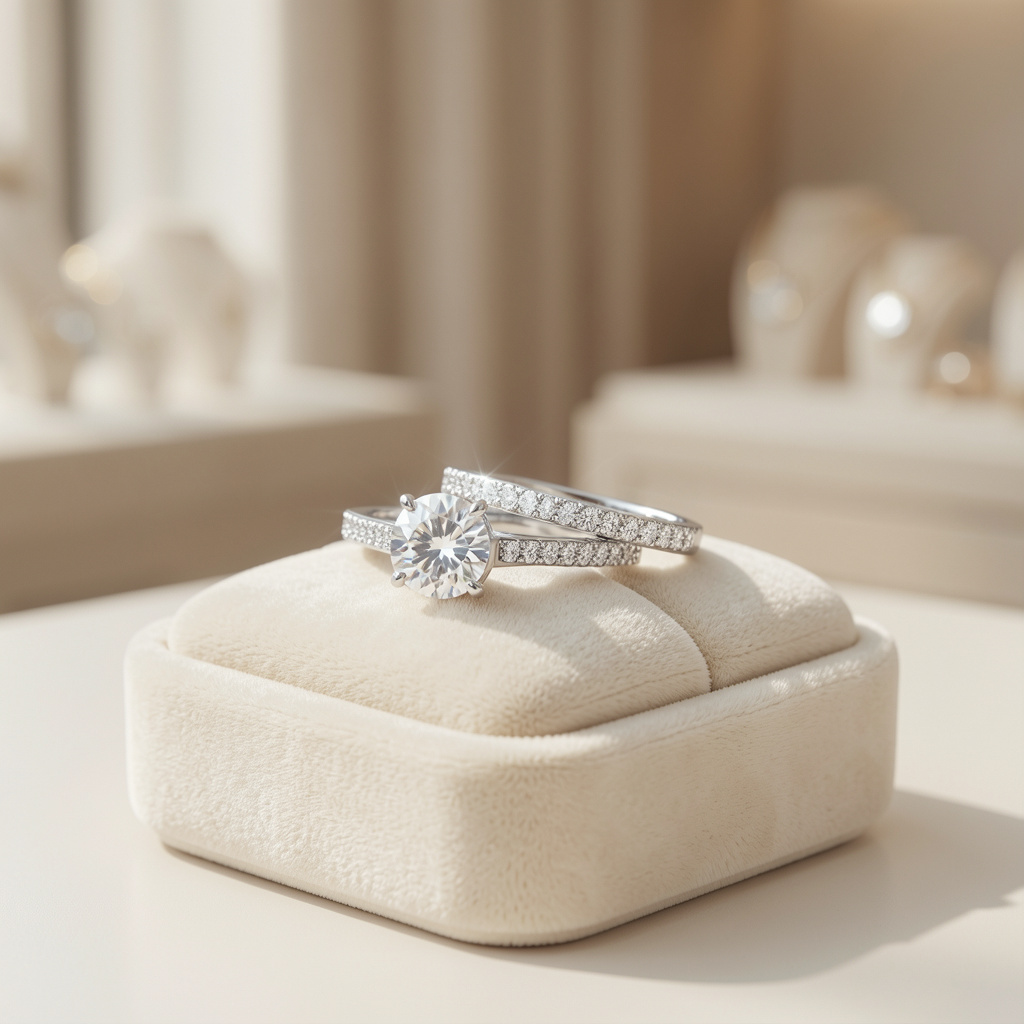
Most people spend weeks choosing an engagement ring. The wedding band, somehow, gets left for the last minute. That is where things go sideways. Getting matching wedding bands right is less about finding something pretty and more about understanding how two pieces of jewelry can look like they belong together. Whether shopping alone or exploring couple’s wedding bands as a pair, the process starts the same way: look closely at what you already have and work from there.
How to Match Your Wedding Band with Your Engagement Ring?
The engagement ring sets the tone for everything else. Its metal, profile, and setting height all inform what kind of band will actually work beside it. Matching wedding bands are not about being identical; instead, they are about sharing enough design logic that the two rings feel like a set.
- Start with the metal: Pairing matching gold wedding rings in the same karat and color is the simplest route to visual consistency. Mixed metals can work, but it takes a deliberate eye.
- Think about setting height: High prong settings need a band that curves low enough not to press against the prongs. A flat, straight band will often leave a gap or put quiet pressure on the setting over time.
- Try both rings on together: A band that looks proportionate alone can feel oddly wide or slim once placed beside the engagement ring on your finger. This step gets skipped more than it should.
- Consider a designed set from the start: Wedding ring sets for him and her sold as bridal packages remove the guesswork; the bands are built to complement each other and the engagement ring without any extra matching effort.
Key Design Elements to Consider for a Coordinated Bridal Set
Beyond metal and fit, subtler details separate a well-coordinated bridal set from one that just happens to share a hand.
- Width: Fine engagement rings pair best with slim bands. A wide band beside a delicate setting pulls the eye apart rather than drawing it together.
- Surface finish: Polished next to brushed can look careless. Even a partial polish on the band ties both pieces together without forcing a perfect match.
- Milgrain and engraving: Vintage-inspired rings with decorative edging look visually disconnected beside a plain modern band. A small milgrain detail bridges that gap quickly.
- Stone shape echoes: A round-cut center stone pairs naturally with round pavé on the band. Small detail, but it reads as intentional rather than coincidental.
Popular Wedding Band Styles That Complement Every Engagement Ring
Pavé or Channel-Set Bands
Small diamonds set flush or in a row add brilliance without overshadowing the center stone. A reliable choice for matching gold wedding rings where a little extra sparkle is wanted alongside a solitaire.
Plain Polished Bands
A clean metal band in the right width suits nearly every engagement ring style. Its restraint is the point; it completes the look without competing with it.
Contoured or Shadow Bands
Shaped to follow the profile of the engagement ring, these work well with pear cuts, marquise shapes, or rings with elaborate side stones. They sit flush in a way that straight bands cannot.
Conclusion
The goal is never identical rings, but two rings that make sense together and belong together. Start with metal, get the fit right, and let the design details follow. Whether you choose wedding ring sets for him and her as a complete package or build the pair piece by piece, two rings that share a visual language will always look like they belong, on any hand, at any angle.
