Clean air and clean water are essential across industrial operations, but removing contaminants is not always as simple as passing air or water through a conventional filter. Some pollutants are too small to be captured effectively by mechanical filtration and require adsorption instead.
This is where active carbon fibers can be useful. They are carbon-based fibrous materials with a porous structure that can adsorb certain gases, vapors, and dissolved substances. Their form also makes them different from the granular activated carbon commonly used in filtration systems.
For industries in Finland, active carbon fibers are relevant mainly where a filtration process needs to remove specific organic contaminants from air or water. Understanding where they work well and where they do not, is more useful than treating them as a universal filtration solution.
What Are Active Carbon Fibers?
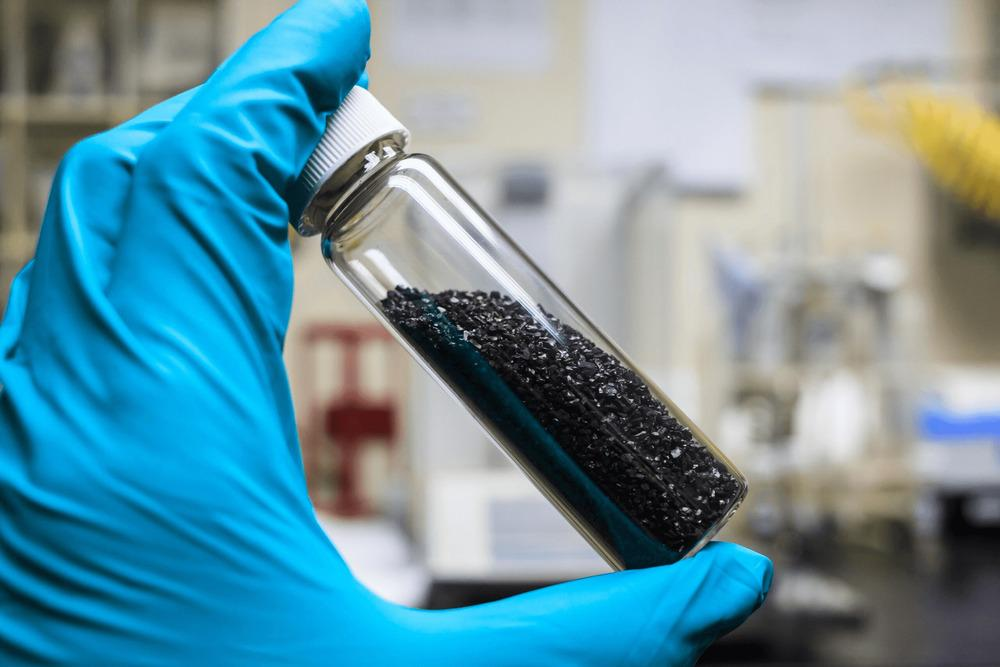
Active carbon fibers are fibers that have been processed to develop a network of pores throughout their structure. These pores provide sites where molecules can be adsorbed onto the carbon surface.
The important distinction is their physical form. Instead of loose carbon granules, the carbon is present as a fiber or incorporated into a fibrous material.
This structure can provide:
- A large surface area relative to the material’s size
- Short distances for contaminants to reach adsorption sites
- Flexible filter configurations
- The possibility of producing thin filtration layers
- Easy integration with fabrics, felts, and nonwovens
Their performance depends on factors such as pore size, surface chemistry, activation method, contaminant concentration, temperature, humidity, and flow conditions.
How Do They Purify Air?
Air filters generally deal with two different types of contaminants: particles and gases.
Mechanical filters are primarily designed to capture particles such as dust and aerosols. Activated carbon materials work differently. Instead of physically trapping particles, they adsorb certain gaseous molecules onto their internal surfaces.
Active carbon fibers can therefore be considered when an air stream contains compounds such as:
- Volatile organic compounds (VOCs)
- Certain solvent vapors
- Odor-causing compounds
- Other organic gaseous contaminants
For example, an industrial process that uses solvents may release vapors into an exhaust or indoor air stream. A carbon-based adsorption layer can be placed after particulate filtration to capture some of these compounds.
The exact carbon material matters. A filter that performs well for one VOC may perform poorly for another. Humidity can also affect adsorption, so performance in a dry laboratory environment should not automatically be assumed to apply to a humid industrial environment.
Air Purification Is Not the Same as Particle Filtration
It is important to distinguish adsorption from conventional particle filtration.
An active carbon fiber filter should not be selected simply because the air contains dust. Carbon fibers are primarily valuable for their surface chemistry and adsorption capacity.
A practical air-treatment system may therefore contain several stages. A pre-filter can remove larger particles, while a carbon-containing layer deals with gaseous contaminants.
This combination can also help protect the adsorption material from becoming unnecessarily loaded with dust.
Water Purification With Active Carbon Fibers
Activated carbon is widely associated with water purification because many organic compounds can be adsorbed onto carbon surfaces.
Active carbon fibers use the same basic principle, but their fibrous structure changes how water interacts with the adsorption material.
Potential applications include the removal of certain:
- Organic pollutants
- Industrial chemicals
- Color compounds
- Odor-causing substances
- Trace organic contaminants
The effectiveness depends heavily on water chemistry. pH, dissolved salts, competing organic compounds, temperature, and pollutant concentration can all influence adsorption.
For industrial wastewater, it is therefore important to test the actual water rather than assuming that a carbon fiber material will perform according to results obtained with clean laboratory water.
Textile Dyeing and Dye-Containing Wastewater
One area where carbon-based adsorption can be relevant is textile dyeing.
Dyeing processes can produce wastewater containing residual dyes and other organic substances. Some dyes are difficult to remove completely using a single conventional treatment method.
Adsorption can be used as one part of a treatment process. Carbon materials can interact with dye molecules and remove them from water.
However, the outcome depends on the type of dye. Different dyes have different molecular structures, charges, and solubilities. The water may also contain salts, auxiliaries, surfactants, and other substances that compete for adsorption sites.
For this reason, active carbon fibers are better viewed as a potential treatment component rather than a stand-alone answer to all textile wastewater problems.
Why the Fibrous Structure Matters
The form of the carbon material can influence filtration performance.
Granular activated carbon is normally packed into a bed through which air or water passes. Active carbon fibers can instead be produced as sheets, felts, fabrics, or composite structures.
This can be useful when a filtration system needs a thin or flexible adsorption layer.
The fibrous structure can also provide relatively direct access to adsorption sites. Depending on the design, this may contribute to faster adsorption compared with some conventional carbon configurations.
But a higher adsorption rate does not necessarily mean greater total capacity. Filter selection should consider both how quickly contaminants are captured and how much contaminant the material can retain before becoming saturated.
Combining Active Carbon Fibers With Nonwovens
Nonwovens can provide a practical structure for incorporating carbon-based materials into filtration systems.
A nonwoven can act as a support or mechanical filtration layer while carbon fibers provide adsorption functionality. The resulting material can combine particle capture and contaminant adsorption in a single filter assembly.
For example, an air filter could use:
- A pre-filter for larger particles
- A finer particle filtration layer
- An active carbon fiber layer for gaseous contaminants
Similar multilayer concepts can be considered for water treatment, although the material must be compatible with prolonged contact with water and the relevant chemicals.
The advantage of a layered approach is that each material performs a specific function rather than expecting one filter medium to remove every type of contaminant.
Where Does Chitosan Fit?
Chitosan is another material investigated for adsorption and water-treatment applications. It is derived from chitin and contains functional groups that can interact with certain pollutants.
Research into chitosan applications includes contaminant adsorption, membranes, coatings, and composite materials.
Chitosan can be particularly interesting for pollutants that interact with its surface chemistry. However, its performance is different from that of activated carbon.
Combining chitosan with carbon-based materials is therefore an area of material research rather than a straightforward substitution. A composite could potentially combine the adsorption characteristics of both materials, but its performance needs to be evaluated for the specific contaminant and operating conditions.
Cellulose-Based Filtration Materials
Cellulose is also relevant when discussing fibrous filtration materials, particularly in Finland where wood-based resources and cellulose processing are significant parts of the industrial landscape.
Research involving cellulose solubility is relevant to the production and processing of regenerated cellulose materials, which can be used to create fibers, membranes, and other structures.
Cellulose-based materials can potentially serve as supports for functional filtration components. In some material-development approaches, cellulose, carbon, and other functional materials may be combined to produce composite filters.
The purpose of such combinations is not simply to add more materials. Each component needs to contribute a useful property, such as mechanical strength, adsorption, permeability, or selectivity.
What Are the Limitations?
Active carbon fibers are not suitable for every filtration problem.
They are primarily useful for adsorption. They do not replace filtration methods designed specifically for microorganisms, suspended solids, dissolved minerals, or other contaminants that require different treatment mechanisms.
There is also a finite adsorption capacity. Once the available adsorption sites become occupied, the filter needs to be regenerated or replaced.
Other factors need consideration as well:
- Humidity: Water vapor can compete with some contaminants in air-treatment applications.
- Contaminant concentration: High concentrations can rapidly exhaust the adsorption capacity.
- Competing substances: Multiple contaminants can compete for the same adsorption sites.
- Pressure drop: The filter structure must allow sufficient airflow or water flow.
- Regeneration: The feasibility of recovering or reusing the carbon depends on the application.
- Disposal: Spent filters may contain concentrated contaminants and need appropriate handling.
Choosing a Filter for a Specific Application
The starting point should always be the contaminant rather than the filtration material.
For air purification, determine which gases or vapors are present, their concentrations, humidity, temperature, and required removal level.
For water purification, factors such as pollutant type, pH, temperature, dissolved substances, flow rate, and organic load should be assessed.
Laboratory testing with the actual air or water composition can then establish whether active carbon fibers provide sufficient adsorption capacity and operating life.
The Practical Role of Active Carbon Fibers
Active carbon fibers are best understood as an adsorption material with a distinctive fibrous structure. Their main value is not that they can replace every conventional filter, but that they provide another way of incorporating activated carbon into air and water treatment systems.
For Finnish industries, their relevance is likely to be greatest in applications where specific organic contaminants need to be removed and where a thin, flexible, or composite filtration structure is useful.
They can also be combined with materials such as nonwovens, cellulose-based fibers, and chitosan when the requirements of the application justify a multifunctional filtration material.
Ultimately, successful filtration depends less on choosing the newest material and more on matching the material’s properties to the contaminant, flow conditions, and required treatment outcome.
