Nothing derails a beautiful reception faster than a long line outside a flimsy restroom. Guests forgive a late cake, but they remember uncomfortable facilities. That is why more couples now look at luxury portable toilet rentals when planning an outdoor celebration. These trailers promise flushing toilets, sinks, and climate control, but they also cost more. This article explains what you get, what drives the price, and when the upgrade truly pays off.
How a Restroom Trailer Differs From a Standard Portable Toilet
A standard portable toilet is a single plastic cabin with a chemical-treated holding tank. It works well at construction sites and festivals, but most models have no running water and only basic lighting.
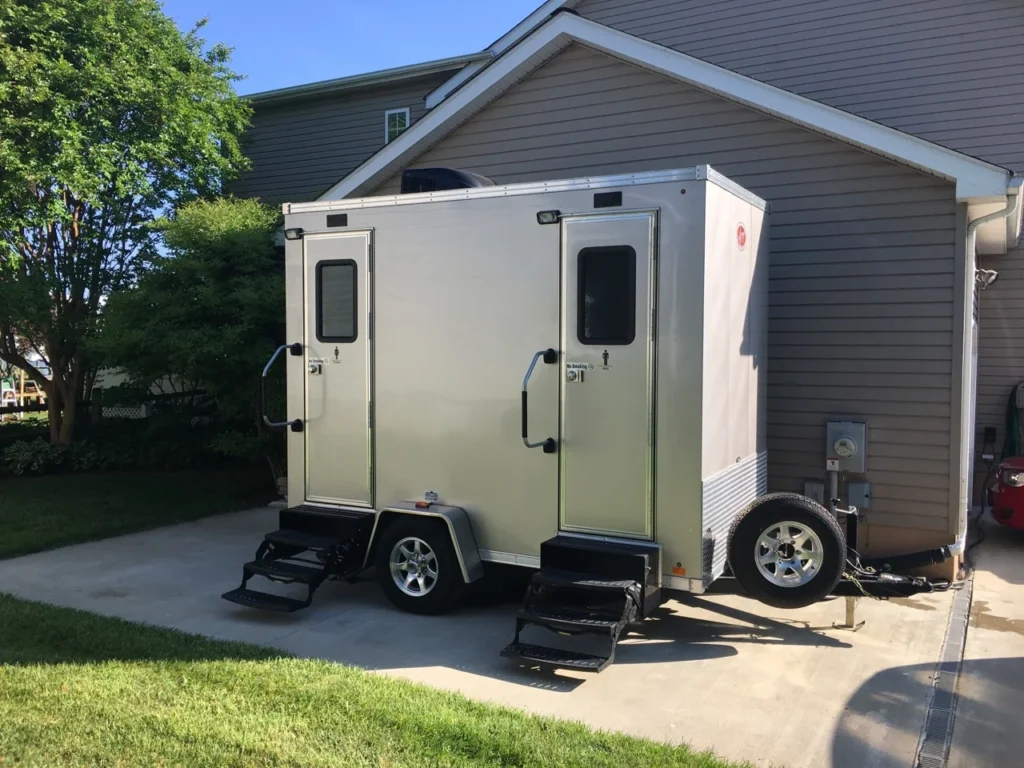
A restroom trailer works more like a small building on wheels. Inside, you typically find flushing toilets, sinks with running water, mirrors, interior lighting, and heating or air conditioning. Many have finished walls, real flooring, and separate stalls, and some include a vanity area. The trailer is towed in, positioned, and connected to power. Depending on the model, it also connects to water and waste lines or carries its own tanks.
Between those two sit upgraded single units, often called deluxe or flushable models. They usually add a sink or better lighting, yet they remain single cabins. Which tier makes sense depends on your guest count, your venue, and the experience you want to create.
When the Extra Cost Is Easy to Justify
A trailer is not the right answer for every wedding, but certain situations make it a strong choice.
Longer Guest Lists and Long Evenings
Weddings differ from most events that use portable toilet rentals. Guests dress up, stay for hours, and often drink. Restroom visits also bunch together, usually right after the ceremony and again between dinner and dancing.
A trailer with several private stalls moves people through faster. A roomier stall also helps someone in a long gown or a rented tux, who would struggle in a narrow plastic cabin.
Formal or Heavily Photographed Celebrations
If your guests are dressed for black-tie or a formal garden party, a mirror and good lighting let them freshen up without leaving the celebration. Trailers also tend to look more polished near a tent or reception area than a row of basic cabins. That matters when photographers are capturing the grounds.
Venues Without Indoor Plumbing
Barns, farms, vineyards, beaches, parks, and backyards often have no restrooms at all. In those settings, bathrooms are the biggest comfort gap in the whole event. A trailer with running water and flushing toilets closes that gap and tells guests you planned for them.
Hot, Cold, or Wet Weather
A plastic cabin in direct summer sun can get uncomfortably warm. A trailer with air conditioning stays comfortable, and one with heat keeps guests from shivering on a cool fall evening. The solid floor also helps when the ground turns soft, although you should still plan walkways for rain.
Situations Where a Trailer May Not Make Sense
A trailer can be the wrong choice for a small, casual gathering with a short guest list. Spending a large part of your budget on restrooms may not make sense if only a few dozen people are attending and the event is brief.
Site limits matter too. Trailers need a fairly level area, a route wide and clear enough for a tow vehicle, and usually access to power. If your venue has a narrow gate, steep slope, or soft ground, a trailer may not be practical.
Finally, if your venue already has clean, adequate indoor restrooms, you may only need one extra unit for overflow or for vendors and staff. In many cases, upgraded single units are a sensible middle path when a full trailer feels like too much.
Standard, Upgraded, and Trailer Options Compared
The table below shows how the three common choices usually differ. Features vary by provider, so confirm what each specific unit includes.
| Feature | Standard Portable Toilet | Upgraded Single Unit | Restroom Trailer |
|---|---|---|---|
| Toilet type | Chemical holding tank | Chemical or flush-style, varies | Flushing toilets |
| Hand washing | Sanitizer or none | Sanitizer or small sink | Running-water sinks |
| Climate control | None | None or basic ventilation | Heating and A/C common |
| Lighting and mirrors | Minimal | Better lighting, mirror varies | Full interior lighting and mirrors |
| Utilities needed | None | Usually none | Power, plus water and waste or onboard tanks |
| Space needed | Small | Small | Large, level area with tow access |
| Relative cost | Lowest | Moderate | Highest |
| Best for | Work crews, casual outdoor events | Casual weddings, vendor and staff use | Formal weddings, larger guest lists |
What Influences the Price of a Wedding Restroom Trailer
Pricing varies widely by region and provider, so no single number fits every wedding. Instead, it helps to know what shapes your quote.
Size is the biggest factor. A two-stall trailer costs less than a larger multi-stall unit with a vanity area. Rental length also matters, since a trailer kept for a full day costs more than one picked up shortly after the reception.
Delivery distance and setup add to the total. A venue far from the provider’s base means more travel, and a site that needs extra time for positioning or leveling may add labor. Peak wedding season and popular weekend dates can raise demand and prices as well.
Then come the optional extras: an on-site attendant, a generator if the venue lacks power, upgraded supplies, scent options, or decorative touches. Ask for an itemized written quote so you can compare providers fairly. Also ask about deposits, cancellation terms, and overtime charges, since these differ more than people expect.
Venue and Logistics Checks Before You Book
Most trailer problems come from site issues that nobody checked in advance. A short call with your venue manager can prevent them.
Space, Ground, and Placement
Measure the delivery route as well as the final spot. Gates, low branches, tight turns, and soft lawns can stop a tow vehicle. Ask the provider what ground conditions they require and whether they can lay mats or choose a gravel area.
Placement affects the guest experience. Aim for a spot that is easy to find and reasonably close to the reception, but not right behind the head table or in your photo backdrops. Keep it a sensible distance from the food area, and make sure the path is lit after dark.
Power and Water Requirements
Trailers need electricity for lights, pumps, and climate control. Confirm the power requirement with your provider and compare it with what the venue can supply. If the venue cannot meet it, ask whether a generator is available and who is responsible for fuel and noise. Also ask whether the unit carries its own fresh water and waste tanks or needs.
Accessibility and Permits
Guests with mobility needs should have a usable option. Ask whether the trailer has an accessible stall, a ramp, and enough interior space, because not all models do. If not, ask for a separate accessible unit. Some venues and local jurisdictions also have rules about rentals and placement, so check with the venue before you sign.
How Many Stalls Do You Need?
Many providers use a rough starting point of about one toilet per 50 guests for a shorter event. Weddings often need more because the event runs longer, guests drink, and everyone goes at the same moments. Treat that ratio as a starting estimate, not a rule, and let your provider help you size the order.
Here is an example. For 120 guests at a six-hour reception with an open bar, the basic ratio suggests two or three toilets. The length of the event and the drinking push the realistic number toward four. A two-stall trailer would likely create lines.
Also think about vendors, caterers, and the wedding party. A separate standard unit for staff keeps your guest trailer cleaner and available when it matters.
Making the Restroom Part of the Guest Experience
Small details make a rented restroom feel like part of the wedding rather than an afterthought. Add clear signage and lighting along the path. Place a flower arrangement or greenery near the entrance to soften the look of the trailer.
Ask what supplies are included, and consider extras such as hand towels, a basket of toiletries, or mints. If an attendant is available, have them check supplies and tidiness during the reception. A short check-in mid-event prevents a problem from lasting until the end.
Finally, share the restroom location with your planner, DJ, or emcee so they can mention it. Guests who know where to go will not wander off during key moments.
Questions to Ask Any Provider
Before you commit, ask each provider:
- What exactly is included in the rental, and what costs extra?
- What power, water, and ground access does the trailer need?
- Is there an attendant, and who restocks supplies during the event?
- Is an accessible option available?
- What are the delivery window, pickup time, and cancellation policy?
Clear answers to these questions usually signal a reliable provider. Vague ones are a warning sign.
Conclusion
For many weddings, a restroom trailer is worth it when the event is formal, the guest list is large, the venue lacks plumbing, or the weather could make basic cabins unpleasant. It is harder to justify for small, casual gatherings or sites that cannot handle a trailer. Before booking, compare standard portable toilet rentals, upgraded units, and trailers against your guest count and budget. Check power, access, and accessibility early, and get everything in writing. If comfort matters to your guests, request quotes from a few local providers and choose the option that fits your day.
FAQs
1. How far in advance should I book a restroom trailer for my wedding?
Book as soon as your venue and date are confirmed, especially for popular seasons and weekends. Trailers are limited in number, and early booking also gives you time to check venue requirements.
2. Do restroom trailers need electricity and water at the venue?
Most need power for lighting, pumps, and climate control. Some connect to a water source and waste line, while others carry onboard tanks. Your provider can tell you what a specific model needs.
3. Can a restroom trailer be placed on grass?
Often yes, but it depends on how firm and level the ground is. Soft or sloped lawns can cause problems for towing and setup, so ask the provider to check the site or suggest mats or a gravel area.
4. Are restroom trailers accessible for guests with mobility needs?
Not every trailer is. Ask whether a specific unit has an accessible stall and a ramp. If it does not, request a separate accessible unit.
5. Is a restroom trailer better than upgraded portable toilets?
It depends on the event. Trailers offer more space, running water, and climate control, which suits formal or large weddings. Upgraded single units cost less and fit casual events or smaller guest lists.