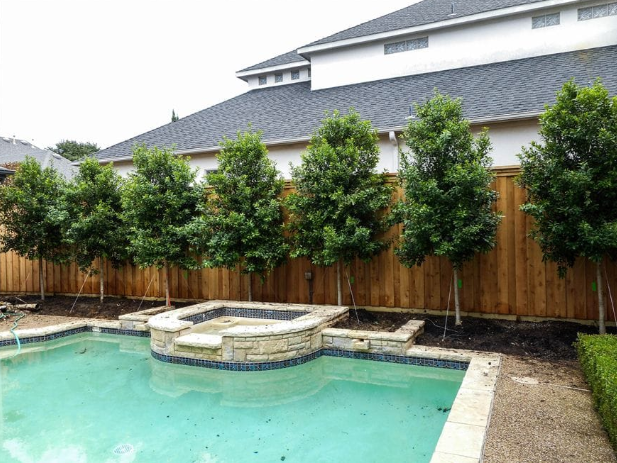
Dense, glossy, and green all year, evergreen shrubs and small trees remain a favorite for people who want privacy without a fussy maintenance routine. Few options combine fast growth with a tidy, formal look. Many homeowners who want a living wall end up considering Carolina Cherry for exactly those reasons. Before planting, however, it pays to understand how fast it grows, how far apart to space it, what soil it tolerates, and how much pruning it needs. This guide explains those basics, along with common problems to watch for, so your hedge or screen gets off to a strong start.
Understanding This Evergreen
The botanical name is Prunus caroliniana, and the plant is native to the southeastern United States and eastern Texas. Its leaves are glossy, leathery, and dark green, and it produces fragrant white flowers that attract bees, followed by small, shiny black fruits that birds enjoy. Nurseries commonly sell it in two forms: a columnar hedge plant and a single-trunk standard tree. Gardeners who choose Carolina Cherry usually value that flexibility, since the same species can form a dense screen or a shaped specimen near a patio or entrance.
Size and Growth
Growth rate is a major selling point. Under proper watering, sunlight, and soil conditions, plants typically add 12 to 24 inches per year. Left unpruned, a mature tree can reach 25 to 40 feet tall with a spread of 15 to 25 feet, though it is often smaller in open settings. That final size matters when you choose between a hedge and a tree, so measure your space first. The roots are described as less aggressive than those of many landscape trees, which makes planting near patios and walkways more practical, though you should still keep a reasonable distance from structures.
Hedge and Screen Uses
This plant works hard as a privacy screen. For a dense hedge, space plants about 4 to 6 feet apart, using the closer end of that range for faster, fuller coverage. Borders and general landscape coverage are other common uses, and the evergreen foliage keeps the screen effective in every season. A Carolina Cherry hedge also tolerates regular shearing, so it can be kept formal and neat or allowed to grow into a softer, natural shape. Wind, salt exposure, and fluctuating temperatures are tolerated well, which makes it a reasonable choice for coastal areas.
Soil, Sun and Water
Good drainage is the key. Cherry laurel tolerates clay, sand, and loam as long as water drains away, and adding organic matter helps heavy clay soil. Avoid soggy spots, because wet roots cause problems quickly. It grows in conditions ranging from full sun to full shade. Young plants prefer consistent moisture while their roots establish. Mulching around the base also helps conserve soil moisture. Once established, the plant is highly drought-tolerant and needs little irrigation, and overwatering can do more harm than dryness. It performs best in USDA zones 8a through 10a, so check your local climate before buying.
Pruning and Care
Little pruning is needed for a natural form, but regular trimming keeps a hedge dense and in bounds. Watch for mites, borers, and caterpillars, since borers particularly target stressed plants. Leaf spot, fire blight, and stem canker can also appear, and root rot is a risk when plants sit in overly wet soil or containers. Seedlings often sprout beneath mature trees, so pull them early. Treat the leaves and twigs as potentially poisonous, and keep children and pets from chewing them.
Conclusion
A successful planting comes down to matching the form to the job, spacing it correctly, and providing well-draining soil. Water young plants carefully, prune as needed, and inspect leaves regularly for early signs of trouble. Retailers such as Plant Clearance list both hedge and standard tree forms along with spacing guidance on their collection pages, which helps buyers plan before purchasing. With steady care, a cherry laurel screen can provide privacy and greenery for many seasons.