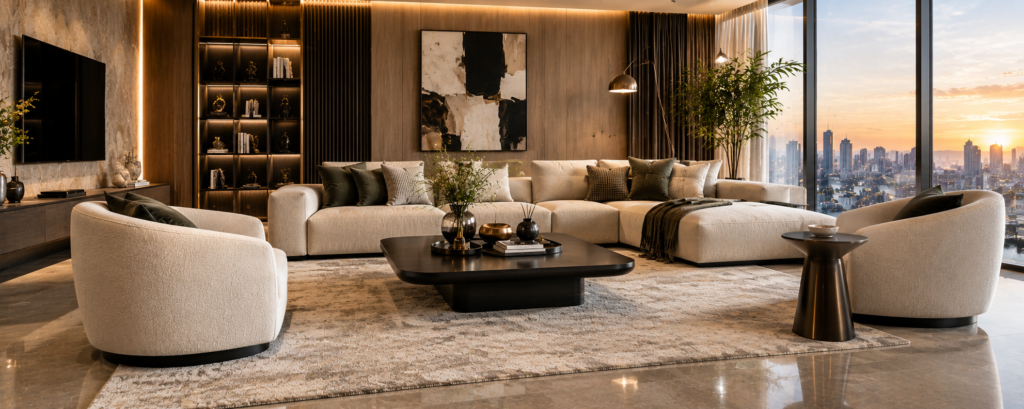
A sofa is one of the largest pieces of furniture in a living room, so choosing one should involve more than simply finding a shape or fabric that looks attractive. The right sofa needs to work with the way people actually use the room. A household that spends evenings watching films has different requirements from one that mainly entertains guests.
This is where thoughtful furniture planning becomes important. Seating depth, arm height, cushion construction, room proportions, fabric performance, and even the position of windows can influence whether a sofa feels comfortable and practical. A beautiful sofa that does not suit the room can quickly become an expensive inconvenience.
Instead of starting with a catalogue photograph, homeowners can start with their daily routines. Consider where people sit, how many people normally use the room, whether pets or children are present, and whether the sofa needs to support formal entertaining or relaxed everyday use.
Start With the Room, Not the Sofa
Before selecting a sofa, measure the room carefully. Overall wall length is only one measurement that matters. Door openings, radiators, windows, fireplaces, shelving, electrical points, and walking routes can all affect the available space.
A useful approach is to map the room before looking at individual designs. Mark the approximate sofa footprint with masking tape on the floor. This gives a much clearer impression of how much floor area will remain for movement.
The scale of neighbouring furniture matters too. A large sofa beside a tiny coffee table can make the room feel visually unbalanced, while several small furniture pieces may make a large room appear fragmented.
Think About Movement
A living room should not feel like an obstacle course. People need comfortable routes between the entrance, seating, windows, storage, and other frequently used areas.
Keep particular attention on:
- Door opening areas
- Main walking routes
- Access to windows
- Space around coffee tables
- Clearance beside side tables
- Television viewing positions
The exact clearance required depends on the furniture and room, but the principle is simple: the sofa should support the room’s circulation rather than interrupt it.
Consider How People Sit
Not everyone uses a sofa in the same way. Some people prefer sitting upright, while others like to stretch out. Families may need a combination of individual seats and lounging space.
Seat depth therefore deserves more attention than many buyers give it. A deep seat can feel luxurious for relaxing, but someone with a shorter frame may find it difficult to sit comfortably without additional support.
The same applies to seat height. A lower sofa can create a relaxed appearance, whereas a higher seat can make standing and sitting easier for some users.
Why Custom Dimensions Can Change the Planning Process
Standard sofa dimensions work well in many homes, but they cannot accommodate every architectural situation. Awkward corners, unusually narrow rooms, bay windows, open-plan spaces, and unusual wall lengths can make standard furniture difficult to position.
This is one reason homeowners consider Bespoke Sofas when planning a room around specific dimensions, comfort preferences, and interior requirements.
The benefit of a tailored approach is not simply that the sofa can look different. The proportions can be considered alongside the room itself. Seat depth, overall width, arm proportions, configuration, and upholstery choices can all form part of a more deliberate furniture plan.
Choose the Configuration Carefully
A sofa does not necessarily need to be a simple three-seater. Different configurations can create completely different experiences in the same room. A corner arrangement can make efficient use of two connected walls. A modular arrangement can provide greater flexibility when the room layout changes. Separate sofas and chairs can create a more conversational arrangement.
For open-plan homes, configuration becomes especially important because the sofa can help define the living zone without the need for a physical wall. A sectional positioned with its back toward the dining area, for example, can visually separate the lounge from the rest of the space while keeping the overall layout open.
Upholstery Should Match Real Life
Fabric selection is another area where appearance should not be the only consideration. A delicate material may look impressive in a showroom but may not be practical for a busy family room.
Think about how frequently the sofa will be used and what kind of maintenance is realistic.
Important considerations include:
- Expected daily use
- Cleaning requirements
- Exposure to sunlight
- Presence of children
- Pets
- Frequency of entertaining
- Desired texture
A sofa is a working part of the home. Its upholstery should therefore be selected with the same practical attention given to flooring or kitchen surfaces.
Colour Needs Context
A fabric sample can look completely different in a showroom compared with a living room. Natural daylight, artificial lighting, wall colours, flooring, curtains, and nearby furniture can all affect how a colour appears. Rather than selecting a shade from memory, view samples in the actual room whenever possible.
Neutral colours provide flexibility, but neutral does not have to mean plain. Texture, piping, stitching, weave, and subtle tonal variation can create visual interest without relying on strong colour. Alternatively, a sofa can become the room’s focal point through a more distinctive fabric while surrounding furniture remains restrained.
Cushion Construction Matters
The appearance of a sofa can attract attention, but cushion construction has a major effect on everyday comfort. Different filling combinations provide different experiences. Some create a softer, more relaxed appearance, while others provide firmer support and retain their shape more strongly.
Cushion maintenance should also be considered. Certain loose cushions may require regular plumping or repositioning. Fixed cushions can offer a cleaner appearance but may provide less flexibility for adjustment. The best choice depends on how the sofa will be used rather than on a universal idea of what is superior.
Match the Sofa With the Coffee Table
A sofa rarely works alone. The relationship between the sofa and coffee table affects both appearance and usability. The table should be positioned so that users can comfortably reach it without obstructing movement. Its shape can also complement the sofa configuration.
A rounded table can soften a room containing strong rectangular furniture. A rectangular table can reinforce a structured, contemporary layout. Scale matters more than matching everything exactly. Furniture can coordinate through proportion, material, or tone without coming from the same collection.
Plan for the Future
A sofa is a long-term purchase, so think beyond the current room arrangement. Will the room still work if a television is moved? Could the space eventually become a family room, guest area, or home office? Will a new rug or coffee table still work with the sofa?
A flexible furniture decision can reduce the need for major changes later. This is particularly important in homes where rooms have multiple functions. A sofa that works for relaxing, entertaining, reading, and occasional working can provide more value than one designed around a single activity.
Avoid Designing From a Photograph Alone
Interior photographs are useful for inspiration, but they do not show every practical detail. Camera angles can make rooms appear larger, while wide-angle photography can distort furniture proportions.
Use photographs to identify ideas rather than to copy a complete arrangement.
Ask practical questions instead:
- Does the size suit the room?
- Is the seating comfortable?
- Can people move around it easily?
- Does the upholstery fit the household?
- Does the configuration suit daily routines?
- Will it remain useful if the room changes?
These questions produce a much stronger decision than choosing a sofa because it looks impressive in an online photograph.
Create a Balanced Living Room
A successful living room usually combines several different visual and functional elements. The sofa may be the largest item, but it should not dominate every other piece.
Rugs can define the seating area. Lighting can create different moods. Side tables provide useful surfaces. Artwork can introduce personality, while plants and accessories can soften the overall arrangement.
The goal is not to make every item identical. A more natural interior often combines complementary shapes, materials, and textures.
Conclusion
Designing a sofa around the way you actually live creates a more useful and comfortable living room. Instead of beginning with a trend or a photograph, start with room dimensions, everyday routines, seating preferences, movement, maintenance, and long-term needs.
A carefully planned sofa can influence the entire room, from the position of the coffee table to the arrangement of lighting and accessories. When dimensions, upholstery, comfort, and configuration are considered together, the result feels intentional rather than forced.
The most successful sofa choice is ultimately one that looks appropriate while continuing to work comfortably after the novelty of a new purchase has disappeared.
