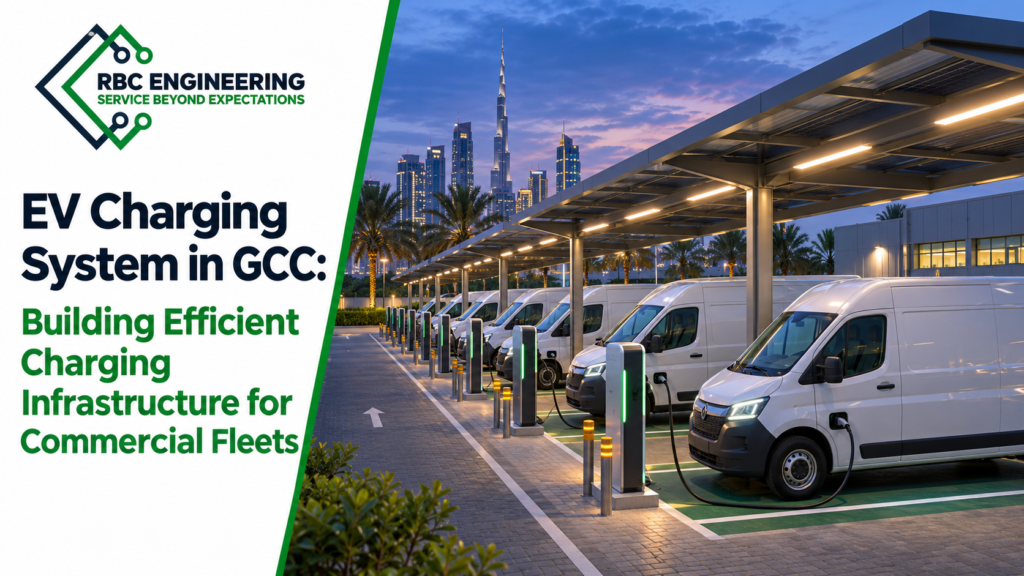
For logistics and transportation companies, an electric vehicle with insufficient battery energy can disrupt an entire delivery schedule.
Fleet electrification requires more than purchasing electric vehicles and installing charging stations. Businesses must coordinate charging schedules, electrical capacity, vehicle movements and operational requirements.
An efficient EV Charging System in GCC should support daily business activities without creating unnecessary charging delays or infrastructure expenses.
Whether a company operates delivery vans in Dubai or transportation fleets across Saudi Arabia, careful planning can support more dependable operations.
Why an EV Charging System in GCC Must Match Fleet Operations
Commercial vehicles operate under different conditions from privately owned electric cars. Their charging requirements depend heavily on business schedules.
Understand Fleet Duty Cycles
Daily driving distance, working hours, vehicle efficiency and return schedules determine how much charging energy each vehicle requires.
Delivery vans returning to a depot every evening may have predictable charging requirements.
Identify Different Commercial Fleet Charging Needs
Taxis and vehicles operating multiple shifts may need shorter charging sessions throughout the day.
Corporate vehicles with extended parking periods may have greater charging flexibility.
Prioritise Vehicle Readiness
The main objective is ensuring vehicles have sufficient energy before their scheduled departures.
Installing the most powerful chargers does not automatically provide the most efficient operational solution.
Calculate Fleet Energy Demand Before Installing Depot Chargers
Understanding electricity requirements helps businesses select suitable equipment and avoid unnecessary infrastructure investment.
Estimate Daily Energy Requirements
Review each vehicle’s average travel distance and electricity consumption. Consider differences between vehicle models, payloads, driving conditions and air conditioning usage.
Calculate Combined Fleet Charging Demand
Consider an illustrative commercial fleet consisting of 12 electric delivery vehicles.
- Daily battery energy requirement per vehicle: 30 kWh.
- Combined battery energy requirement: 360 kWh.
- Assumed charging efficiency: 90%.
- Required electrical energy: 400 kWh.
- Available overnight charging window: eight hours.
Under these assumptions, the fleet requires an average electrical input of 50 kW throughout the available charging period.
Evaluate Available Depot Charging Capacity
This calculation provides an initial planning reference rather than a complete electrical design.
Final equipment selection must also consider vehicle charging limits, overlapping schedules, existing building consumption and operational reserves.
Develop Efficient Fleet Charging Schedules and Power Allocation
Effective charging schedules can help businesses make better use of available electrical infrastructure.
Use Overnight Charging for Predictable Operations
Vehicles returning to depots for extended periods may benefit from scheduled AC charging.
Longer parking windows can reduce the need for expensive high-powered equipment.
Prioritise Vehicles With Earlier Departure Times
Charging priorities should reflect upcoming delivery routes, remaining battery energy and scheduled departure times.
Vehicles with later departure times may have greater flexibility in their charging arrangements.
Manage Demand With Dynamic Load Balancing
Compatible load management equipment can distribute available electricity between connected vehicles.
This helps control simultaneous charging demand without exceeding configured site limits.
However, load balancing does not increase the property’s underlying electrical capacity.
Prepare for Unexpected Operational Changes
Late vehicle returns, additional deliveries and charging interruptions can affect planned schedules.
Maintain sufficient operational flexibility to accommodate these situations without disrupting the following day’s activities.
Select AC and DC Charging Equipment for Commercial Fleet Depots
Different fleet operations require different charging configurations.
AC Charging for Extended Parking Windows
AC chargers can support vehicles parked for several hours with moderate daily energy requirements.
This arrangement may suit corporate vehicles, delivery vans and fleets returning to a depot overnight.
DC Fast Charging for High-Utilisation Fleets
DC charging may be appropriate for vehicles operating multiple shifts or requiring substantial energy replenishment within shorter parking periods.
Actual charging performance depends on vehicle compatibility and available electrical infrastructure.
Combine AC and DC Equipment Where Necessary
Some commercial fleets benefit from combining charging technologies.
AC equipment can support routine overnight charging, while suitable DC equipment accommodates vehicles with shorter turnaround requirements.
Consider GCC Environmental Conditions
Check manufacturer specifications for operating temperatures, dust protection, cooling requirements and outdoor installation suitability.
Standardise Fleet Charging Infrastructure Across Multiple GCC Locations
Businesses operating across several Gulf countries face additional equipment procurement and management challenges.
Establish Common Equipment and Software Requirements
A consistent procurement framework can simplify future expansion and operational management.
Common requirements may include:
- Vehicle connector compatibility.
- Charging management software functions.
- Equipment performance reporting.
- Maintenance documentation.
- Spare parts and warranty arrangements.
Monitor Charging Operations Centrally
Compatible fleet charging management software can help businesses review equipment availability, vehicle charging records and electricity consumption across multiple depots.
Verify supported functions and interoperability before selecting a platform.
Adapt Installations to Local Regulatory Requirements
Electrical installation requirements and regulatory procedures can differ between GCC countries.
In Dubai, independent public charging operators must follow DEWA’s licensing framework.
Saudi Arabia also maintains conformity certification procedures for electric vehicle chargers and accessories.
Businesses should confirm applicable requirements for each destination country rather than assuming one approval covers the entire GCC.
Plan Infrastructure Expansion in Phases
Coordinate additional charger installations with vehicle acquisition schedules and measured charging demand.
Evaluate Fleet Charging Costs and Operational Reliability
Equipment purchase prices represent only part of the overall infrastructure investment.
Consider Total Infrastructure Ownership Costs
Commercial fleet charging expenditure may include electrical upgrades, installation, management software, maintenance and replacement components.
Compare these costs alongside expected vehicle usage and operational requirements.
Account for Charging Equipment Failures
An unavailable charger can affect vehicle readiness and scheduled deliveries.
Suitable backup arrangements should reflect the operational importance of each charging point.
Measure Performance Against Fleet Requirements
Fleet managers should regularly review:
- Vehicles ready at scheduled departure times.
- Electricity consumption per vehicle.
- Charging interruptions and equipment faults.
- Charger utilisation during parking windows.
- Maintenance and operating expenditure.
These records can help businesses identify capacity limitations and justify future infrastructure investments.
Plan Commercial Fleet Charging Infrastructure With Technical Support
Successful fleet electrification requires coordination between vehicle requirements, charging schedules, depot infrastructure and long-term business plans.
RBC Engineering provides EV Charging System in GCC solutions for commercial, industrial, logistics and transportation applications.
Planning a fleet charging project? Request a technical assessment and share your vehicle specifications, depot locations, daily travel requirements and operating schedules.
Early planning supports more informed equipment selection and infrastructure investment.
Frequently Asked Questions
How Many EV Chargers Does a Commercial Fleet Need?
The required number depends on vehicle quantities, daily energy consumption, available charging hours and electrical capacity. Businesses should also consider simultaneous charging requirements and departure schedules. A technical assessment can help identify a suitable charging configuration.
Can a Commercial EV Fleet Charge Entirely Overnight?
Yes, when available charging hours and electrical capacity can meet the fleet’s energy requirements. Vehicle charging limitations, equipment compatibility and unexpected schedule changes should also be considered. Some high-utilisation fleets may require additional daytime charging.
Should Fleet Operators Choose AC or DC Charging Equipment?
AC charging may suit vehicles with extended parking periods. DC charging can support operations requiring shorter charging sessions. The appropriate technology depends on fleet duty cycles, vehicle compatibility, available electrical infrastructure and operating costs.
Can Businesses Manage Fleet Charging Across Different GCC Countries?
Compatible centralised management software can support monitoring across multiple charging locations. However, businesses must consider equipment interoperability, local electrical requirements, communication infrastructure and country-specific regulations. Common procurement specifications should accommodate these regional differences.
Conclusion
Efficient fleet charging begins with understanding vehicle operations. Businesses should assess energy requirements, develop practical charging schedules and select suitable infrastructure. A phased, carefully planned approach supports dependable vehicle readiness and informed long-term investment.
