A great potato dish does not begin when the pan gets hot or the oven is turned on. The results often depend on what happens beforehand. Selecting a suitable potato, cleaning it properly, cutting it consistently, and preparing it according to the cooking method can all influence the texture, flavor, and appearance of the finished dish.
Good potato preparation is therefore an important part of cooking with fresh potatoes. Whether the goal is crispy roasted potatoes, creamy mashed potatoes, tender boiled potatoes, or golden fried potatoes, thoughtful preparation can help bring out the natural characteristics of each variety.
Why Potatoes Matters Before Cooking
Potatoes contain different levels of starch and moisture depending on the variety. These characteristics influence how they respond to heat and how they feel when cooked.
Preparation helps cooks work with those natural characteristics rather than against them. For example, drying cut potatoes before roasting can encourage better browning, while cutting potatoes into similar-sized pieces can help them cook more evenly.
The preparation process also provides an opportunity to inspect the potatoes. Firm potatoes with clean, intact surfaces are generally easier to work with and can produce more consistent results.
Selecting Potatoes for the Dish
An effective potato prep guide should begin with selection. Not every potato is equally suited to every recipe, so the intended cooking method should influence the choice.
Starchy potatoes can be useful for baking, mashing, and frying because they can develop a lighter or fluffier interior. Waxy potatoes tend to hold their shape better and can be useful for boiling, salads, and certain roasting applications.
All-purpose varieties provide flexibility when one potato needs to work across several recipes. Specialty potatoes can also offer distinctive colors, shapes, and textures that make them interesting choices for specific dishes.
Understanding these differences makes preparation more purposeful. Instead of treating every potato in the same way, cooks can adapt their preparation to the characteristics of the variety.
Cleaning and Handling Fresh Potatoes
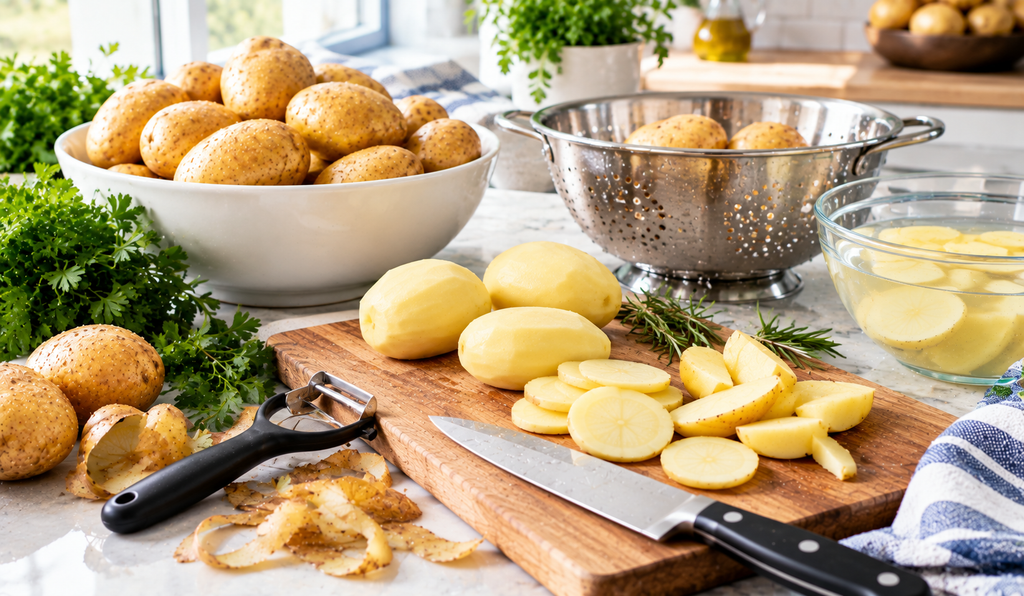
When preparing fresh potatoes, cleaning is one of the first practical steps. Because potatoes grow underground, their surfaces can carry soil and other debris from cultivation and harvesting.
Rinse potatoes thoroughly under cool running water and scrub them gently when needed. Whether the skin should remain depends on the variety and recipe. Thin-skinned potatoes can often be prepared with their skins, while peeling may be appropriate when a smoother texture is desired.
Once washed, potatoes should be handled according to the cooking method. Drying the surface is especially useful when roasting or frying, where excess moisture can interfere with browning and crispness.
Cutting Size Can Change the Cooking Result
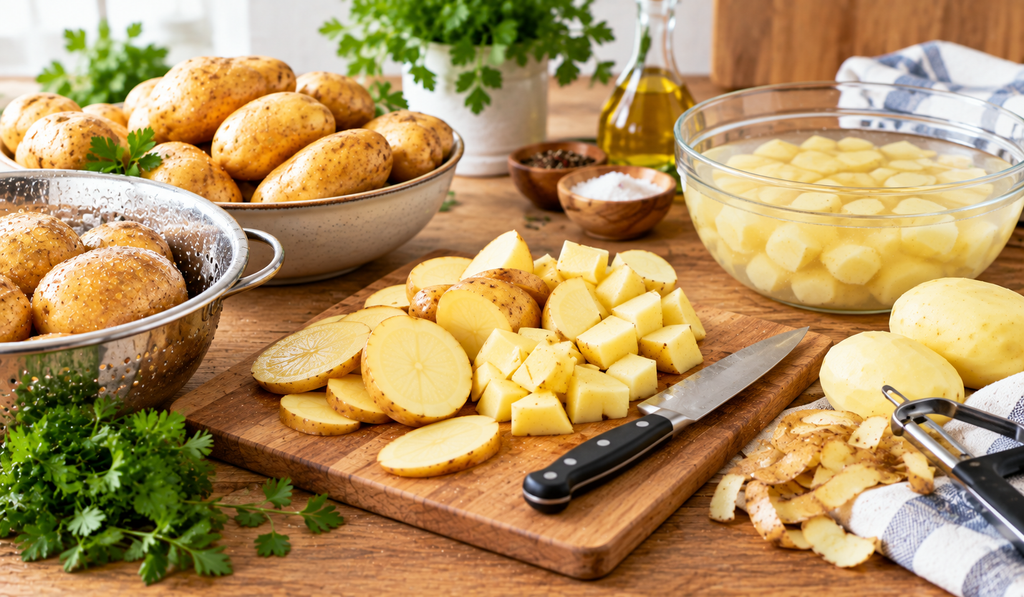
The way potatoes are cut has a direct effect on cooking time. Large pieces generally take longer to become tender, while smaller pieces cook more quickly.
For consistent results, pieces intended for the same dish should generally be similar in size. This helps reduce the chance of having some pieces overcooked while others remain firm.
Cutting also influences texture. Thin slices can develop more surface browning, while larger chunks can retain a softer interior. The ideal size depends on the recipe and cooking method.
A sharp knife and stable cutting surface can make this step easier and more precise.
Preparation Techniques for Different Cooking Methods
One of the most useful potato cooking tips is to match preparation with the method that will be used.
Baking
Whole potatoes should be cleaned and dried before baking. Pricking the skin can help steam escape during cooking. The variety selected can influence whether the finished interior is light and fluffy or more moist and dense.
Boiling
When boiling potatoes, similarly sized pieces can promote more even cooking. Potatoes should be cooked until tender without allowing them to become excessively soft or waterlogged.
Roasting
Drying potatoes before roasting can help encourage browning. Giving the pieces enough space on the cooking surface also allows heat to circulate more effectively.
Seasoning can be added according to the recipe, but preparation remains important because surface moisture and piece size can affect the final texture.
Frying
Frying requires careful control of moisture, size, and temperature. Cut potatoes should be prepared consistently and dried thoroughly when appropriate. These steps can help support the contrast between a crisp exterior and a properly cooked center.
Mashing
For mashed potatoes, cooking the pieces until tender is only part of the process. They should also be drained well before mashing. Excess water can affect consistency, while overworking certain varieties can produce an undesirable texture.
How potato preparation Influences Texture
Texture is one of the clearest ways preparation affects the final dish. The same variety can produce different results depending on how it is cut, heated, and handled.
For example, larger roasted pieces can retain a softer center, while smaller pieces may develop more surface crispness. Boiled potatoes that are handled gently can retain more of their shape, while prolonged cooking can cause them to break apart.
These differences demonstrate why potato preparation should not be considered a single fixed process. Preparation needs to change according to the potato, recipe, and desired result.
Storage Is Part of Preparation Too
Preparation begins before potatoes reach the cutting board. Proper storage can help maintain their condition and reduce avoidable quality problems.
Raw potatoes are generally best stored in a cool, dry, dark, and well-ventilated place. They should typically remain unwashed during storage because excess surface moisture can encourage deterioration.
Potatoes should also be protected from excessive light. Regular inspection can help identify potatoes showing signs of spoilage or deterioration before they affect the rest of the stored crop.
Buying quantities that can be used within a reasonable period can make it easier to maintain freshness and quality.
From Farm Practices to Kitchen Results
The quality of fresh potatoes begins long before preparation. Growing conditions, harvesting, grading, handling, and storage can all influence the condition of potatoes when they reach consumers.
Modern agricultural practices are increasingly focused on using resources efficiently while maintaining crop quality. Climate smart potato farming can involve approaches designed to improve resilience, manage water and soil resources responsibly, and respond to changing environmental conditions.
These efforts connect the farm with the kitchen. When potatoes are grown and handled with attention to quality and resource management, the result is a crop better positioned to meet the needs of different markets and cooking applications.
Simple Habits for More Consistent Potato Dishes
A few preparation habits can make everyday potato cooking more predictable:
- Select a variety that suits the intended cooking method.
- Wash potatoes thoroughly before cutting or cooking.
- Keep pieces similar in size when even cooking is important.
- Dry cut potatoes when browning or crisping is the goal.
- Avoid overcrowding potatoes during roasting or frying.
- Cook potatoes until they reach the texture required by the recipe.
- Handle cooked potatoes carefully when maintaining their shape matters.
These steps do not require complicated equipment or advanced techniques. They simply encourage greater attention to the characteristics of the potato and the requirements of the recipe.
Making Every Preparation Step Count
Good potato dishes are often the result of several small decisions rather than one complicated technique. Choosing an appropriate variety, cleaning it properly, cutting it consistently, controlling moisture, and matching preparation to the cooking method can all contribute to better results.
A useful potato prep guide should therefore go beyond basic washing and cutting. It should help cooks understand why preparation matters and how different choices can influence texture, flavor, and appearance.
From Pennsylvania farms to kitchens and markets, potatoes go through a series of steps before becoming part of a finished meal. Pennsylvania Co-Operative Potato Growers supports the state’s potato industry by connecting growers with markets and helping provide quality potatoes for a variety of applications. Understanding that journey—from responsible farming and careful handling to thoughtful potato preparation—can help consumers make better use of fresh potatoes in every dish.