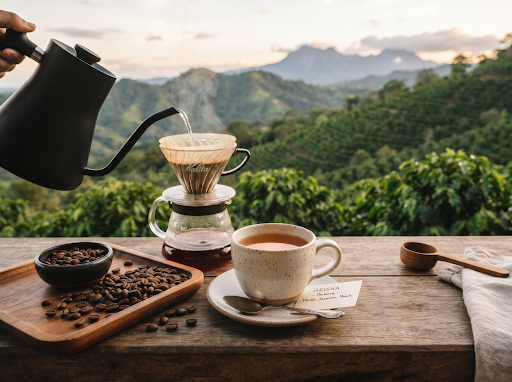
Few coffees spark as much curiosity as one grown from the rare Geisha varietal. Prized for delicate aromas that recall flowers and tea, it tastes unlike the chocolatey, nutty cups most drinkers know. Yet the high price and the mystique can leave first-time buyers wondering what makes it special. In this guide, geisha coffee gets a clear and simple explanation, covering its origins, flavor profile, processing methods, and the brewing habits that let its subtle character shine in your cup.
Where Geisha Beans Come From and Why They Became Famous
The Varietal Originated in Ethiopia Before Spreading to Other Regions
The Geisha varietal takes its name from the Gesha area of Ethiopia, where it was first collected before being planted in other countries. For decades,s it attracted little notice, and Geisha coffee only gained fame after exceptional lots from Panama won international competitions in the early 2000s.
High Altitude Farms Slow Cherry Ripening and Build Complex Flavor
Geisha thrives at elevation, where cooler temperatures slow the ripening of the cherry and concentrate its sugars and acids. Producers in Colombia, Panama, and Ethiopia now grow it on carefully managed plots. Lower yields and demanding care explain much of the cost, because each tree produces comparatively few cherries.
Micro Lots Keep Beans Traceable to a Single Farm or Producer
Many bags of Geisha coffee are sold as micro-lots, small batches kept separate from other harvests. Traceability lets drinkers learn the farm, altitude, and processing method behind the beans. That transparency rewards producers who invest in quality, and it helps buyers compare lots with confidence.
What Geisha Tastes Like and How Processing Shapes the Cup
Floral Aromas Like Jasmine and Rose Water Define the Profile
The signature of Geisha is aroma. Notes of jasmine, rose water,r and bergamot are common, often with flavors of stone fruit, citrus, or tropical fruit. The body tends to feel silky and tea-like rather than heavy, with a clean, sweet finish that lingers pleasantly.
Honey and Washed Processing Change Sweetness and Clarity in the Cup
Processing leaves a clear mark. Washed lots tend to taste clean and bright, while honey-processed lots leave some fruit mucilage on the seed during drying, which can add sweetness and fruit-forward character. A skilled roaster adjusts for each style, so Geisha coffee from different processes can taste remarkably different.
Light Roasting Protects Delicate Aromas Instead of Covering Them Up
Dark roasting adds smoky, bitter flavors that would bury the delicate floral notes. For that reason, most roasters keep Geisha coffee at a light level, preserving high acidity, sweetness, and aroma. Many drinkers enjoy it black, since milk and sugar can mask the very qualities that make the coffee distinctive.
Brewing Tips and Storage Habits That Help Protect Delicate Flavors
Pour Over Brewing Offers Precise Control and Highlights Aromatic Detail
Pour-over is widely recommended because it gives you control over water flow and extraction, showcasing layered aromas. A good starting point for Geisha coffee is water just below boiling and a medium-fine grind, adjusted to taste. If the cup tastes sharply sour, grind slightly finer or extend the brew time.
Immersion Methods Like French Press Add Extra Body and Sweetness
A French press or similar immersion brewer produces a rounder, more syrupy cup with less clarity. Choose it if you prefer weight and texture over delicate detail. Pairing the cup with light pastries or buttery shortbread complements floral and fruit notes without overpowering them.
Freshness and Proper Storage: Keep Floral Aromas Vibrant for Longer
Aromas fade as beans age, so buy in small quantities and grind just before brewing. Store beans in an airtight container away from light, heat, and moisture. Avoid refrigerating them, since condensation can damage flavor, and use them within a few weeks of the roast date for the best results.
Conclusion
Geisha rewards curiosity, patience, and good technique. Learning where it grows, how processing shapes flavor, and why light roasting matters lets you enjoy every delicate note. For the best experience, choose fresh roasted coffee beans from producers who share the farm, altitude and processing details, and brew them with care. Start with a simple pour-over, taste slowly,y and notice how the aroma evolves from the first sip to the last.