Introduction
Your car’s engine needs clean air, fuel, and the right amount of heat to work properly. Over time, however, carbon deposits can collect inside different parts of the engine. This build-up is common, especially in vehicles that spend a lot of time in traffic, make short trips, or have poor combustion.
A small amount of carbon may not cause an obvious problem. But as deposits become thicker, they can affect airflow, fuel burning, engine response, and overall performance. You may notice that your car feels slower, uses more fuel, or does not run as smoothly as it once did.
Understanding how carbon build-up happens and what it can do to your engine can help you spot problems early.
What Is Carbon Build-Up?
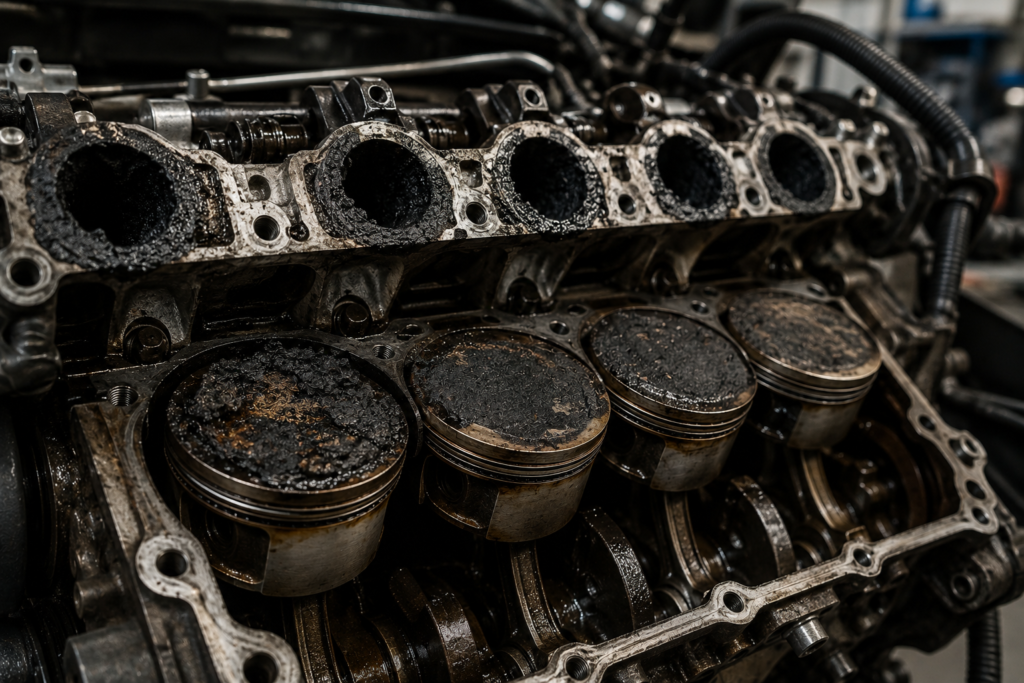
Carbon build-up is a layer of deposits that forms when fuel and oil are not completely burned inside the engine. These deposits can contain carbon, soot, oil residue, and other materials.
They can collect on parts such as the intake valves, pistons, fuel injectors, combustion chamber, and exhaust system.
Modern engines are designed to control emissions and improve fuel use. However, these systems can also allow certain deposits to collect over time. Diesel engines can be more affected by soot, while some petrol engines, especially direct-injection engines, can develop deposits around the intake valves.
Carbon build-up does not always mean that something is seriously wrong with the engine. It is often a result of normal use and can increase as the vehicle gets older.
How Does Carbon Build Up in an Engine?
Several factors can lead to carbon deposits.
One common cause is incomplete combustion. When fuel does not burn fully, some residue can remain behind. Oil vapour and exhaust gases can also enter areas where deposits may form.
Short journeys can make the problem worse. When an engine does not reach its normal operating temperature, moisture and deposits may not be cleared as effectively as they would during longer drives.
Frequent stop-and-go driving can also contribute to deposits. Other possible causes include poor-quality fuel, worn engine parts, incorrect fuel mixture, and problems with the fuel or emissions system.
The amount of carbon build-up will depend on the vehicle, engine design, driving habits, mileage, and maintenance history.
What Problems Can Carbon Build-Up Cause?
Carbon deposits can affect different engine parts in different ways. The effect may be small at first, but heavy build-up can lead to noticeable performance problems.
1. Reduced Engine Power
One of the most noticeable signs can be a loss of power.
If deposits restrict airflow or affect combustion, the engine may not produce power as efficiently as it should. You may notice this when accelerating, driving uphill, or carrying a heavy load.
The car may still drive normally, but it can feel less responsive than before.
2. Poor Fuel Economy
Carbon build-up can also affect fuel efficiency.
When combustion becomes less efficient, the engine may need more fuel to produce the same amount of power. This can slowly increase fuel consumption.
If your car suddenly starts using much more fuel, carbon deposits could be one possible cause. However, other problems, such as tyre pressure, fuel-system faults, sensors, or engine issues, should also be considered.
3. Rough Idling
A healthy engine should usually idle smoothly.
Heavy deposits can affect the way air and fuel move through the engine. This may cause the engine to shake, vibrate, or feel uneven when the car is stopped.
Rough idling can have many causes, so it is important not to assume that carbon build-up is the only reason.
4. Slower Acceleration
Carbon deposits can reduce engine response.
You may press the accelerator and notice that the car takes longer to pick up speed. This can be especially noticeable when joining a busy road or overtaking.
A loss of acceleration should not be ignored, because it can also be linked to turbocharger, fuel, air, or exhaust problems.
5. Starting Problems
Heavy deposits can sometimes make it harder for an engine to start.
If combustion is not happening as it should, the engine may take longer to fire up. You might notice this more often when the engine is cold.
Repeated starting problems should always be checked, as batteries, glow plugs, spark plugs, injectors, and other components can also cause similar symptoms.
6. Increased Exhaust Smoke
Some carbon-related engine problems can be linked with increased exhaust smoke.
Diesel vehicles, in particular, can produce more visible soot when combustion or emissions systems are not working correctly.
The colour and amount of smoke can provide useful clues, but proper diagnosis is needed to identify the real cause.
7. Engine Warning Light
In some cases, carbon deposits can contribute to problems that trigger the engine warning light.
The warning light may appear when sensors detect that the engine or emissions system is not working within expected limits.
A warning light should not automatically be blamed on carbon build-up. A diagnostic check can help identify what is actually causing the problem.
Where Does Carbon Build Up?
Carbon deposits can appear in several areas of an engine. The location can depend on the engine type and how the vehicle is used.
| Engine Part | Possible Effect of Carbon Build-Up |
| Intake valves | Can restrict airflow and affect engine response |
| Fuel injectors | May affect fuel spray and combustion |
| Pistons | Can interfere with efficient combustion |
| Combustion chamber | May affect engine efficiency |
| EGR system | Soot can restrict movement and airflow |
| Exhaust system | Deposits can contribute to restricted exhaust flow |
This is why simply cleaning one part may not always solve an engine performance problem. A proper inspection can help determine where deposits are located and whether cleaning is suitable.
Can Short Trips Increase Carbon Build-Up?
Yes, frequent short trips can contribute to deposit formation.
During a short journey, the engine may spend much of its time warming up. It may not reach the temperature it needs for efficient operation.
Short trips also often involve frequent starting, stopping, and low-speed driving. Over time, these conditions can encourage deposits to form.
This does not mean that every short trip will damage your engine. It simply means that regular longer drives and proper servicing can be helpful for many vehicles.
Does Carbon Build-Up Affect Diesel and Petrol Engines?
Both diesel and petrol engines can develop carbon deposits, but the way deposits form can be different.
Diesel engines naturally produce soot as part of the combustion process. Exhaust gas recirculation and other emissions systems can also collect deposits.
Petrol engines can develop deposits in the combustion chamber, while some direct-injection petrol engines may experience deposits on intake valves because fuel does not wash over those valves in the same way as some older injection systems.
The best cleaning method depends on the engine and the location of the deposits.
How Can You Reduce Carbon Build-Up?
You cannot always prevent carbon deposits completely, but good vehicle care can help reduce the risk.
Regular servicing is one of the most important steps. Use the correct engine oil and follow the manufacturer’s recommended service schedule.
Try to avoid making every journey a very short trip when possible. Allowing the engine to reach its normal operating temperature can support better engine operation.
Using suitable fuel and replacing air and fuel filters when required can also help maintain good combustion.
Most importantly, pay attention to changes in your car. A small change in performance can sometimes be easier and cheaper to address than a larger problem that has been ignored for a long time.
When Should You Consider Engine Cleaning?
Engine cleaning may be worth considering when a vehicle has noticeable symptoms or when an inspection shows significant deposits.
Possible signs include:
- Reduced engine power
- Slower acceleration
- Poor fuel economy
- Rough idling
- Increased smoke
- Difficult starting
- Engine warning lights
- Uneven engine performance
However, cleaning is not a cure for every engine problem. If a component is worn or damaged, cleaning it may not fix the issue.
A proper diagnosis should come first. This helps determine whether deposits are actually causing the problem and which cleaning method is appropriate.
Why Regular Maintenance Matters
Carbon build-up usually develops gradually. That means your car may continue to run for a long time before you notice a major change.
Regular maintenance gives you a better chance of finding problems early. Checking the engine, fuel system, air intake, exhaust system, and other important components can help keep the vehicle running properly.
Good maintenance can also help protect the engine from unnecessary stress and keep performance more consistent as the vehicle gets older.
Conclusion
Carbon build-up is a common issue that can slowly affect the way your car performs. From reduced power and slower acceleration to poor fuel economy and rough running, heavy deposits can make an otherwise reliable engine feel less responsive.
Regular servicing, sensible driving habits, and early attention to engine problems can help keep carbon deposits under control. If your vehicle is showing signs of poor performance, it is worth finding the real cause before the problem becomes more serious.
Engine Carbon Cleaning can be a useful option when carbon deposits are affecting engine performance, but the right cleaning method should always depend on the condition and type of engine.
Frequently Asked Questions
1. Is carbon build-up normal in a car engine?
Some carbon deposits can develop naturally as an engine is used. The amount depends on the engine design, mileage, fuel, driving habits, and maintenance.
2. Can carbon build-up reduce engine power?
Yes. Heavy deposits can affect airflow and combustion, which may lead to reduced power and slower acceleration.
3. Can carbon build-up increase fuel consumption?
It can. If deposits reduce combustion efficiency, the engine may use more fuel to produce the same level of performance.
4. Are diesel engines more likely to have carbon deposits?
Diesel engines can produce more soot, so deposits can be a common concern. However, petrol engines can also develop carbon build-up.
5. Can driving longer distances remove carbon deposits?
Regular longer drives may help an engine operate at its normal temperature and can support proper operation. However, driving alone will not remove heavy deposits in every situation.
6. Is carbon cleaning suitable for every car?
Not necessarily. The right approach depends on the engine, its condition, and where deposits are located. A proper inspection is recommended before choosing a cleaning method.
7. How can I tell if my car has carbon build-up?
Symptoms may include poor acceleration, reduced power, rough idling, higher fuel use, smoke, or starting problems. These symptoms can have other causes, so diagnosis is important.
