Introduction
Every relationship goes through ups and downs. Even couples who love and care deeply for each other can face disagreements, misunderstandings, and communication problems. While occasional conflict is normal, ongoing arguments and poor communication can put stress on a relationship and make partners feel disconnected.
Many couples struggle because they do not know how to express their feelings, listen effectively, or work through disagreements in a healthy way. Over time, these challenges can lead to frustration, resentment, and emotional distance.
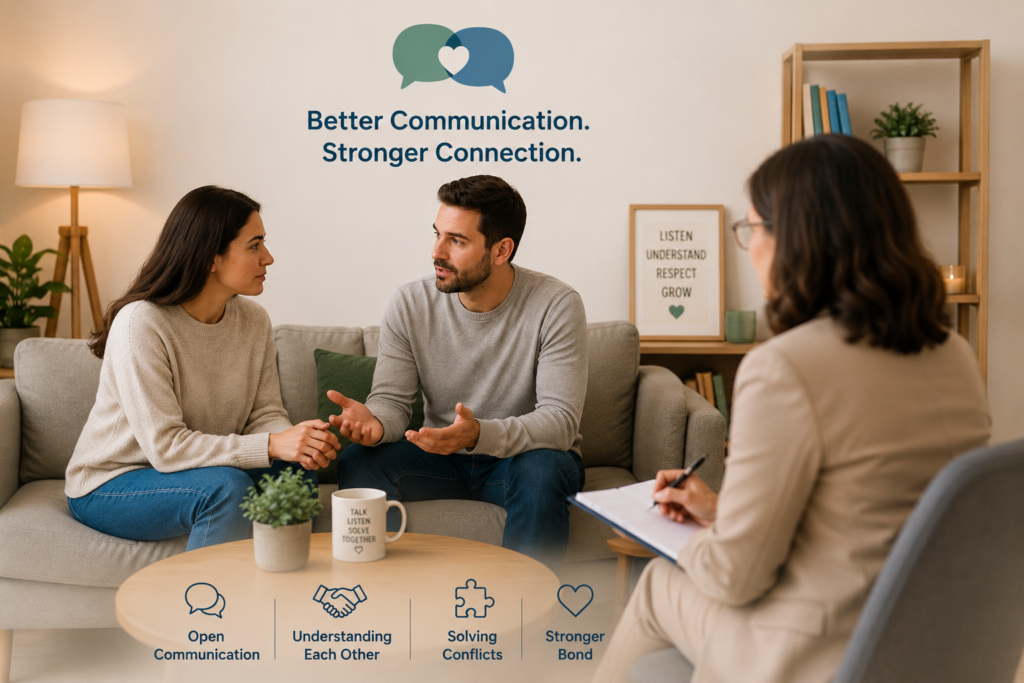
Couples counseling offers a supportive setting where partners can learn better communication skills and healthier ways to resolve conflict. It helps couples understand each other more clearly, improve their connection, and build a stronger relationship.
This guide explains how couples counseling supports conflict resolution and communication and why it can be beneficial for long-term relationship success.
Understanding Conflict in Relationships
Conflict is a natural part of any relationship. Every person has different opinions, habits, expectations, and ways of handling situations. Because of these differences, disagreements are bound to happen from time to time.
Conflict itself is not necessarily harmful. In fact, healthy disagreements can help couples understand each other better and grow together. Problems arise when conflicts are handled poorly or left unresolved.
Repeated arguments, criticism, avoidance, and emotional reactions can make small issues become much bigger over time. When conflicts are not addressed properly, they can affect trust, intimacy, and overall relationship satisfaction.
Why Communication Matters in a Relationship
Good communication is one of the most important parts of a healthy relationship. It allows partners to express their thoughts, feelings, needs, and concerns openly.
Without effective communication, misunderstandings can easily develop. One partner may feel ignored, while the other may feel criticized or misunderstood. These communication gaps often become the source of ongoing conflict.
When couples communicate clearly and respectfully, they are more likely to solve problems together and maintain a strong emotional connection.
Common Signs of Communication Problems
Many couples experience communication difficulties without realizing how much these issues affect their relationship.
Some common signs include:
- Frequent misunderstandings and arguments
- Feeling unheard during conversations
- Avoiding difficult discussions
- Interrupting or talking over each other
- Becoming defensive when concerns are raised
- Struggling to express emotions clearly
Recognizing these patterns is often the first step toward making positive changes.
How Couples Counseling Improves Communication
One of the main goals of couples counseling is to help partners communicate more effectively. During counseling sessions, couples learn how their communication habits influence the relationship.
A counselor helps both individuals speak openly while ensuring that each person feels respected and heard. This creates opportunities for honest conversations that may otherwise be difficult to have.
Couples also learn how to communicate their feelings without blaming or attacking each other. Instead of focusing on winning an argument, they learn how to work together to understand and solve problems.
Over time, these communication skills can lead to healthier interactions both inside and outside counseling sessions.
The Role of Active Listening
Communication is not only about speaking. Listening is equally important.
Many disagreements happen because people focus on preparing their response instead of fully listening to their partner. This can make the other person feel dismissed or misunderstood.
Active listening teaches couples to pay attention to both the words and emotions being expressed. It encourages partners to listen with patience and understanding rather than judgment.
When couples practice active listening, conversations become more productive and respectful. Both partners feel valued, which helps strengthen emotional connection and trust.
Learning Better Conflict Resolution Skills
Conflict resolution is an important part of any successful relationship. Couples counseling teaches partners how to handle disagreements calmly and productively.
Instead of allowing emotions to take control, couples learn strategies for discussing issues respectfully and finding solutions together.
These skills often include:
- Staying focused on the current issue
- Avoiding personal attacks
- Looking for solutions rather than blame
- Respecting different viewpoints
- Working together toward a common goal
By learning these techniques, couples can reduce tension and resolve disagreements more effectively.
Understanding the Real Cause of Arguments
Many arguments are not actually about the issue being discussed. For example, a disagreement about household chores may be connected to feelings of being unappreciated. An argument about spending money may reflect concerns about security or trust.
Couples counseling helps partners look beyond the surface of a disagreement to identify the deeper emotions involved.
Understanding the true source of conflict often makes it easier to find meaningful solutions. Instead of repeatedly arguing about the same topics, couples can address the underlying concerns that are driving those disagreements.
Building Emotional Awareness
Emotions have a major influence on communication and conflict resolution. When people feel hurt, stressed, angry, or disappointed, they may react in ways that create more tension.
Couples counseling helps individuals become more aware of their emotional responses. This awareness allows partners to recognize triggers and manage emotions in healthier ways.
As emotional awareness grows, couples often become better at expressing feelings clearly and responding to each other with empathy and understanding.
How Couples Counseling Supports Relationships
| Relationship Challenge | How Couples Counseling Helps |
| Frequent arguments | Teaches healthy conflict resolution skills |
| Poor communication | Improves listening and speaking skills |
| Trust issues | Encourages open and honest conversations |
| Emotional distance | Strengthens emotional connection |
| Misunderstandings | Promotes clearer communication |
| Stress-related conflicts | Helps couples manage stress together |
| Ongoing resentment | Addresses unresolved issues constructively |
Strengthening Trust Through Better Communication
Trust is one of the foundations of a healthy relationship. When trust is damaged, communication often becomes more difficult.
Partners may hesitate to share their feelings or concerns because they fear being judged or misunderstood. Over time, this can create emotional distance.
Couples counseling provides a safe space for honest conversations. Partners can discuss concerns openly while learning how to rebuild trust through understanding, consistency, and respect.
As communication improves, trust often becomes stronger, creating a more secure and supportive relationship.
Managing Ongoing Relationship Challenges
Every relationship faces challenges. Financial concerns, parenting responsibilities, work stress, family issues, and lifestyle changes can all create pressure.
When these challenges are not managed well, they can lead to recurring conflicts. Couples counseling helps partners approach these situations as a team rather than as opponents.
By improving communication and problem-solving skills, couples become better equipped to handle life’s difficulties together.
Creating a Stronger Emotional Connection
Emotional connection is what helps partners feel close, supported, and valued. When communication breaks down, emotional intimacy often suffers.
Couples counseling encourages open discussions about thoughts, feelings, hopes, and concerns. These conversations help partners understand each other on a deeper level.
As emotional intimacy grows, couples often experience greater satisfaction in their relationship and feel more connected in their daily lives.
Developing Healthy Relationship Habits
Strong relationships are built through daily habits and consistent effort. Small positive actions can make a significant difference over time.
Couples counseling helps partners develop healthy habits that support communication and connection. These habits can strengthen the relationship and reduce the likelihood of future conflicts.
Simple habits may include setting aside time to talk, expressing appreciation regularly, and addressing concerns before they become major problems.
The Benefits of Couples Counseling in South Ogden, Utah
Many couples seek professional support when communication challenges begin affecting their relationship. Couples counseling in South Ogden, Utah offers a structured environment where partners can work together toward healthier communication and stronger conflict resolution skills.
Whether a couple is dealing with frequent disagreements, trust concerns, or emotional distance, counseling provides practical tools that can help improve the relationship.
By learning effective communication techniques and healthier ways to handle conflict, couples can build stronger, more satisfying partnerships.
When to Consider Couples Counseling
Some couples wait until problems become severe before seeking help. However, counseling can be valuable at any stage of a relationship.
You may benefit from counseling if:
- Arguments happen frequently
- Communication feels difficult or strained
- Trust has been damaged
- Emotional connection is fading
- Major life changes are creating stress
- The same issues keep repeating
Seeking support early can often prevent small concerns from becoming larger relationship problems.
Final thoughts
Every relationship experiences conflict from time to time, but healthy communication can make a significant difference in how those conflicts are handled. When couples learn to listen, understand, and communicate effectively, they are better prepared to face challenges together.
Couples counseling helps partners build important skills that improve communication, strengthen trust, and support healthy conflict resolution. It provides a safe space to address concerns, understand each other’s perspectives, and create positive changes within the relationship.
For couples considering couples counseling in South Ogden, Utah, professional guidance can provide valuable tools for building a stronger, healthier, and more connected relationship for years to come.
Frequently Asked Questions
1. How does couples counseling improve communication?
Couples counseling helps partners learn how to express their thoughts and feelings clearly while also improving listening skills. It encourages respectful conversations, reduces misunderstandings, and teaches practical communication techniques that support healthier and more productive interactions.
2. Can couples counseling help with frequent arguments?
Yes. Couples counseling helps identify the reasons behind repeated arguments and teaches healthier ways to handle disagreements. Couples learn conflict resolution strategies that reduce tension, encourage cooperation, and help both partners work toward solutions instead of continuing negative cycles.
3. Is couples counseling only for relationships in crisis?
No. Many couples attend counseling to strengthen their relationship before serious problems develop. Counseling can help improve communication, deepen emotional connection, and provide useful tools that support long-term relationship health and satisfaction.
4. How long does it take to see results from couples counseling?
The timeline varies depending on the couple’s goals, challenges, and level of participation. Some couples notice improvements within a few sessions, while others may benefit from longer-term counseling focused on deeper relationship concerns and communication patterns.
5. What can couples expect during counseling sessions?
During sessions, couples discuss concerns, communication patterns, and relationship goals. The counselor guides conversations, helps identify problem areas, and teaches practical skills for conflict resolution, emotional understanding, and healthier communication within the relationship.
