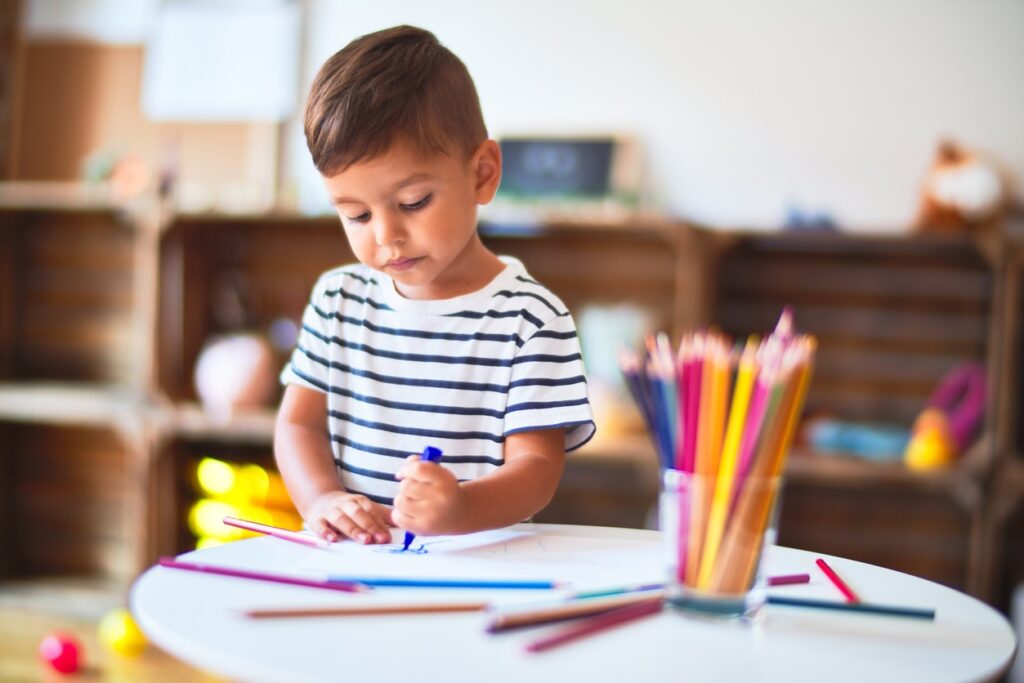
A child’s first friendships often begin with a shared toy, a group activity, or a simple invitation to play. These small moments teach lessons that shape how children communicate, cooperate, and understand others. A Davie Preschool can provide a supportive environment where young learners practice these essential skills every day. Through guided play, classroom routines, and meaningful interactions, children gradually learn how to build relationships, manage emotions, and feel confident in social situations.
Why Social Skills Matter During Early Childhood
Social skills help children interact with others, express their needs, and develop healthy relationships. During the preschool years, children begin moving beyond the familiar routines of home and learning how to participate in a wider community. They discover that other people have different feelings, ideas, preferences, and expectations.
These experiences are important because social development influences more than friendships. Children who learn to communicate clearly, cooperate with peers, and manage frustration often find it easier to participate in classroom activities and adjust to new environments.
Preschool creates regular opportunities for children to practice these abilities in a safe, structured setting. Rather than simply telling children how to behave, teachers demonstrate positive interactions and guide them through everyday situations.
Learning to Interact Beyond the Family
At home, adults often understand a child’s needs before the child expresses them. In a preschool classroom, children must communicate with teachers and classmates who may not immediately understand what they want. They learn to ask questions, explain their feelings, listen to others, and respond appropriately.
For example, a child who wants to join a group building a tower might initially grab a block. With a teacher’s guidance, that child can learn to ask, “Can I help you build?” This simple change encourages communication while helping the child understand how to enter a social interaction respectfully.
How Preschool Encourages Communication and Listening
Communication is one of the first social skills children develop through group learning. A preschool classroom gives children daily opportunities to express ideas, describe experiences, ask for help, and listen to different points of view.
Teachers support language development through conversations, storytelling, songs, group discussions, and pretend play. These activities help children understand that communication involves both speaking and listening.
As children become more comfortable expressing themselves, they may find it easier to make friends, explain disagreements, and participate in group activities.
Practicing Turn-Taking in Everyday Activities
Turn-taking teaches children that conversations, games, and shared activities involve other people. Activities such as rolling a ball, completing a puzzle together, or taking turns choosing a story help children understand when to participate and when to wait.
Teachers can reinforce this skill by using clear language, such as, “Mia is having her turn, and then it will be yours.” Over time, children begin to anticipate their turns without constant reminders.
These experiences also teach patience. Although waiting can be difficult for young children, repeated practice helps them gradually manage their impulses and respect others.
Building Empathy Through Meaningful Relationships
Empathy is the ability to recognize and respond to another person’s feelings. Preschool helps children develop this ability by bringing them into regular contact with classmates who experience happiness, disappointment, excitement, and frustration.
When a child notices that a friend feels sad after losing a game, a teacher might ask, “How do you think your friend feels? What could we do to help?” Such questions encourage children to consider another person’s perspective instead of focusing only on their own experience.
Teachers also model empathy by acknowledging children’s emotions without judging them. When adults respond calmly to distress, children learn that feelings are normal and that people can support one another during difficult moments.
Helping Children Recognize Different Emotions
Young children do not always have the words to describe what they feel. They may cry, withdraw, shout, or become frustrated because they cannot explain their emotions clearly.
Preschool educators can help by naming feelings and connecting them to situations. For instance, a teacher might say, “You look disappointed because the painting did not turn out the way you wanted.” This approach helps children connect emotional experiences with words.
Picture books, emotion cards, dramatic play, and classroom conversations provide additional ways to explore feelings. As children develop emotional awareness, they can begin recognizing similar emotions in their peers and responding with greater understanding.
Developing Cooperation and Teamwork Through Play
Play offers children a natural way to practice working together. During preschool, children often participate in activities that require them to share materials, agree on roles, solve small problems, and contribute to a common goal.
Building a pretend grocery store, creating a group mural, or constructing a road with blocks encourages children to coordinate their ideas. One child might organize the materials while another designs the layout. They learn that different contributions can help a group succeed.
These experiences are especially valuable because cooperation requires flexibility. Children must sometimes change their plans, consider another person’s suggestion, or accept that a shared activity will not unfold exactly as they imagined.
Choosing Activities That Encourage Collaboration
Teachers can encourage teamwork by selecting activities with shared goals rather than relying entirely on individual tasks. Group art projects, cooperative games, dramatic play, and simple classroom jobs all create opportunities for children to work together.
Adults should allow children time to negotiate when disagreements arise, stepping in when guidance is needed. The goal is not to eliminate every conflict but to help children learn how to resolve differences respectfully.
Parents can reinforce the same lessons at home by inviting children to prepare a snack together, sort laundry with family members, or build something with a sibling. Consistent opportunities across home and school help social skills become familiar habits.
Teaching Conflict Resolution and Problem-Solving
Disagreements are a normal part of childhood. Two children may want the same toy, disagree about the rules of a game, or struggle to decide who will play a particular role. These moments can become valuable learning opportunities when adults respond constructively.
Preschool teachers help children understand that conflict does not have to lead to aggression, shouting, or exclusion. Instead, children can learn to explain what happened, listen to another perspective, suggest solutions, and agree on a fair next step.
For example, if two children want the same set of crayons, a teacher might encourage them to identify possible solutions. They could take turns, use different colors together, or find another set of materials. The children practice solving the problem rather than depending entirely on an adult to decide the outcome.
Using Simple Language to Resolve Disagreements
Young children benefit from short, repeatable phrases that help them communicate during stressful moments. Teachers can model expressions such as:
- “I was using that. Can I have it back when you’re finished?”
- “I don’t like that. Please stop.”
- “Can we take turns?”
- “Let’s find another way.”
These phrases give children practical alternatives to grabbing, hitting, or walking away without explaining what they need. Adults should also help children recognize when a situation requires immediate intervention, especially when someone feels unsafe.
With practice, children can become more independent in handling minor disagreements. They also learn that resolving conflict involves listening, compromise, and respect for other people’s boundaries.
How Preschool Builds Confidence and Independence
Social confidence grows when children feel accepted and have opportunities to make age-appropriate choices. In preschool, children begin navigating routines, participating in group discussions, asking for assistance, and interacting with people outside their immediate family.
These experiences can help hesitant children become more comfortable in social settings. A child who initially watches others play may gradually join a small group after a teacher offers encouragement or introduces a familiar activity.
Independence also supports healthy relationships. When children learn to put away materials, follow classroom routines, and communicate their needs, they become more capable of participating in group life.
Teachers can support confidence without pressuring children to socialize before they feel ready. Some children need more time to observe, build trust, and approach new situations at their own pace.
Social Skills Children Develop in Preschool
Different classroom experiences strengthen different aspects of social development. The following table highlights common activities and the skills children can practice through them.
| Preschool activity | Social skill developed | Practical example |
|---|---|---|
| Group storytelling | Listening and communication | Waiting to speak and responding to a story |
| Shared building projects | Cooperation | Combining ideas to build a structure |
| Pretend play | Perspective-taking | Acting out family, community, or workplace roles |
| Board games and group games | Patience and turn-taking | Waiting for a turn and following rules |
| Classroom helper duties | Responsibility | Helping distribute supplies or tidy materials |
| Teacher-guided discussions | Emotional awareness | Naming feelings and discussing solutions |
| Partner art activities | Negotiation | Choosing colors and sharing materials |
| Group problem-solving | Conflict resolution | Finding a fair solution to a disagreement |
These activities work best when teachers provide clear guidance while allowing children enough freedom to explore, make decisions, and learn from their experiences. Social development happens gradually, so children benefit from repeated opportunities rather than expecting immediate mastery.
The Role of Teachers in Supporting Social Development
Preschool teachers do more than organize activities and maintain classroom routines. They observe how children interact, identify areas where support is needed, and create an environment where respectful behavior becomes part of everyday learning.
A skilled teacher notices whether a child struggles to join groups, becomes overwhelmed during transitions, or has difficulty expressing frustration. Instead of labeling the behavior as bad, the teacher looks for ways to teach the missing skill.
For instance, a child who frequently interrupts may need support with listening and waiting. A child who avoids group activities may benefit from starting with a familiar partner before participating in a larger group.
Teachers also set the tone through their own behavior. When they listen attentively, speak respectfully, acknowledge mistakes, and handle disagreements calmly, they demonstrate the same social skills they want children to develop.
Helping Shy Children Feel Comfortable in Groups
Not every child enters preschool eager to make friends. Some children are naturally reserved, while others need additional time to adjust to unfamiliar adults, new routines, and busy environments.
A supportive classroom respects these differences. Teachers can begin by offering low-pressure opportunities, such as playing alongside one classmate, choosing a book with a teacher, or participating in a small-group activity involving familiar materials.
It is important to distinguish between a quiet temperament and persistent difficulty participating. A child does not need to be highly outgoing to develop strong social skills. The more useful goal is to help each child communicate needs, build comfortable relationships, and participate at an appropriate pace.
Parents can help by talking positively about classroom experiences, arranging short playdates when appropriate, and recognizing small steps toward interaction. Praising a child for greeting a classmate or sharing an idea can reinforce confidence without making socializing feel like a performance.
Preparing Children for Kindergarten and Beyond
The social skills children practice in preschool can support their transition to kindergarten. Elementary classrooms often require children to follow group instructions, collaborate on activities, ask for help, respect shared materials, and manage everyday frustrations.
Children who have practiced these routines may find it easier to understand classroom expectations. They have already experienced many of the social situations that arise in school, such as waiting in line, working with partners, and navigating disagreements.
These abilities also matter beyond academic settings. As children grow, communication, empathy, cooperation, and problem-solving help them form friendships, participate in community activities, and develop respectful relationships.
However, children develop at different rates, and preschool cannot guarantee that every transition will be effortless. Its value lies in providing consistent practice, responsive guidance, and opportunities to build skills that children can continue strengthening throughout childhood.
How Parents Can Reinforce Preschool Social Skills at Home
Children benefit when the lessons they encounter at school connect with everyday family life. Parents do not need elaborate activities or special equipment to support social development. Ordinary routines often provide the most useful practice.
Encourage children to describe their day, explain what made them happy or upset, and think about how another person might feel. When siblings disagree, guide them toward explaining their needs and considering possible solutions instead of immediately deciding every issue for them.
Reading stories together is another effective approach. Ask questions such as, “Why do you think the character feels sad?” or “What could the character do differently?” These conversations encourage perspective-taking and thoughtful problem-solving.
Parents can also support development by:
- Modeling polite language, active listening, and respectful disagreement.
- Arranging opportunities for children to play with peers in manageable settings.
- Praising specific behaviors, such as waiting patiently or offering help.
- Keeping expectations appropriate for the child’s age and developmental stage.
Regular communication with preschool teachers can help families identify which skills a child is practicing and how to reinforce them consistently.
Choosing a Preschool That Values Social-Emotional Growth
When evaluating a preschool, parents should look beyond classroom decorations and academic activities. The way teachers respond to children, organize group experiences, and manage disagreements can reveal a great deal about the learning environment.
Ask how the school teaches sharing, supports children who struggle with transitions, and handles conflicts between classmates. Parents may also want to observe whether children have opportunities for both independent exploration and collaborative play.
A strong program recognizes that social development and academic learning complement each other. Children need opportunities to explore letters, numbers, stories, and creative activities, but they also need caring relationships and time to practice interacting with others.
Families considering preschool options should look for an environment where teachers communicate openly with parents, respect individual differences, and help children build social confidence through age-appropriate experiences. The best fit is a setting where children feel safe enough to ask questions, make mistakes, and develop relationships at their own pace.
Conclusion
Preschool gives children much more than an introduction to classroom learning. It provides everyday opportunities to communicate, cooperate, recognize emotions, resolve disagreements, and build meaningful friendships. Through supportive teachers, guided play, and positive peer interactions, children gradually develop the social skills that help them participate confidently in school and community life. Parents can strengthen this progress by reinforcing the same lessons at home and choosing a learning environment that respects each child’s needs. With consistent support and practice, these early experiences can lay a strong foundation for healthy relationships and lifelong learning.
Frequently Asked Questions
1. At what age do children begin developing social skills in preschool?
Children begin developing social skills from infancy, but preschool often provides more structured opportunities to practice them with peers. Many children attend preschool between ages three and five, although readiness varies. Activities should match each child’s developmental stage and comfort level.
2. How does preschool help children make friends?
Preschool brings children together through play, group activities, storytelling, and shared classroom routines. These experiences help them learn how to approach others, start conversations, share materials, and maintain positive interactions. Teachers can also support children who need extra encouragement to join a group.
3. Can preschool help a shy child become more social?
Yes. A supportive preschool can give shy children opportunities to build confidence through small-group activities, familiar routines, and gentle encouragement. The aim is not to change a child’s personality but to help them communicate comfortably, develop relationships, and participate at their own pace.
4. What social skills should children learn before kindergarten?
Important skills include listening, communicating needs, taking turns, cooperating with others, recognizing emotions, and handling minor disagreements. Children should also begin following group routines and asking adults for help when needed. These skills develop gradually, so children do not need to master every ability before kindergarten.
5. How can parents support the social skills children learn at preschool?
Parents can encourage conversations about feelings, arrange opportunities for peer interaction, model respectful communication, and guide children through everyday disagreements. Reading stories and discussing characters’ emotions can also strengthen empathy. Regular communication with teachers helps families reinforce the skills children are practicing at school.
