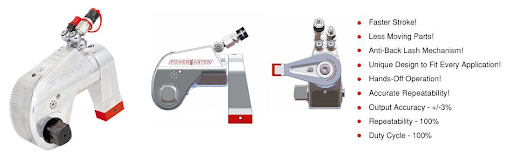
Hydraulic torque wrench provides precise and controlled rotational force through fluid pressure, which allows for accuracy within very tight tolerances (normally within ±3%). Reliable hydraulic torque wrenches producers make their products with the intent to avoid human errors, prevent fatigue and guarantee even distribution of loads on heavy industry machine joints.
Dive through this guide to how these devices work, factors that influence bolting accuracy, industrial uses, and correct selection process.
What Makes Bolting Accuracy Critical in Heavy Industries?
Large industrial activities such as oil refineries, power stations, steel production factories, and mining sites depend on bolt connections for their operations.
- Prevention of Fluid Leaks: The imbalance in bolt tension results in unequal pressure in the flanges, thereby causing fluid leaks.
- Prevention of Structure Breakdowns: Over-tensioning results in elongated bolts and stripped threads, while under-tensioning results in joint separations due to high vibrations.
- Increasing Equipment Longevity: Load balancing prevents wear and tear of heavy industrial equipment.
- Ensuring Safety Standards: Controlled bolting ensures workers are not exposed to hammer strikes and sudden mechanical failures.
How Hydraulic Torque Tools Achieve Exceptional Accuracy
- Fluid Controlled Pressure: The hydraulic pump will release pressurized liquid into the calibrated cylinder at a predetermined pressure of PSI or bars. Liquid pressure corresponds to torque produced.
- Ratchet and Pawl System: It performs in measured, sequential strokes; every stroke has an equal amount of force exertion without any changes in power delivery.
- Reaction Arm Fixing Firmly: It reduces recoil forces by making contact with another nearby bolt or other structure.
Manual Bolting vs. Impact Tools vs. Hydraulic Systems
| Feature / Method | Manual Torque Wrench | Pneumatic Impact Wrench | Hydraulic Torque System |
| Accuracy Rate | ±10% to ±20% | ±20% to ±30% | ±3% |
| Max Torque Capacity | Low (Human effort limited) | Medium (Fluctuating air line) | Extremely High (Up to 50,000+ Nm) |
| Operator Fatigue | Very High | High | Very Low |
| Repeatability | Unpredictable | Inconsistent | High & Fully Repeatable |
| Best Application | Light maintenance | Fast teardown / Assembly | Critical heavy-duty joints |
Key Industry Applications
- Wind Energy
- Oil & Gas Pipeline Flanges
- Mining Machinery
- Power Plants
Types of Hydraulic Torque Tools
Square Drive Hydraulic Tools
- Uses standard impact sockets.
- Ideal for general industrial applications where clearance around the nut is unrestricted.
- Quick socket swapping for different bolt head sizes.
Low-Profile (Direct Fit) Tools
- Fits right over the nut in restricted clearance locations.
- The very slim design makes it possible to install in narrow flange clearances and flat surfaces.
- Eliminates the additional height profile of standard sockets.
Best Practices for Maximum Bolting Precision
- Check Pressure Gauge Calibration: Always check the pump’s pressure versus torque table prior to starting up.
- Lubricate Properly: Friction in the thread is a factor that impacts torque measurements. Ensure even torque measurements by applying anti-seize compound to the thread and nut surfaces.
- Cross-Tightening Sequence: Follow a cross-tightening sequence of bolting using 30%, 60%, and 100% torque.
- Tool Maintenance: Check your hydraulic hose connections and internal pawls before every turnaround job.
Final Thoughts
Bolting precisely is vital for ensuring safety, avoiding leaks, and maintaining structure under difficult conditions. It will be very wise to buy the best available tools from reliable hydraulic torque wrenches manufacturers to ensure calibration stability and durability. Choosing the correct hydraulic torque wrench will give you the best results.