A building can look impressive when it is new, but its real quality becomes clear years later. Walls face rain, heat, freezing temperatures, impact, moisture, and everyday wear long after construction crews leave the site. Choosing durable materials and proper installation can make a major difference. A skilled Masonry Contractor helps create structures that withstand these challenges while reducing long-term repairs, maintenance costs, and premature deterioration.
Why Masonry Is Built for Long-Term Performance
Masonry has been used for centuries because it combines strength, stability, and resistance to many common sources of building damage. Brick, concrete block, and stone can form durable walls that perform reliably under demanding conditions.
One of the biggest advantages is the material’s ability to maintain its structural and visual qualities over time. When properly designed and installed, masonry can tolerate exposure to weather, temperature changes, and everyday impacts better than many less durable wall systems.
This matters for both residential and commercial construction. Owners are not simply looking for a wall that performs well on opening day. They want a building envelope that continues to protect occupants, equipment, and interior finishes for many years.
Resistance to Everyday Wear
Exterior walls experience constant exposure to physical and environmental stress. Wind-driven rain, sunlight, dust, accidental impacts, and seasonal temperature changes can gradually affect building materials.
Masonry provides a solid barrier against many of these challenges. Its dense construction makes it particularly useful in areas where walls may experience frequent contact or impact, such as warehouses, schools, retail buildings, apartment complexes, and industrial facilities.
Interior masonry can also provide lasting performance. Concrete block walls, for example, can be useful in utility rooms, mechanical spaces, garages, and other areas where surfaces need to withstand heavy use.
How Masonry Handles Weather and Moisture
Weather is one of the greatest threats to a building’s exterior. Rain, snow, humidity, freezing conditions, and strong sunlight can cause deterioration when a wall system is poorly designed or maintained.
Masonry can provide excellent weather resistance when the wall is properly detailed. However, durability does not come from the masonry units alone. Flashing, drainage, joints, sealants, weep systems, and proper installation all contribute to how well a wall manages moisture.
Water should have a controlled path away from the building rather than becoming trapped inside the wall assembly.
Managing Freeze-Thaw Conditions
In colder parts of the United States, repeated freezing and thawing can be especially challenging. Water that enters small openings can freeze and expand, potentially contributing to cracking or surface damage.
Proper material selection and construction practices help reduce this risk. Masonry designed for the local climate, combined with effective drainage and sound detailing, can improve resistance to seasonal changes.
For projects in regions with harsh winters, designers should consider local climate conditions before selecting materials. Construction methods should also account for temperature during installation because mortar and other materials may require specific handling and protection in cold weather.
Protection Against Heat and Sun
Hot climates present a different set of challenges. Continuous sunlight can heat exterior surfaces, while daily temperature changes cause materials to expand and contract.
Masonry’s thermal mass can help moderate temperature changes within a building. Dense wall materials absorb and store heat, which can contribute to more stable interior conditions when the overall building envelope is properly designed.
This does not mean masonry eliminates the need for insulation or energy-efficient design. Instead, it can work alongside insulation, air barriers, windows, and other components to create a more effective building envelope.
Masonry Reduces Long-Term Maintenance Demands
Durability is not only about surviving severe weather. It is also about reducing the amount of maintenance required throughout a building’s service life.
Many wall systems need regular attention to coatings, finishes, or surface treatments. Masonry can often maintain its basic appearance and function with comparatively straightforward maintenance when it has been correctly installed.
That does not mean masonry is maintenance-free. Mortar joints, sealants, flashing, drainage paths, and damaged units should still be inspected periodically.
Common Maintenance Tasks
Property owners can extend the life of masonry by incorporating simple inspections into their maintenance programs.
Useful checks include:
- Looking for cracks or damaged units
- Inspecting mortar joints for deterioration
- Checking areas around windows and doors
- Keeping drainage openings clear
- Examining flashing and sealants
- Removing vegetation growing against walls
- Addressing water leaks before they spread
- Cleaning stains using appropriate methods
Early attention can prevent a small issue from becoming a major repair. For example, a damaged mortar joint may be relatively simple to address, while prolonged moisture penetration can eventually affect adjacent materials.
Structural Strength Adds Another Layer of Protection
A durable wall needs more than resistance to rain and sunlight. It must also perform under structural loads and everyday physical stress.
Masonry can provide substantial compressive strength, making it useful for load-bearing walls and other structural applications. Reinforced masonry can provide additional capacity where project requirements call for it.
The final performance depends on engineering, material selection, workmanship, reinforcement, connections, and site conditions. Therefore, masonry should be treated as part of an integrated structural system rather than as a standalone material.
Better Performance Through Proper Design
Good design begins before the first unit is installed. Engineers and architects need to account for factors such as:
- Building height and structural loads
- Local climate and exposure
- Soil and foundation conditions
- Moisture management
- Expansion and movement
- Openings for doors and windows
- Required fire performance
- Expected building use
When these factors are considered together, the wall system is better prepared for the conditions it will face.
Comparing Masonry With Other Wall Materials
Every construction material has strengths and limitations. The right choice depends on the building’s purpose, budget, climate, design, and expected service life.
The following comparison provides a general overview:
| Factor | Masonry | Wood Framing | Metal-Framed Systems |
|---|---|---|---|
| Impact resistance | High | Moderate | Moderate |
| Fire resistance | Generally excellent | Requires protective assemblies | Depends on assembly |
| Moisture resistance | High when properly detailed | Requires careful protection | Requires corrosion protection |
| Maintenance | Generally low to moderate | Moderate to high | Moderate |
| Thermal mass | High | Low | Low |
| Design flexibility | High | High | High |
| Long-term durability | Excellent with proper construction | Good with proper protection | Good with proper protection |
| Typical concern | Cracking or moisture detailing | Moisture, insects, decay | Corrosion and thermal movement |
This table should not be treated as a substitute for project-specific engineering. Instead, it highlights why masonry remains an attractive option when long-term durability is a major priority.
Fire Resistance and Building Safety
Safety is another important reason masonry is frequently selected for construction projects. Many masonry materials are noncombustible, which can help limit the spread of fire through a building.
Concrete masonry units and brick are commonly used in fire-resistance assemblies, although the actual rating depends on the complete wall assembly, material properties, thickness, joints, penetrations, and applicable building codes.
For commercial and multi-family projects, fire performance can be particularly important. A well-designed masonry wall can contribute to compartmentation and provide a robust barrier between different areas of a building.
Local building codes and project-specific requirements should always guide the final design.
Sound Control Is an Added Benefit
Long-term building performance also involves occupant comfort. Noise from traffic, neighboring rooms, machinery, or other activities can affect how useful and comfortable a building feels.
Masonry’s density gives it useful sound-control characteristics. Heavy wall assemblies can reduce the transmission of airborne sound, particularly when combined with insulation and other acoustic measures.
This can be valuable in apartments, hotels, schools, healthcare facilities, offices, and industrial buildings. The final acoustic performance depends on the entire wall assembly, not simply the presence of masonry.
Choosing Materials Based on the Project
Not every masonry material is appropriate for every application. Brick, concrete block, natural stone, and manufactured stone products have different characteristics, costs, appearances, and installation requirements.
Project teams should consider both performance and location before making a selection.
Important Factors to Review
Before choosing masonry materials, consider:
- Local weather conditions
- Expected exposure to moisture
- Freeze-thaw requirements
- Structural loads
- Fire-resistance requirements
- Desired appearance
- Available construction skills
- Material availability
- Project budget
- Expected maintenance schedule
For example, a commercial building in a region with severe winters may have different material requirements from a residential project in a hot, dry climate.
Selecting materials based solely on appearance or initial cost can create problems later. A better approach is to consider total performance throughout the expected life of the building.
Workmanship Has a Major Impact on Durability
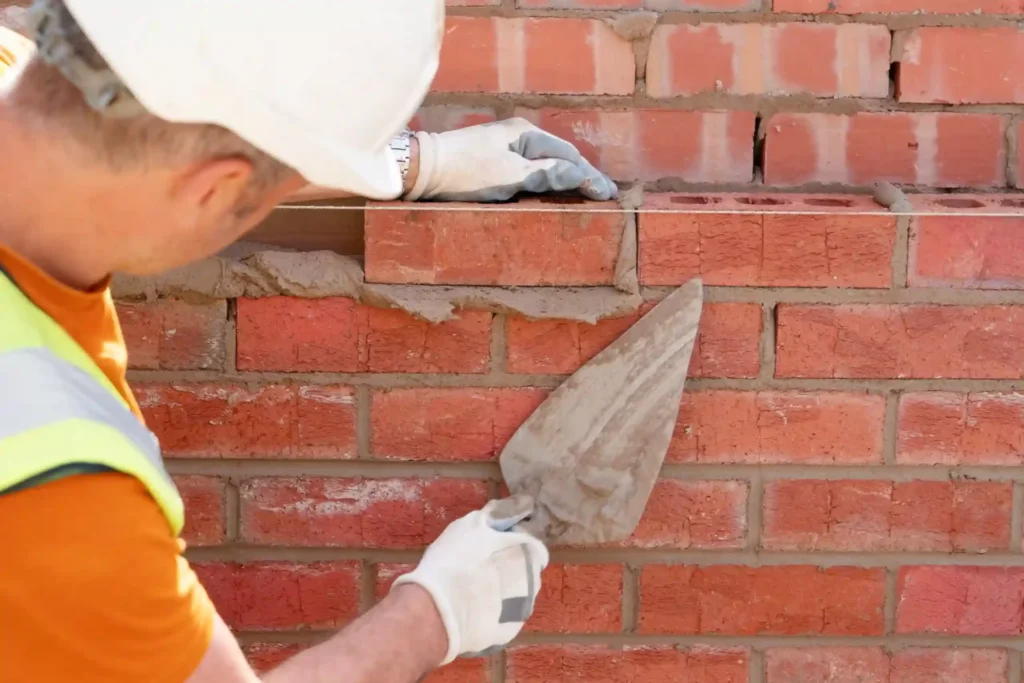
Even excellent materials can fail when installation is poor. Masonry construction requires attention to mortar consistency, joint tooling, alignment, flashing, drainage, reinforcement, curing, and weather conditions during installation.
Small mistakes can create larger problems over time. Poorly installed flashing, for instance, may allow water to enter areas where it cannot easily escape.
Experienced crews understand that durability comes from the details. They follow project specifications, manufacturer recommendations, applicable codes, and appropriate construction practices rather than relying on appearance alone.
Why Proper Mortar Joints Matter
Mortar joints connect individual masonry units and play an important role in the wall’s overall performance. Weak, poorly tooled, or improperly cured joints may allow moisture to penetrate more easily or become vulnerable to deterioration.
Joint profiles also affect how water moves across a wall surface. Proper tooling creates a more effective finished joint and can improve resistance to water penetration.
Regular inspections can identify deteriorated joints early. Repointing, when appropriate, can restore portions of an aging wall without requiring complete reconstruction.
Planning for Long-Term Value
Construction budgets naturally focus on initial costs, but the cheapest option at installation is not always the least expensive over the building’s lifetime.
A durable wall may cost more initially while reducing repair frequency and extending the useful life of the structure. Owners should therefore consider lifecycle costs rather than focusing exclusively on the upfront price.
A useful evaluation can include:
- Initial material and installation costs
- Expected maintenance expenses
- Likely repair frequency
- Energy-performance considerations
- Replacement costs
- Expected service life
- Potential disruption during repairs
This approach gives property owners a clearer picture of the investment.
Practical Ways to Extend Masonry’s Service Life
Owners and construction teams can take several straightforward steps to protect masonry after installation.
First, keep water management systems functioning properly. Gutters, downspouts, flashing, drainage openings, and sealants should be checked regularly.
Second, inspect walls after severe weather. High winds, hail, storms, and freeze-thaw cycles can reveal damage that may not be obvious during routine inspections.
Third, address small defects promptly. Cracks, damaged units, and deteriorating mortar should be evaluated before water or repeated weather exposure makes the problem worse.
Finally, avoid inappropriate cleaning methods. Harsh chemicals, excessive pressure, or improper tools can damage masonry surfaces and mortar joints. Cleaning procedures should be selected according to the material and type of staining.
Why Durability Matters to Construction Owners
Durability affects much more than the appearance of a finished building. It influences maintenance budgets, tenant satisfaction, operational interruptions, safety, property value, and the long-term usefulness of the structure.
A durable masonry system can provide a strong foundation for decades of service when design, materials, installation, and maintenance work together.
For construction owners, the goal should not simply be to build something that looks good at completion. The better goal is to create a structure that continues to perform when the building is 10, 20, or even 50 years old.
Conclusion
Masonry remains a dependable choice for projects where long-term performance matters. Its strength, weather resistance, fire performance, impact resistance, thermal mass, and relatively manageable maintenance requirements can provide meaningful value throughout a building’s service life. However, durability depends on more than the material itself. Proper design, moisture control, workmanship, material selection, inspections, and timely repairs all play important roles. By considering these factors from the beginning, construction teams and property owners can reduce avoidable problems and build structures that remain strong, functional, and attractive for decades.
Frequently Asked Questions
1. How long can masonry construction last?
Properly designed and maintained masonry buildings can remain serviceable for many decades. Actual longevity depends on the materials used, climate, structural design, workmanship, exposure, moisture management, and maintenance practices.
2. Is masonry suitable for all U.S. climates?
Masonry can be used successfully in many U.S. climates, but the design and material selection should reflect local conditions. Cold regions require attention to freeze-thaw exposure, while hot and humid areas require effective moisture management and appropriate detailing.
3. Does masonry require regular maintenance?
Yes. Although masonry is generally durable, periodic inspections are important. Owners should check mortar joints, cracks, drainage openings, flashing, sealants, and damaged units so minor issues can be addressed before they become expensive repairs.
4. Can masonry improve a building’s energy performance?
Masonry can contribute to energy performance because dense materials provide thermal mass. However, energy efficiency depends on the complete building envelope, including insulation, windows, air sealing, HVAC systems, and overall design.
5. What is the most important factor in achieving durable masonry?
Proper installation is one of the most important factors. Even high-quality materials can experience premature problems when moisture management, mortar joints, flashing, drainage, reinforcement, or other construction details are handled incorrectly.