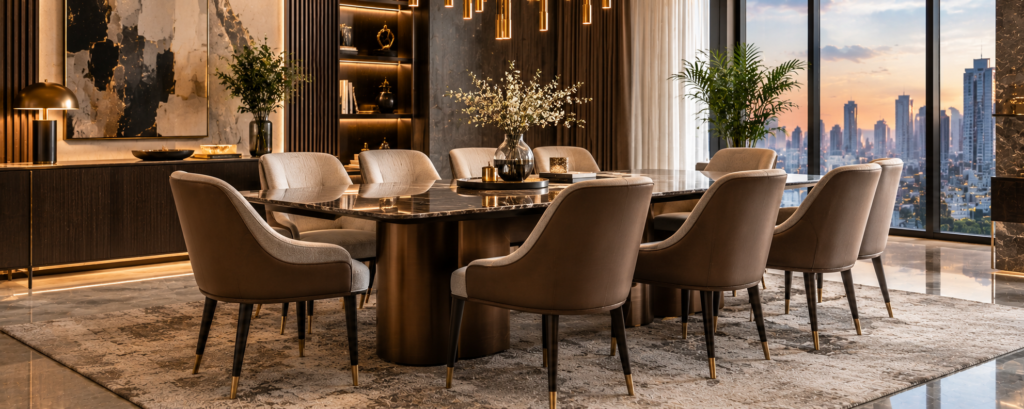
A dining room has to do more than look attractive. It needs to support everyday meals, family conversations, weekend gatherings, homework, celebrations, and all the small moments that happen around a table. That makes the choice of seating more important than it may seem at first.
Many people begin by choosing a table and then look for chairs that simply fit underneath it. That approach can work, but it can also create problems later. A beautiful chair may feel uncomfortable after twenty minutes, while a practical design may make the whole room feel too heavy or out of proportion.
The better approach is to consider the dining setup as one complete system. Table height, seat height, legroom, upholstery, room scale, traffic flow, and the way the furniture will be used should all work together. When those details are balanced, a dining space becomes easier to live with and much more enjoyable.
Start With the Way the Room Is Actually Used
Before looking at finishes or colours, think about what happens around the dining table during a normal week. A household that uses the room for every meal has different requirements from someone who mainly hosts guests at weekends.
For everyday use, comfort and durability should be high on the list. A chair may need to cope with repeated movement, spills, children, pets, or long family dinners. In a more formal room, appearance may carry greater weight, but comfort still matters because guests can spend several hours seated.
Consider these practical questions:
- How many people usually sit at the table?
- How long do people normally remain seated?
- Is the dining room also used as a work or study area?
- Does the space receive direct sunlight?
- How often will the chairs be moved?
- Will the furniture need to cope with regular entertaining?
These questions help narrow down the right style before you become distracted by individual designs.
Getting the Proportions Right
Proportion is one of the easiest details to overlook. A chair can be attractive on its own but look completely out of place when paired with the table.
Seat Height Matters
Most standard dining tables are designed to work with conventional dining chair seat heights, but small differences can still affect comfort. A seat that is too high may leave your knees crowded beneath the tabletop. A seat that is too low can force you to lean forward or raise your shoulders.
Measure from the floor to the underside of the table, not just to the top surface. Allow enough clearance for your thighs while sitting naturally. Armchairs also require extra attention because their arms need to slide under the table or remain outside it without restricting movement.
Width Can Change the Whole Layout
A wide chair may feel luxurious, but several large chairs around a table can quickly reduce usable space. Think about the number of diners you need to accommodate rather than simply filling every available position.
A useful rule is to leave enough space between neighbouring seats for people to sit without brushing shoulders constantly. This becomes particularly important when the table is used for larger gatherings.
If you have a smaller room, a visually lighter chair can create a more open feeling. If the dining area is large and spacious, a broader upholstered design may provide better balance.
Think Beyond Looks When Choosing Materials
Materials affect comfort, maintenance, appearance, and longevity. Upholstered chairs can provide softness and warmth, while timber or hard-shell options may be easier to maintain in a busy household. Fabric is worth considering carefully. A textured or patterned surface can add character, but it may also show wear differently from a smooth weave. Leather and leather-look finishes have their own maintenance requirements and can create a more structured appearance.
Timber chairs can suit both traditional and modern interiors depending on their shape, finish, and joinery. When assessing quality, look closely at joints, frame construction, surface finishing, and how stable the chair feels when weight is applied. For households where furniture receives heavy daily use, durability should not be treated as a secondary feature. A chair that still looks good after years of regular use is often more satisfying than one that only looked impressive on delivery day.
Create Comfort Without Making the Room Bulky
Dining furniture needs enough support for long meals, but adding too much visual weight can make a room feel cramped. A chair with a high back can give a sense of structure and formality. A lower-profile option can make sightlines more open, which can help in smaller spaces or rooms connected to a kitchen or living area.
Armchairs can be excellent at the ends of a dining table, especially in larger rooms. However, placing them on every side can make movement more difficult. A mixed arrangement can sometimes produce a better balance between comfort and practicality. For example, upholstered armchairs at the table ends paired with slimmer side chairs can create a clear visual hierarchy without overwhelming the room.
Use the Table as the Starting Point
The chair should support the character of the table rather than fight against it. A heavy traditional table usually works well with chairs that have enough visual substance to match it. A slim contemporary table may look better with cleaner silhouettes.
This does not mean everything has to come from the same furniture range. Mixing styles can create a more personal result when the proportions are controlled.
Look for at least one connecting detail:
- Similar wood tones
- Repeated shapes
- Complementary upholstery
- Shared metal finishes
- A consistent design period
This gives the room cohesion without making it feel like a showroom display.
Make Movement Part of the Design
A dining room is a working space. People need to pull chairs out, sit down, stand up, pass behind seated guests, and walk between the table and surrounding furniture.
Leave enough clearance around the table for normal movement. If the dining area sits close to a doorway, sideboard, or kitchen island, the route through the room becomes particularly important.
One of the most common mistakes is measuring only the furniture dimensions and forgetting the space needed to operate the furniture. A chair may technically fit in a room, but the room can still feel awkward if there is not enough space to pull it back comfortably.
Check the Room From Different Angles
Stand at the entrance and look toward the table. Then imagine someone walking behind a seated diner. Think about doors opening, drawers being used, and guests moving around during a meal. This simple exercise often reveals layout problems before anything is purchased.
Matching Style With the Architecture
The surrounding architecture should influence your choice. A period property may suit turned timber legs, classic upholstery, or refined detailing, while a contemporary apartment can support stronger geometric shapes and cleaner finishes.
However, matching a chair to the architecture does not require strict imitation. Contrast can be effective when it is deliberate.
A traditional dining room with modern chairs can feel fresh. A contemporary room with classic upholstered seating can feel softer and more established. The key is to make the contrast look intentional rather than accidental.
Colour Should Work With Everyday Life
Colour is often discussed as a purely visual choice, but it also affects maintenance and the atmosphere of the room.
Light upholstery can make a small dining area feel brighter, although it may require more care. Darker colours can create depth and are often easier to integrate with rich timber finishes.
Neutral shades offer flexibility if you like to change accessories regularly. Stronger colours can become the focal point and help define an otherwise restrained room.
You do not need every chair to match perfectly. A coordinated palette can be more interesting than identical pieces, particularly when the room already contains a variety of textures.
Why Quality Seating Changes the Dining Experience
There is a practical reason to invest time in choosing seating. People notice comfort quickly, especially when they are sitting for a long period.
Good support can improve the overall experience of a meal because guests are less likely to constantly adjust their position. Stable construction also makes chairs feel more secure, particularly when they are moved repeatedly.
When comparing options, sit in the chair whenever possible. Check the angle of the back, the depth of the seat, how your feet rest on the floor, and whether the front edge presses into the back of your legs.
For online shopping, study the listed dimensions carefully and compare them against a chair you already own that feels comfortable. This is more reliable than judging scale from product photography alone.
Choosing Pieces That Fit Changing Needs
A dining setup may need to evolve over time. Families grow, rooms change, and furniture sometimes needs to serve a different purpose. Selecting adaptable designs can make future changes easier. Neutral upholstery, well-proportioned frames, and timeless silhouettes tend to work with more table styles and room updates.
For shoppers exploring different options, comparing construction, dimensions, finish, and practical use is often more useful than focusing only on the photograph. At this stage, browsing a broad range of Dining Chairs can help you compare shapes, materials, proportions, and finishes before settling on a final arrangement.
Build a Room That Feels Intentional
A dining room feels considered when the furniture appears to belong there naturally. That usually comes from proportion and consistency rather than from buying matching items as a set.
Think about the relationship between the table, chairs, lighting, flooring, and surrounding storage. If the room contains a statement pendant light, for example, choosing very elaborate chairs may create too many competing focal points.
On the other hand, a simple room can benefit from seating with stronger detail. The goal is not to make every object equally noticeable. The goal is to make the room feel balanced.
Everyday Maintenance Is Part of Good Design
A dining space will eventually experience spills, knocks, crumbs, and general wear. Planning for maintenance makes ownership easier.
Use suitable cleaning methods for the material rather than applying a universal cleaner to every surface. Check manufacturer care guidance for upholstery, timber, coated finishes, and leather products.
Regular maintenance can also prevent small issues from becoming expensive repairs. Tightening loose fittings and dealing with marks early is usually easier than waiting until visible wear becomes severe.
Conclusion
The best dining setup is not simply the one that looks impressive in a photograph. It is the one that continues to feel comfortable, practical, proportionate, and attractive after years of normal use.
Start with how the room functions, then consider measurements, seating comfort, materials, movement, and style. Pay attention to details such as seat height, chair width, clearance around the table, and how the finishes will cope with everyday life.
When those factors are considered together, the result is a dining room that feels natural to use rather than carefully staged. Good furniture should support the way people live, and thoughtful seating is one of the simplest ways to make a dining space more comfortable, welcoming, and lasting.
